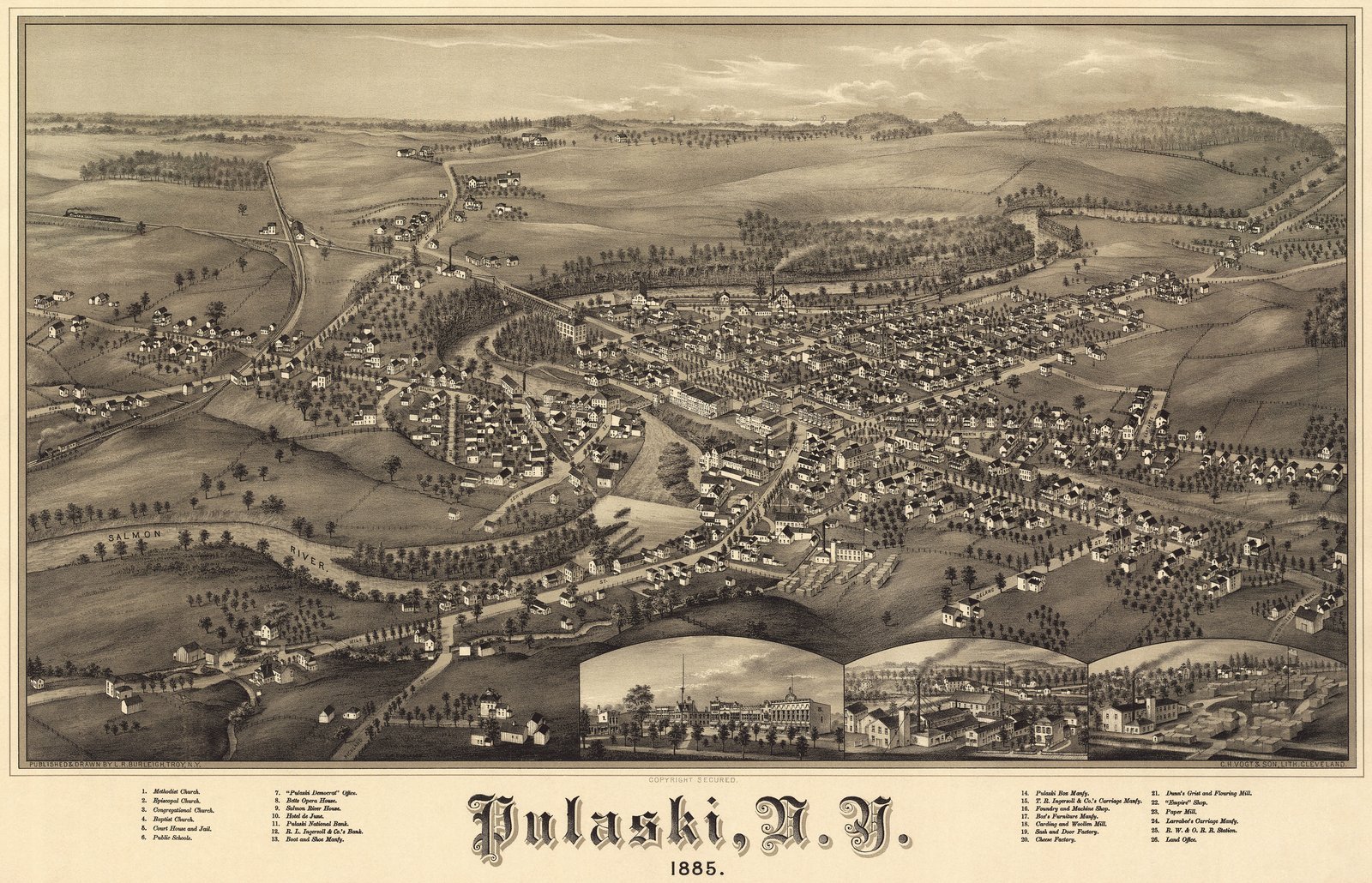
Pulaski, New York
A different scale of fishery, a different scale of fish, a different scale of crowd. The Salmon River pulls more anglers in a six-week fall window than most of the Alley sees in a year — and the town has built itself around them. If the Pennsylvania Erie cluster is the Alley's heart, Pulaski is its other-side-of-the-lake industrial cathedral.
TL;DR
Why come. The Salmon River runs a fall king-salmon migration that anglers fly in for. Steelhead show up in late October and stay through April. Lodging, guides, fly shops, and tackle are concentrated within a few miles of the river. The fish are bigger than anything on the Alley.
What to know. Combat fishing is real here in peak fall. Regulations are stricter than the Alley — fly-only sections, snagging restrictions, season nuances. Hire a guide your first trip if you can. Lake Ontario tribs are not Lake Erie tribs.
The Salmon River
The Salmon River is regulated water — flows are released from Lighthouse Hill Reservoir on a schedule, not by the whim of a thunderstorm. Standard release is 185 CFS, with bumps during the run that anglers track like a stock ticker. The river runs from Altmar (where the New York State hatchery sits) down through Pineville, the Town of Pulaski itself, and into Lake Ontario at the mouth.
The fall king salmon run is the marquee event. Late August through early October, kings push up to spawn — fish in the 15-30 lb range, with 40+ pounders not unheard of. Coho follow in October. Steelhead arrive late October and stay through ice-out, then a spring window before water warms. Brown trout fishery year-round. The water's higher gradient up near the hatchery, slower and broader through Pulaski.
A handful of fly-only catch-and-release sections are managed for tradition and pressure relief. Standard tackle works most of the river. Snagging is illegal — read the regs. Tag system at the hatchery in fall.
Live conditions. Flow, water temp, recent trend, and 7-day weather: /rivers/salmon-river.
Where to stay
Pulaski is a fishing-lodging town. Property options skew functional: clean rooms close to the water, often with rod racks and freezers for fish, a coffee setup that runs at 4:30 a.m.
Tailwater Lodge / dedicated fishing lodges
Several mid-to-upmarket lodges built for the angler trade — group bookings, on-site guides, restaurant, smoking-room culture. Tailwater is the best-known. Book 2-4 months out for fall.
Riverside cottages and motels
Older properties along Route 11 and the river road — basic but right on the water. Cheaper. Sometimes rod-and-cleaning-table-equipped. Solid for a small group on a budget. Same advice on fall booking.
Where to eat
- The pre-dawn breakfast spot. One or two cafes open at 4-4:30 a.m. in fall. You'll be eating with guides and lodge clients. Coffee, eggs, and the day's water-condition gossip.
- Riverside restaurants. Tailwater Lodge has a real restaurant. A few independent spots along Route 11 do the standard angler-tavern menu — burgers, steaks, fish.
- Don't expect dinner past 9 p.m. Pulaski runs on dawn-patrol hours. Late-night options dry up fast. If you want a real night out, drive 45 minutes to Syracuse.
When the river's slow
The Salmon's regulated flows mean it's almost always fishable. But sometimes the run hasn't pushed, the water's too cold, or you're between fish and want a break.
Salmon River Hatchery (Altmar)
Free tours. Watch them strip eggs in October. The state's stocking program is the reason the river works — see how the sausage gets made. 12 miles upstream of Pulaski.
Selkirk Shores State Park
Lakefront state park at the mouth. Camping, day-use, beach, boat launch into Lake Ontario. Worth a windshield-time look even if you're not staying.
Syracuse (45 min south)
Real city, real restaurants, the Carrier Dome if there's a game. The escape valve when Pulaski's "everything closes at 9" gets old.
When to come
Marquee window: late September through October — kings, then coho, then steelhead arrive. Crowds peak the same weeks. Quieter and arguably better fishing: late October through early December for steelhead, and mid-March before the spring runoff for the back end of the winter steelhead run.
FAQ
Is "combat fishing" really a thing?
In the upper river during peak fall, yes. Anglers stand 10 feet apart. There's an etiquette — rotate the run, give the hooked-fish angler space — and most people abide. If you want quieter water, fish farther downstream or come in November after the salmon push thins out.
Do I need a guide my first trip?
Strongly yes for the fall salmon run. The river's water-release schedule, the regulation map (fly-only sections, posted private water, snagging rules), and the productive lies are not obvious to a first-timer. A one-day guide saves you the steepest part of the learning curve. We list active guides in the businesses block below.
What's the difference between Salmon River and the Lake Erie tribs?
Scale, regulation, and fish. The Salmon is bigger, regulated-flow, hatchery-driven, with a multi-species fall run including kings and coho. Lake Erie tribs are smaller, weather-driven, mostly steelhead-only with smallmouth in summer. Both are great. They're different sports.
What is Douglaston Salmon Run (DSR)?
A 2.5-mile stretch of private water with a daily rod fee — limited rods, controlled access, known for less pressure. Reservations recommended in fall. It's one option, not a requirement; plenty of public productive water exists.
How far from Buffalo / Syracuse / Albany / NYC?
Buffalo: about 3 hours west. Syracuse: about 45 minutes south. Albany: about 3 hours east. NYC: 5+ hours, depending on the route.
Plan a Pulaski trip
The full Salmon River picture — flow, temp, recent trend, the 7-day weather window — and the lodging that's actually on the water: