Rods · Updated July 2026
Best Centerpin Rods for Steelhead
Centerpin fishing is the purest form of float fishing, and the rod is the engine. You want length (11–14 feet), a forgiving tip that protects light leaders, and enough backbone to turn a hot steelhead in current. The best centerpin rods load smoothly during a drift and have the spine to fight a chrome fish through 200 yards of run. Float-and-spawn anglers across the Great Lakes have settled on a few proven sticks. Centerpin fishing on Great Lakes tributaries is a Western New York and Pennsylvania institution — the technique's adoption rate on the Salmon River, Cattaraugus, and Elk Creek in the last fifteen years has produced a fly-versus-pin culture rivalry that exists in no other part of the angling world. A pin rig is centerpinning's gift to the steelhead angler: a 13-foot float rod, a true centerpin reel with no drag (in the conventional sense), a long-running float trail, and a leader system tuned to dead-drift a single egg or a bead through 200 yards of moving water with zero drag. The result is the most natural drift any angler has ever produced — and a hookup rate that, on its best days, embarrasses fly fishing. The rod is the foundation. These are the centerpin rods that the Great Lakes pin community has settled on.
As an Amazon Associate, we earn from qualifying purchases. Prices and availability may change.
Our Top Pick
Top Picks at a Glance


Buyer's Guide
What length?
11 feet for tight rivers and shorter drifts. 13 feet is the do-everything length. 14-foot rods give you the longest mend and best line control but are tiring to fish all day. Most pros own a 13-footer first.
Action: soft tip, strong butt
A good centerpin rod has a tip soft enough to telegraph a take and protect a 6-pound leader, and a butt section strong enough to bend into a 10-pound fish without folding. This dual-action profile is what separates a real pin rod from a tarted-up trout rod.
Two-piece vs four-piece
Most dedicated centerpin rods are 2 or 3 piece for performance — fewer ferrules, smoother action. 4-piece pin rods exist for travel but feel slightly stiffer. If you don't fly with your gear, go 2 or 3 piece.
Two-piece vs three-piece pin rods
A 2-piece centerpin rod has cleaner action and one fewer ferrule. A 3-piece rod packs to ~50 inches instead of 80 — fits in a truck cab or a closet better. The performance difference is small but real: the 2-piece flexes more uniformly and casts the float slightly more smoothly. If you can store and travel a 2-piece, get one. Most Great Lakes anglers fish 3-piece for the storage flexibility — the trade-off is acceptable.
Brand-by-brand: who owns the pin space
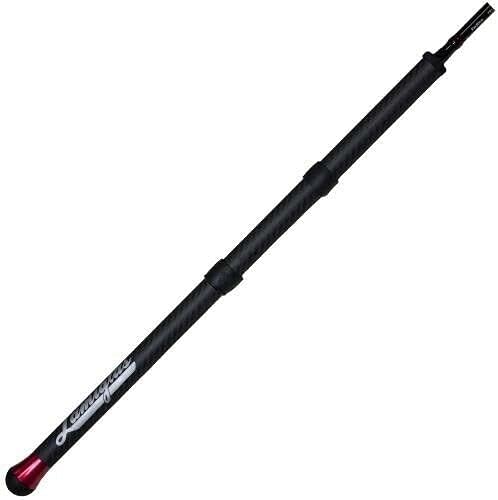
Raven Helix, Drennan Acolyte, and Daiwa Connoisseur are the established premium tier. Raven dominates the Western New York scene; Drennan has the European-import cachet; Daiwa's Connoisseur sets the tone for action + butt strength. Mid-tier picks: Okuma SST, Lamiglas Centerpin, Frontier. Value tier: Cabelas Pin, Pflueger Trion (under $150 and surprisingly competent). The pin world rewards loyalty — most anglers fish whatever their mentor fished.
Care: ferrules + butt cap are the failure points
Centerpin rods are 13 feet long, which means leverage forces at the ferrules and butt-cap are higher than on a 9-foot fly rod. Wax male ferrules every few outings. Inspect the butt-cap for cracks (a high-stick fight loads the butt section dramatically). Store the rod in the sock and tube — never lay it in a truck bed or on a porch. A well-cared-for centerpin rod lasts 15-20 years; a neglected one cracks at the butt within 3 seasons.