What Is a Center Pin?
The simplest reel ever built. And the most effective float fishing tool ever invented.
Strip away everything you know about fishing reels. No drag knob. No anti-reverse. No bail arm. No level-wind. No gears. A center pin reel is a wide-arbor spool mounted on a single stainless steel pin, and it does exactly one thing: spin freely. That's it. That's the entire design philosophy. And that single-minded simplicity is what makes it the most devastating float fishing tool in existence.
The anatomy is almost absurdly minimal. A machined aluminum spool — usually 4 to 5 inches in diameter — sits on a center post with either a ball bearing or a bushing. The spool face is slightly concave to keep line from tangling. There are two small handles for retrieving line. There is no click, no ratchet, no mechanical resistance of any kind. When you flick the rim, the spool spins. And it doesn't stop until friction and air resistance slow it down — which, on a quality pin, can take 30 seconds or more.
That free spin is everything. It means the spool rotates at exactly the speed the current pulls your line, delivering a drift so natural that no spinning reel, regardless of price, can replicate it. The line leaves the spool with zero resistance, zero memory coil, and zero micro-drag. Your float drifts at the precise speed of the river. Your offering hangs in the strike zone like it belongs there. And steelhead eat it because nothing about the presentation tells them otherwise.
"The center pin doesn't make you a better caster. It makes you a better drifter. And the drift is everything."
— The Pin Life creed
The center pin's origin story begins in England, not the Great Lakes. British coarse anglers developed the concept in the early 20th century for trotting baits down slow-moving chalk streams for roach, chub, and barbel. The free-spool design let them present a bait at current speed over distances that fixed-spool reels couldn't match. It was a niche tool for a niche style of fishing — and it stayed that way for decades.
Then, sometime in the early 1990s, Great Lakes steelheaders on the Canadian side of Lake Ontario discovered what British anglers had known for years: a free-spinning spool delivers a presentation that nothing else can touch. The adoption was slow at first — center pins were expensive, hard to find, and required a completely different casting technique. But the anglers who made the switch started catching more fish. A lot more fish. Word spread through the tributaries of Ontario, then crossed into New York, then moved west along the Lake Erie shoreline into Pennsylvania and Ohio. By the early 2000s, the center pin revolution had reshaped Great Lakes float fishing permanently.
Today, if you walk any serious steelhead tributary during peak season, a significant percentage of the anglers on the water will be running pins. It's no longer a fringe technique. It's the endgame.
New to float fishing entirely? Start with The Float Life: The Complete Guide to Float Fishing for Steelhead before diving into center pin specifics.
Why Center Pin?
The physics of a drag-free drift — and why spinning reels can't compete.
Every spinning reel, no matter how smooth or expensive, introduces micro-drag into your drift. The line wraps around the bail roller and exits the spool in coils. Those coils create friction as they pass through your guides. The bail arm itself adds a tiny but measurable amount of resistance. And every time line peels off the spool, it does so against the spring tension of the bail. The result: your float drifts slightly slower than the current. It's subtle. Most anglers never notice it. But the steelhead do.
A center pin eliminates all of it. Line leaves the spool in a straight path — no coils, no bail roller, no spring tension. The spool spins at the exact speed the current demands. There is literally zero mechanical resistance between the river's pull and the line feeding out. It's the closest thing to having no reel at all, while still being able to cast 50-80 feet and fight a 10-pound fish.
50-Foot Drift: Spinning vs. Center Pin
-
🐟
Spinning reel, 50-foot drift. Line exits in coils, creating progressive drag. By 30 feet, your float is moving 10-15% slower than the current. By 50 feet, the belly in your line is actively pulling the float offline. You mend, which temporarily fixes it, but the drag rebuilds within seconds. The last 20 feet of every drift are compromised.
-
🐟
Center pin, 50-foot drift. Line feeds off the spool in a straight stream at current speed. At 30 feet, zero drag. At 50 feet, zero drag. At 80 feet — still zero drag. The spool is simply spinning at whatever speed the river dictates. Every inch of the drift is as good as the first inch. This is the center pin advantage distilled to its essence.
-
🐟
The practical difference. On a 50-foot drift with a spinning reel, you get roughly 30 feet of quality presentation. On a center pin, you get all 50 — plus you can extend to 80 or 100 feet if the run allows it. More quality water covered per drift means more fish. It's not magic. It's physics.
But the advantage isn't just about drift length. It's about sensitivity. With no mechanical resistance in the system, you feel everything through the spool — the float ticking bottom, a subtle take, the current speeding up as your rig enters a seam. Your fingers on the spool rim become a direct extension of the presentation. You're not watching the float and hoping. You're feeling the drift in real time.
Is it worth the learning curve? If you float fish more than a few times a season, the answer is unequivocally yes. The center pin doesn't make a bad angler good — you still need to read water, manage depth, and pick the right presentation. But it removes the mechanical ceiling that spinning reels impose on your drift quality. Once you experience a 60-foot drag-free drift and watch a steelhead eat your jig at the end of it, the spinning reel stays in the truck.
Choosing Your First Setup
The rod, the reel, the line, the floats — everything you need to get started.
Your first center pin setup is going to feel alien compared to a spinning rig. The rod is longer than anything you've held. The reel sits on top and has no moving parts besides the spool itself. The casting motion looks nothing like what you're used to. But every component serves the same purpose: enabling the longest, cleanest, most natural drift possible.
The Four Components
-
🐟
The Rod: 13-15 feet, float action. Length is non-negotiable. A 13-foot rod gives you the leverage to Wallis cast, the reach to mend line at distance without disturbing the float, and the control to steer fish in current. 13'6" is the sweet spot for most Great Lakes rivers. 15' rods are better for wide rivers like the Salmon River or Cattaraugus but can feel cumbersome on tighter Ohio creeks. Look for a rod rated for 4-8 lb line with a soft, parabolic tip that loads into a strong mid-section. Budget picks: Raven IM8 ($150-200), Okuma SST ($130). Premium: Raven RPX ($350+).
-
🐟
The Reel: 4.25-4.75" diameter. The reel is the heart of the system. Three tiers matter:
Budget ($100-175): Raven Matrix — the gold standard entry-level pin. Ball bearing, 4.5" spool, reliable spin time. This reel has introduced more anglers to pin fishing than any other.
Mid-range ($250-350): Kingpin Imperial or Raven Helix — precision bearings, lighter weight, longer spin times, better machining tolerances.
Premium ($500+): Islander IR3 or Kingpin Zeppelin — aerospace-grade bearings, sub-4oz weight, spin times measured in minutes. Beautiful machines, but the fish don't care about the price tag. -
🐟
The Line. Mainline: 6-8 lb monofilament. Mono floats, which is critical — it keeps line off the water between the rod tip and float, reducing drag. High-visibility orange or chartreuse mainline lets you see your line on the water for better drift management. Avoid braid entirely — it sinks, tangles on the spool, and has zero stretch. Leader: 18-36 inches of 4-6 lb fluorocarbon. Fluoro sinks and is nearly invisible, providing a natural presentation below the float.
-
🐟
Floats for Pin Fishing. Center pin floats are typically larger than what you'd use on spinning gear — 5g to 10g is the working range. The heavier float loads the rod for the Wallis cast and provides the mass needed to pull line off the spool during the drift. Balsa floats (Drennan Loafers, Raven FM series) are the most sensitive. Start with a 5g and a 7g to cover most water conditions. Fixed floats for water under 10 feet, slip floats for deeper.
A word on buying your first reel: do not cheap out below the Raven Matrix tier. Sub-$80 "center pin" reels from generic brands often have poor bearing quality, wobbly spools, and spin times measured in seconds rather than minutes. A reel that doesn't spin freely defeats the entire purpose. The Matrix at $150 is the floor for a real center pin experience. If that's a stretch, buy used — the center pin community is active on forums and Facebook groups, and lightly used Kingpins and Ravens show up regularly at 40-60% of retail.
The Wallis Cast
The signature cast that defines center pin fishing. Master it, and the river opens up.
The Wallis cast is the reason most people think center pin fishing looks impossible. It doesn't work like a spinning cast (overhead flick), a fly cast (back-and-forth loading), or a baitcaster (thumb control). It's a side-arm swing that uses the weight of the float and shot to pull line off the free-spinning spool in mid-flight. It looks like magic. It's actually just physics — but it takes practice to make it feel natural.
The cast is named after F.W.K. Wallis, a British angler who popularized the technique in the mid-20th century. It was designed specifically for free-spool reels, and no other casting method delivers the same combination of distance, accuracy, and soft landing that the Wallis cast provides.
The Wallis Cast: Step by Step
-
1
Set your drop. Let out line so the float hangs 3-5 feet below the rod tip. The float and shot weight need to be below the reel — this is the pendulum that generates your cast. Too short a drop and you won't generate momentum. Too long and you lose control.
-
2
Pull off a reservoir. Strip 15-20 feet of extra line off the reel and let it hang in loose coils below the reel. This is your reservoir — the line that will feed out during the cast as the float pulls it off the spool. Without this reservoir, the cast dies at the length of your drop.
-
3
The side-arm swing. Point the rod downstream at about a 45-degree angle. Smoothly swing the rod upstream in a side-arm arc — not overhead, not underhand, but a level sweep at roughly waist to chest height. The float swings outward in a pendulum arc. This is a swing, not a snap. Power comes from smooth acceleration, not brute force.
-
4
Release and follow through. As the float reaches the apex of its swing (pointing upstream), the weight of the float and shot begins pulling line off the spool. The reservoir feeds out smoothly. Follow through with the rod, pointing it toward your target. The float sails out in a gentle arc and lands softly on the water.
-
5
Check the spool. As the float lands, lightly touch the spool rim to stop excess line from spilling off. Then let the current take over — the spool will begin spinning at river speed, feeding line naturally into the drift.
Practice Drill: The Backyard Session
Before you hit the river, practice in a field or backyard. Tie a 5g casting weight to your mainline (no hook). Set your drop at 4 feet, strip off a 15-foot reservoir, and practice the side-arm swing. Aim for a target 40 feet away. Twenty minutes of backyard practice will save you two hours of frustration on the water. Focus on smooth acceleration — if you're muscling it, you're doing it wrong.
The most common failure point: trying to power the cast. The Wallis cast is about timing and smooth acceleration, not arm strength. The float and shot do the work — you just initiate the swing. If your casts are piling up at 20 feet, you're snapping the rod too hard and the line is tangling on the spool. Slow down. Smooth it out. Let the pendulum do its job.
Other Casting Techniques
The Wallis cast isn't the only tool in your arsenal. These four alternatives cover the spots it can't reach.
The Wallis cast is your primary weapon — it covers 70% of the casting situations you'll encounter on Great Lakes tributaries. But rivers aren't casting ranges. You'll face low-hanging trees, tight quarters, strong crosswinds, and heavy rigs that won't fly well on a standard Wallis. Having additional casts in your repertoire means you can fish water that one-dimensional pin anglers walk past.
Four Alternative Casts
-
🐟
The Flick Cast (short range, 10-25 feet). For tight spots where you can't swing. Hold the line near the reel with your off hand, pull 5-6 feet of slack, and flick the rod tip forward while releasing the line. The float shoots out in a low trajectory. It's not pretty, but it puts your float in pockets that the Wallis can't reach. Use this under bridges, beside retaining walls, and in brushy inside bends.
-
🐟
The Side Cast (under canopy). A modified Wallis performed entirely at waist level, with the rod nearly horizontal. The float travels on a flat trajectory, staying under overhanging branches that would snag a standard Wallis arc. Less distance (30-40 feet max), but it opens up shaded bankside runs that hold pressured fish. This is a critical cast for Ohio's smaller tributaries — Euclid Creek, Brandy Run, and Black River all have canopy-covered stretches that demand it.
-
🐟
The Two-Handed Lob (heavy rigs). When you're running a large float (8g+) with substantial split shot for deep, fast water, the standard Wallis swing can feel unwieldy. The lob uses both hands — one on the rod grip, one near the butt — to gently loft the heavy rig upstream. It's a controlled, low-effort cast that relies on the rig's weight rather than spool momentum. Think of it as a catapult rather than a pendulum.
-
🐟
The Snap Cast (quick resets). When you want to recast quickly without stripping new reservoir — snap the rod tip upstream with a quick wrist motion while the float is still at close range. The float hops upstream 15-20 feet, resetting your drift without a full cast. Experienced pin anglers use this constantly to re-drift a productive seam without the overhead of a full Wallis setup. It's the efficiency move that separates high-volume drifters from everyone else.
Every casting situation on a steelhead river can be solved with one of these five techniques. The Wallis handles open water at distance. The flick covers tight quarters. The side cast goes under canopy. The lob handles heavy rigs. And the snap cast keeps you in the zone when you've found fish. Practice all five — the anglers who catch the most fish are the ones who can put a float anywhere the river demands.
Drift Control Mastery
This is the advanced section that separates good pin anglers from great ones.
Casting gets all the attention. New pin anglers obsess over the Wallis cast — how far, how smooth, how clean. But casting is just the delivery mechanism. Drift control is the skill that catches fish. A sloppy cast with perfect drift control will out-fish a beautiful cast with poor drift management every single time. If you want to understand why one pin angler on a run is hooking up every 30 minutes while the person next to them goes fishless — look at what happens after the cast lands.
The Five Pillars of Drift Control
-
🐟
Feeding line. The spool does this automatically — that's the beauty of the center pin. But you're not passive. Your off-hand fingers ride the spool rim, applying just enough pressure to keep the line slightly taut between the rod tip and the float. Too much pressure and you're dragging the float. Too little and slack accumulates, killing your hookset. The ideal state: the line from rod tip to float is straight but not tight. You should be able to see it on the water in a clean, gentle arc.
-
🐟
Palming the spool. Your palm on the rim is your drag system, your brake, and your speed control. Light contact slows the drift for holding a seam. Firmer pressure stops the spool entirely for a hookset or pause. The key is sensitivity — your palm should barely kiss the rim during a normal drift, ready to clamp instantly when the float disappears. Practice palming with the lightest possible contact that still gives you control.
-
🐟
Mending with a 13-foot rod. This is where rod length pays dividends. A 13'6" rod can reach over near-bank currents and mend 40 feet of line without moving the float. The mend is an upstream flip of the line between the rod tip and the float — it eliminates the belly that forms as different current speeds pull on your line. Mend early (within the first 2-3 seconds of the drift), mend often, and mend gently. A good mend is invisible to the float.
-
🐟
Trotting: hold and release. The most advanced drift control technique. Momentarily palm the spool to hold the float in place — the current lifts your jig or bait slightly as line tension builds below the float. Then release. The offering drops back into the strike zone with a natural falling motion that triggers reaction strikes. Experienced pin anglers trot through every likely holding spot: a boulder, a depth change, a submerged log. Steelhead eat on the drop more often than on a steady drift.
-
🐟
The check. A more aggressive version of trotting. Palm the spool firmly, stopping the float entirely for 1-2 seconds. The current swings your offering forward and upward in an arc below the float, then it falls back when you release. Use the check at the end of a drift, when your float passes through the heart of a run, or when you see a flash underwater that might be a fish tracking your bait. The check provokes commitment from following fish.
The difference between a beginner pin angler and an expert is what happens in the 60 seconds after the cast lands. The beginner watches the float. The expert orchestrates the drift.
Drift control is a feel skill — you can read about it, but you learn it on the water. Expect your first 5-10 outings with a center pin to be primarily casting and drift control practice sessions that happen to involve fishing. That's normal. Every pin angler went through it. The breakthrough moment comes when palming, mending, and trotting become automatic and your conscious mind can focus entirely on reading the float. That's when the hookup rate explodes.
Fighting Fish on a Center Pin
No drag means YOU are the drag. And that's the entire point.
Here's where new pin anglers panic. You're hooked into a chrome steelhead, it turns downstream, and the spool starts screaming line off the reel — because there is no drag to stop it. Your heart rate spikes. Your instinct screams to grab the spool. Don't. This is the moment the center pin was designed for, and it will handle it better than any drag system ever could — if you trust the process.
A mechanical drag applies constant pressure regardless of what the fish is doing. That constant pressure is what pulls hooks, pops leaders, and straightens jig hooks during violent headshakes. A center pin replaces mechanical drag with your palm — a variable, responsive, intelligent drag system that can go from zero to maximum in a fraction of a second. You feel the fish surging and you lighten up. You feel it turning and you increase pressure. You feel a headshake and you release entirely for that split second, letting the rod absorb the shock. No drag washer in the world can react that fast.
Fighting Techniques
-
🐟
The hookset. When the float goes down, sweep the rod to the side — not overhead — with firm, steady pressure. The 13-foot rod loads progressively through its parabolic action, driving the hook without the violent snap that pops 4-lb fluoro. You have 13 feet of shock absorption working for you. Use it.
-
🐟
The initial run. Let them go. A fresh steelhead's first run can strip 40-60 feet of line. Apply light palm pressure — just enough to keep the spool from over-spinning and bird-nesting. The rod does the work here. Keep the tip up, maintain a smooth bend in the rod, and let the fish tire against the rod's flex, not against your palm.
-
🐟
Downstream runs. The nightmare scenario for beginners. The fish turns and runs straight downstream. You cannot horse a steelhead upstream on 4-lb fluoro — it will break. Options: follow the fish on foot (best), apply side pressure to turn the head (risky but effective), or palm firmly and pray the rod absorbs the shock (last resort). On big rivers, always be willing to chase. A 100-yard walk is better than a lost fish.
-
🐟
Turning fish. Side pressure is your primary turning tool. Lower the rod tip to one side and apply steady palm pressure. The lateral angle pulls the fish's head sideways, disrupting its ability to swim straight. Alternate sides — left, right, left — to keep the fish off balance. A confused fish tires faster than one fighting in a straight line.
-
🐟
The landing. As the fish tires, palm the spool more aggressively and guide it toward your net. Keep the rod tip high to maintain pressure. A tired steelhead will often make one final surge at the sight of the net — be ready to release palm pressure instantly. More fish are lost in the last 10 feet than at any other point in the fight. Stay patient. Let the rod load. Net them headfirst.
Here's the statistic that surprises most people: experienced center pin anglers land a higher percentage of hooked fish than spinning reel anglers. The reason is counterintuitive. You'd think that having no drag would mean losing more fish. But the opposite is true — because human reflexes, when trained, respond to a fish's movements faster and more appropriately than any mechanical drag system. The palm is a feedback loop. The drag washer is a constant. In a fight with an animal that changes direction, speed, and intensity unpredictably, the feedback loop wins.
Maintenance & Care
A well-maintained pin spins forever. A neglected one becomes a paperweight.
Center pins are mechanically simple, which means there's very little to go wrong — but the few things that can go wrong will destroy the free-spin that makes the reel worth owning. Sand in the bearing, a bent pin, corrosion from salt or grit — any of these will turn your $300 precision instrument into a reel that spins like a door hinge. Fifteen minutes of maintenance after every 3-4 trips will keep your pin performing for decades.
Maintenance Schedule
-
🐟
After every trip. Rinse the reel under warm tap water to flush grit, sand, and tributary silt. Pay attention to the gap between the spool and frame — debris collects there. Shake dry, then leave it disassembled (spool off the pin) overnight to air dry completely. Never store a wet pin in a case.
-
🐟
Every 3-4 trips: bearing service. Remove the spool and clean the bearing with isopropyl alcohol or a purpose-built bearing cleaner. Use a cotton swab to remove any debris from the bearing race. Apply one — one — small drop of reel oil (not grease, not WD-40, not gun oil). Spin the spool to distribute and wipe off any excess. Over-oiling is the #1 maintenance mistake — it attracts dirt and creates drag.
-
🐟
Spool balance. A balanced spool spins evenly. An unbalanced spool wobbles and creates inconsistent line feed. Check balance by placing the spool on the pin and giving it a gentle spin — it should rotate evenly without oscillation. If it wobbles, check for line build-up on one side, a bent handle, or debris in the bearing.
-
🐟
Winter care. Cold weather is the center pin's nemesis. Moisture in the bearing freezes, locking the spool. Prevention: oil the bearing before every cold-weather trip with a light synthetic oil rated for sub-freezing temperatures. On the water, periodically dip the reel in the river to flush forming ice crystals. Carry a small spray bottle of warm water for emergency thawing. After winter trips, fully disassemble and dry the bearing — trapped moisture will corrode the races.
-
🐟
Rod storage & travel. A 13-foot float rod doesn't fit in a standard rod tube. Most break down to 2 or 3 pieces — store in a padded rod sock inside a hard case for travel. Never lean a center pin rod against a car or truck — the reel face is exposed and one bump can dent the spool rim or bend the pin. Use a rod holder or lay it flat. For the reel, a neoprene reel pouch ($10-15) prevents scratches and dings during transport.
Common Mistakes
Every pin angler makes these. The good ones only make them once.
The 8 Deadly Sins of Center Pin Fishing
-
1
Over-palming. The number one mistake. Applying too much pressure on the spool during the drift creates the exact micro-drag you bought a center pin to eliminate. Your palm should barely touch the rim during a normal drift. If the spool isn't spinning freely, you're defeating the purpose of the reel.
-
2
Casting too hard. The Wallis cast is a swing, not a launch. Power causes the line to tangle on the spool, creates splash landings that spook fish, and sends your rig past the target zone. Reduce power by 50% from what feels natural. Then reduce it again. Smooth, controlled acceleration. That's the entire casting philosophy.
-
3
Wrong float size. A float that's too light won't load the rod for the Wallis cast and can't pull line off the spool during the drift. A float that's too heavy kills sensitivity. For most Great Lakes tributaries, 5-7g is the working range. Start there and adjust based on current speed and depth.
-
4
Skipping practice. The center pin has the steepest learning curve of any reel in freshwater fishing. Anglers who show up on day one expecting to fish are going to spend the day untangling bird nests. Spend 2-3 sessions focused on casting and drift control before worrying about catching fish. The investment pays off exponentially.
-
5
Using the wrong line. Braid tangles on center pin spools, sinks (killing your drift), and has zero stretch. Fluorocarbon mainline is too stiff and creates memory coils. Mono is the only correct mainline choice for a center pin. Period. High-vis mono so you can see your line management on the water.
-
6
Ignoring the reservoir. Forgetting to strip off extra line before casting means your Wallis cast dies at whatever drop length you set. The reservoir (15-20 feet of loose coils below the reel) is what gives the cast distance. Make it part of your pre-cast routine until it's automatic.
-
7
Over-oiling the bearing. One drop. One. Not two, not three, and definitely not a squirt. Excess oil attracts dirt, creates viscous drag, and can actually reduce spin time. If you can see oil on the bearing race, you've used too much. Wipe it off and start over.
-
8
Grabbing the spool on a hookset. Instinct tells you to lock the spool when you set the hook. Bad instinct. A locked spool on light fluoro leader means a popped line or pulled hook. Set the hook by sweeping the rod while letting the spool slip slightly through your palm. The rod's length and flex generate more than enough power for a solid hookset without clamping the spool.
Gear Recommendations
Three tiers. Three budgets. All of them will catch steelhead.
Let's cut through the marketing. You don't need a $500 reel to catch steelhead on a center pin. The fish cannot tell the difference between a Raven Matrix and an Islander IR3. What matters is that the spool spins freely, the rod is the right length, and you put in the time to learn drift control. That said, premium gear does feel better, spin longer, and last longer — which is why most dedicated pin anglers eventually upgrade. Here are three complete setups at three price points.
Budget Build: ~$250
-
🐟
Rod: Okuma SST 13'4" Float Rod (~$130) — solid build quality, sensitive tip, enough backbone for Great Lakes chrome. The best value float rod on the market.
-
🐟
Reel: Raven Matrix 4.5" (~$150) — the gateway drug. Ball bearing, smooth spin, reliable. Thousands of steelhead have fallen to this reel. This is the reel we recommend most for first-time pin anglers.
-
🐟
Total with line & floats: ~$300-325 ready to fish. Add $20 for high-vis mono, $15 for fluoro leader material, $15 for a 3-pack of Raven FM floats.
Sweet Spot Build: ~$500
-
🐟
Rod: Raven IM8 13'6" Float Rod (~$200) — lighter, more sensitive, better guide spacing than the Okuma. The Raven IM8 is the rod most serious pin anglers start with and many never feel the need to upgrade from.
-
🐟
Reel: Kingpin Imperial 4.5" (~$300) — precision stainless steel bearings, tighter machining tolerances, noticeably longer spin times. The Imperial is the point where the reel feels like an extension of your hand rather than a tool you're using. This is where the "worth every penny" comments start.
-
🐟
Total with line & floats: ~$550 ready to fish. This is the setup that most experienced pin anglers run. It performs at 90% of premium gear for 60% of the cost.
Premium Build: ~$800+
-
🐟
Rod: Raven RPX 13'6" Float Rod (~$375) — carbon fiber construction, incredibly light for its length, sublime sensitivity. You can feel your shot pattern ticking a pebble 40 feet away. This rod makes long days on the water feel effortless.
-
🐟
Reel: Islander IR3 4.5" (~$525) — aerospace-grade ABEC-7 bearings, sub-4oz weight, CNC-machined from solid aluminum bar stock. Spin times measured in minutes. This is the reel you buy once and fish for 20 years. Beautiful to look at, flawless to fish.
-
🐟
Total with line & floats: ~$950 ready to fish. Does this catch more fish than the sweet spot build? Marginally. Does it feel significantly better in your hands for 8 hours on the water? Absolutely. The premium tier is about the experience as much as the performance.
Browse our full gear recommendations: SteelHead Addiction Gear Shop
Frequently Asked Questions
The questions we hear most from anglers considering the switch to center pin.
Ready to Join the Pin Life?
Check real-time conditions on all 31 rivers. Flow tells you which float weight. Clarity tells you which jig. The Chrome Clock tells you when to be there. The center pin does the rest.
"The Bite Starts When You Have to Leave"
Recommended Gear
Hand-picked products for this guide. Prices and availability may change.

CORTLAND 444 Peach Fly Fishing Line with Front Welded Loop - 90 FT Durable Easy Casting Ultra Supple High Floating Classic Series Fly Rod Line for Freshwater
$69.95

Aventik Fly Line Skagit Shooting Heads Ultra Low Stretch Float Fly Fishing Line with Welded Loops Line ID from 20FT 300 grain/23 FT 550 Grain
$16.69

Mavrk USA Fly Fishing Line | Euro Nymph & Floating Lines | Level ESN Mono & Weight Forward Designs | High Visibility, Low Stretch, Freshwater Trout
$54.99

RIO Products Premier Creek Fly Fishing Line, Floating Trout Series, Accurate Line Design with Long Back Taper, Low Stretch & Ultra-Slick Performance, Green/Yellow
$99.99

SF Fly Fishing Line with Two Welded Loops Weight Forward Floating Fly Lines Trout 90FT WF2 3 4 5 6 7 8 9F Multi-Color Freshwater
$20.89
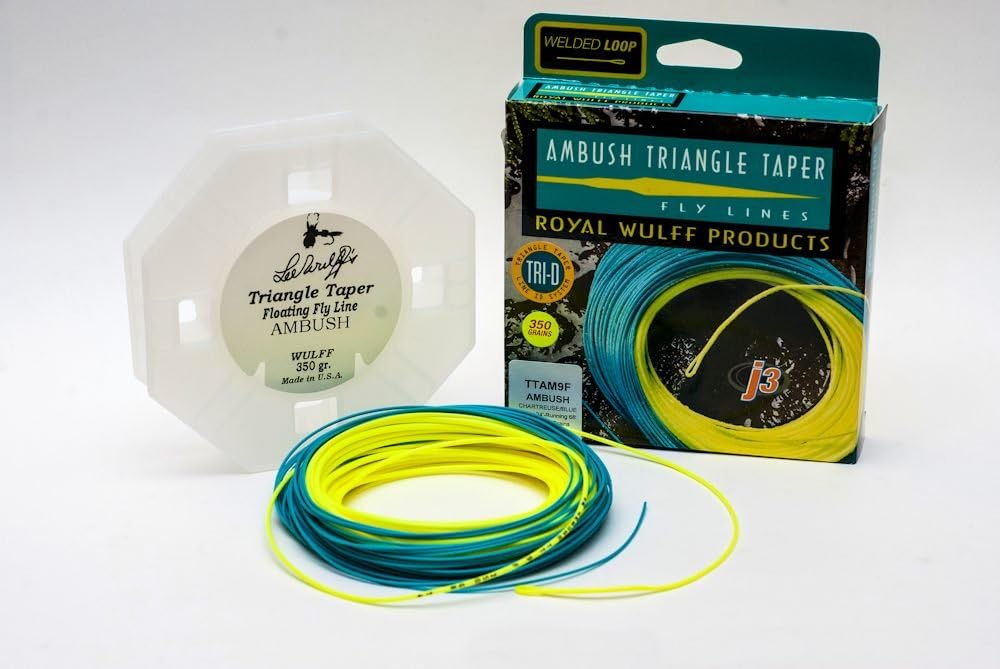
Royal Wulff Ambush - Floating Fly Line
$99.95

Maxcatch Fly Line Floating Shooting Line/Running Line with Front Loop, 20LB/30LB, .026'' .032'' .037'' .042''
$10.99

Scientific Anglers Amplitude Smooth Infinity Plus Freshwater Floating Fly Line, Fishing Line, Smooth Casting, Durable Coating
$99.95
As an Amazon Associate, we earn from qualifying purchases.
Browse All Gear →