There were no steelhead in Lake Erie when Europeans arrived. The fish was carried here from a single California river, planted across the country by the U.S. Fish Commission, and only became the foundation of an Alley fishery after a forty-year project to put it there.
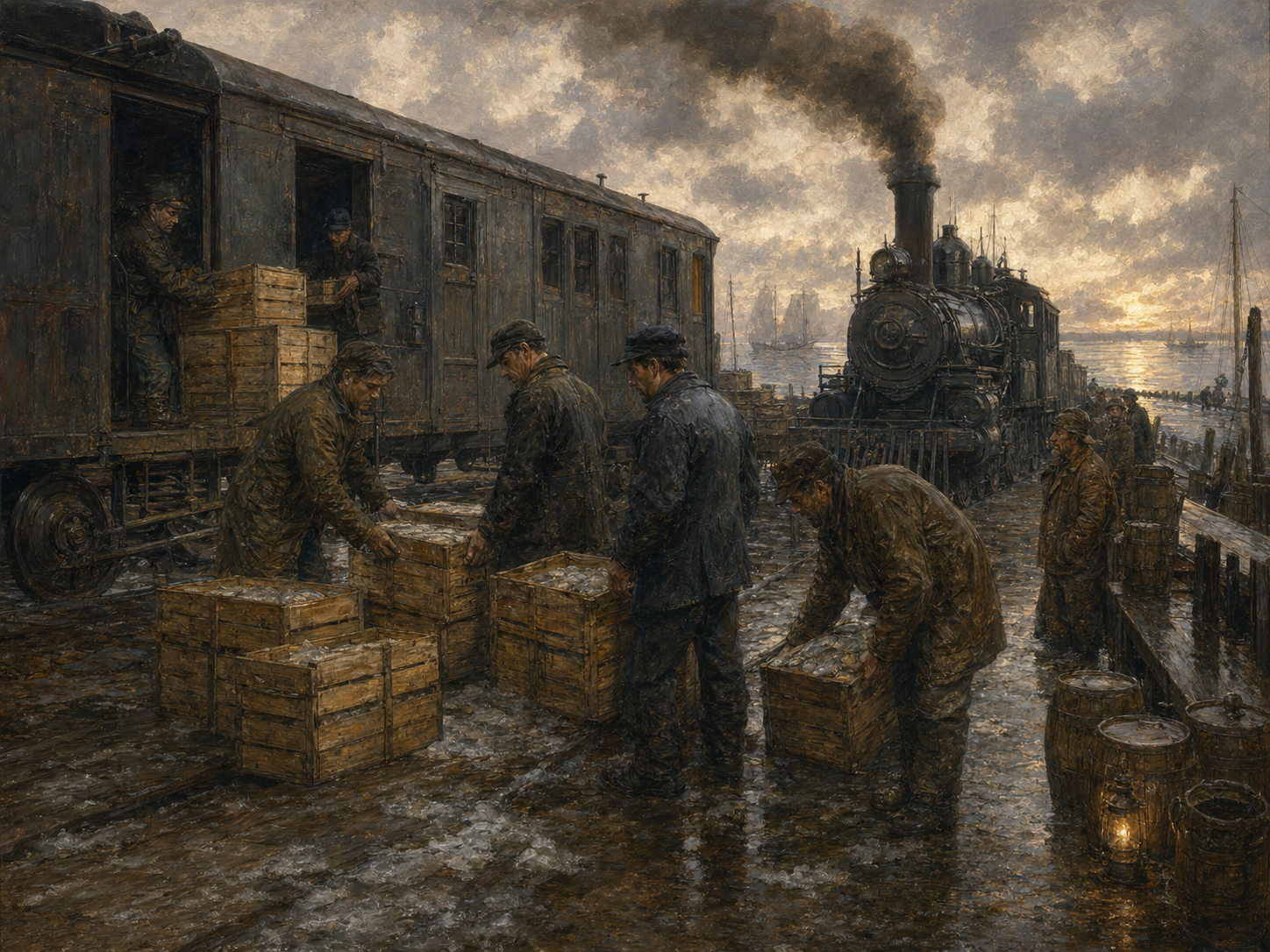
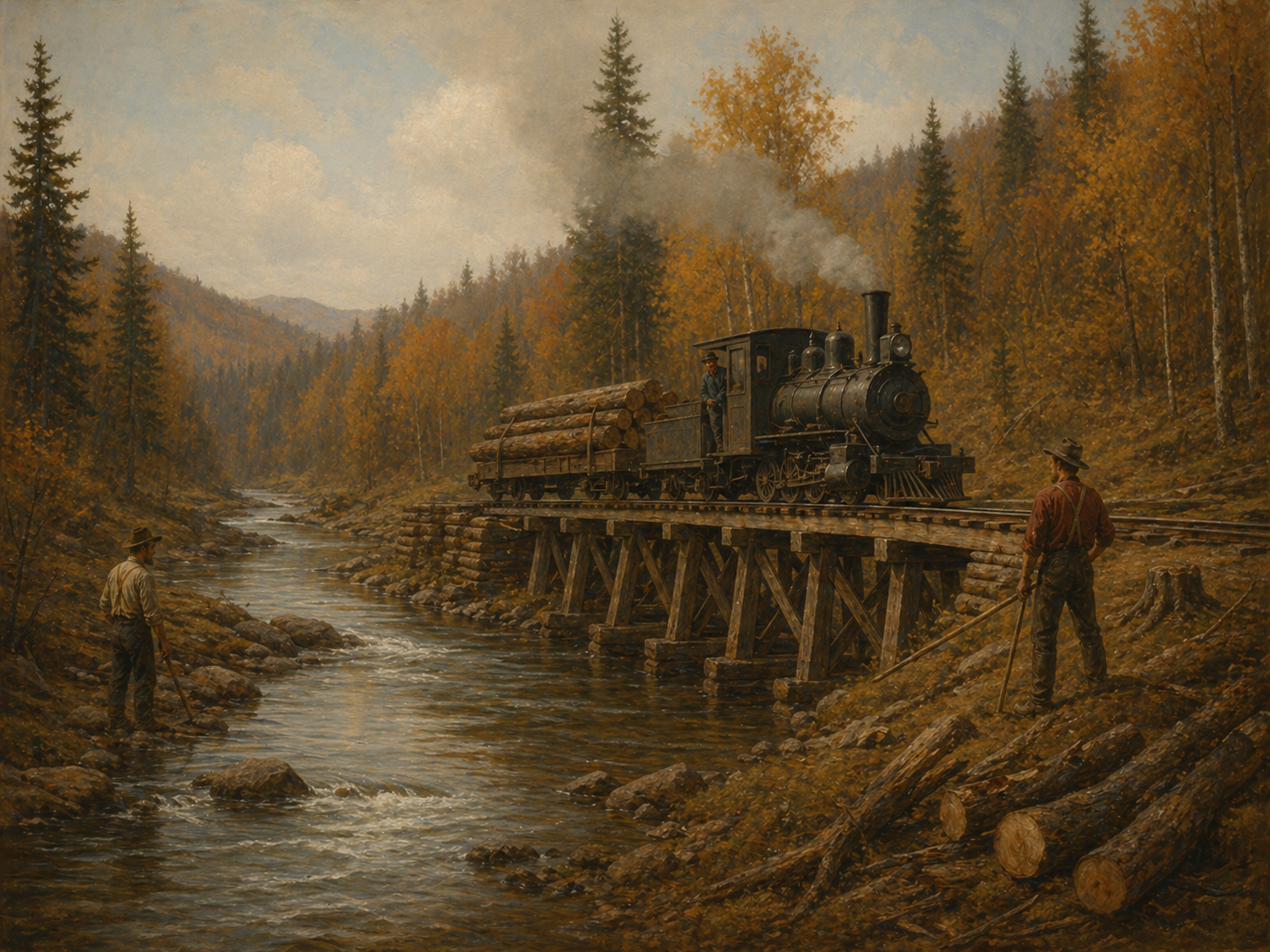
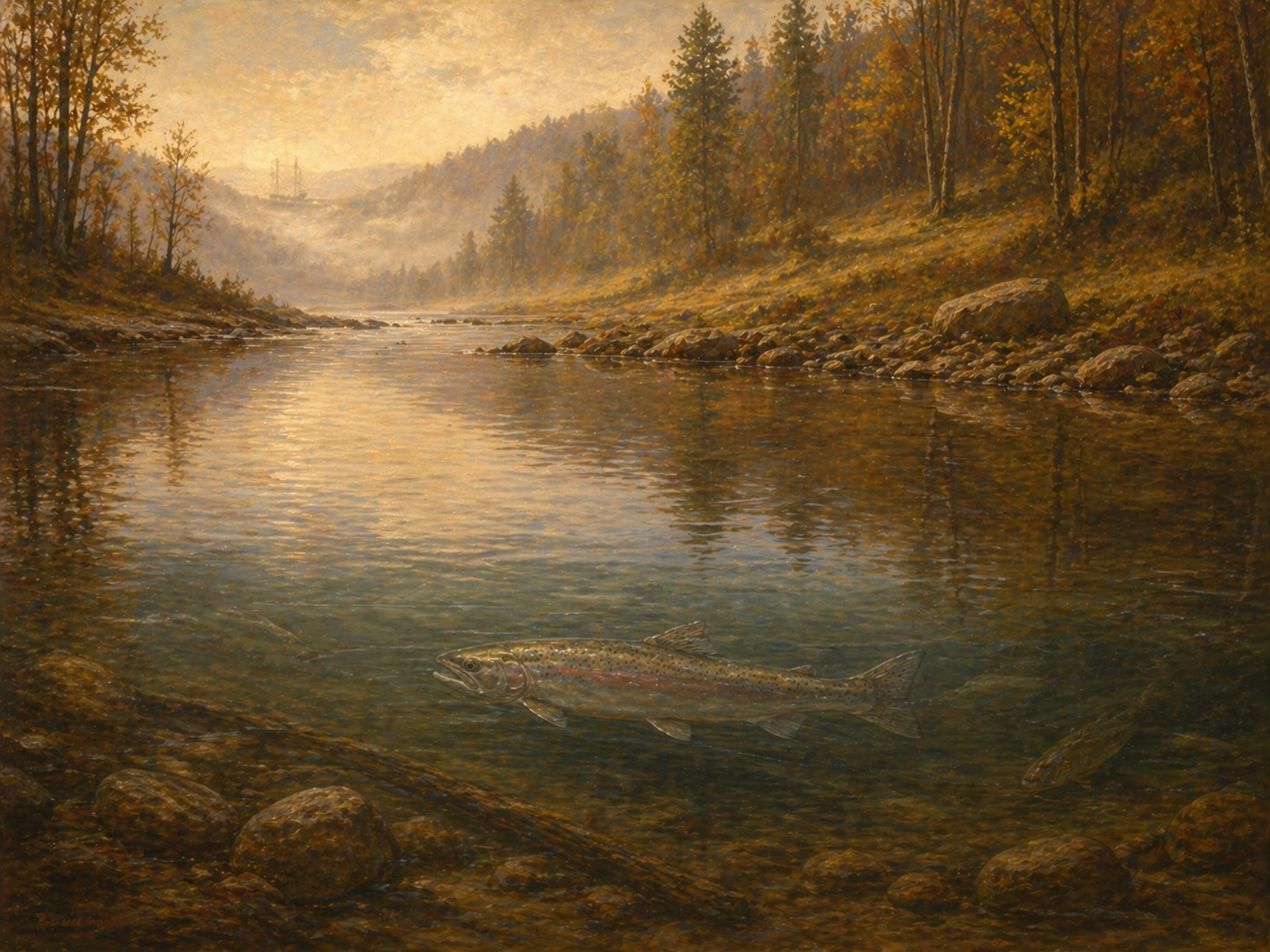
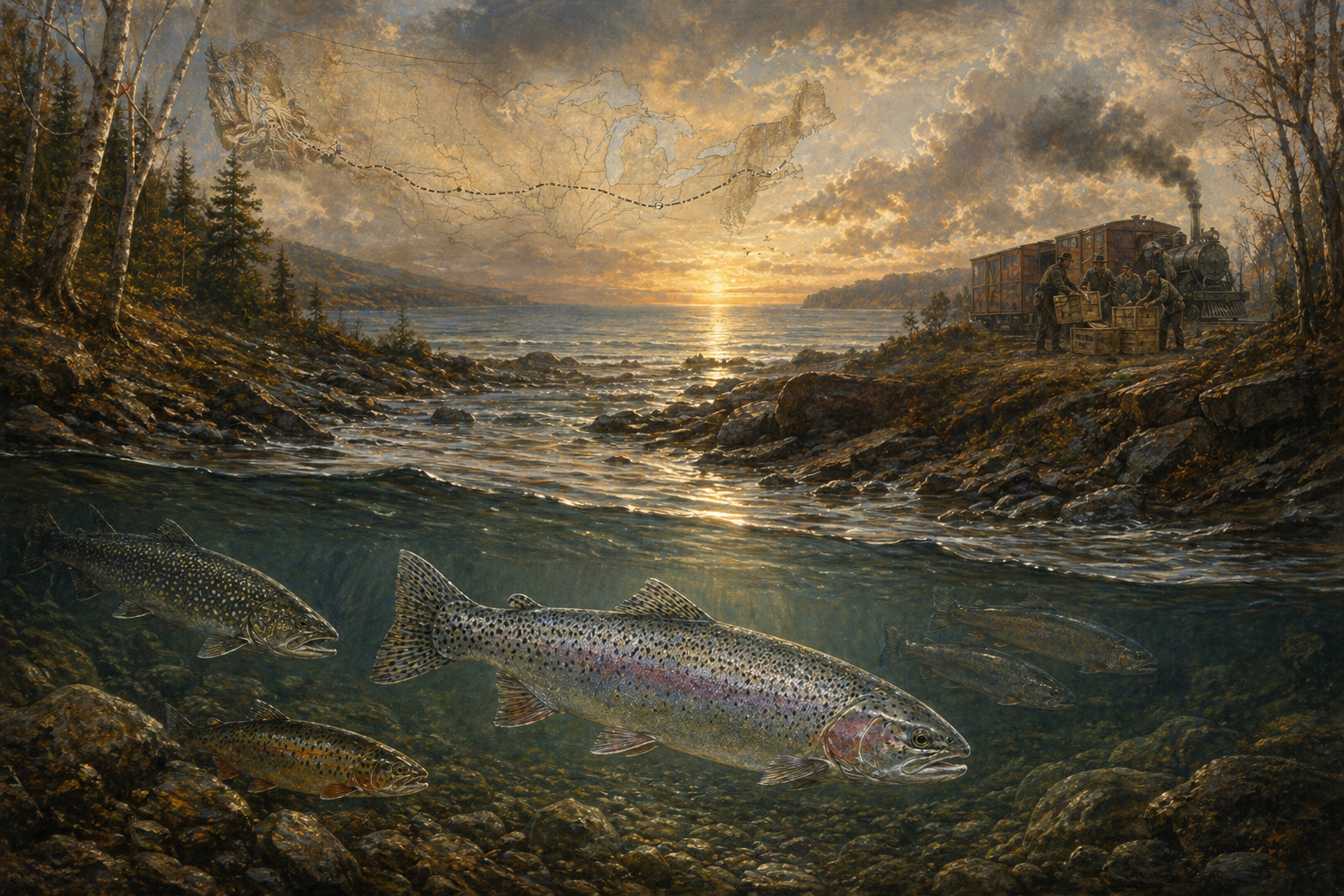
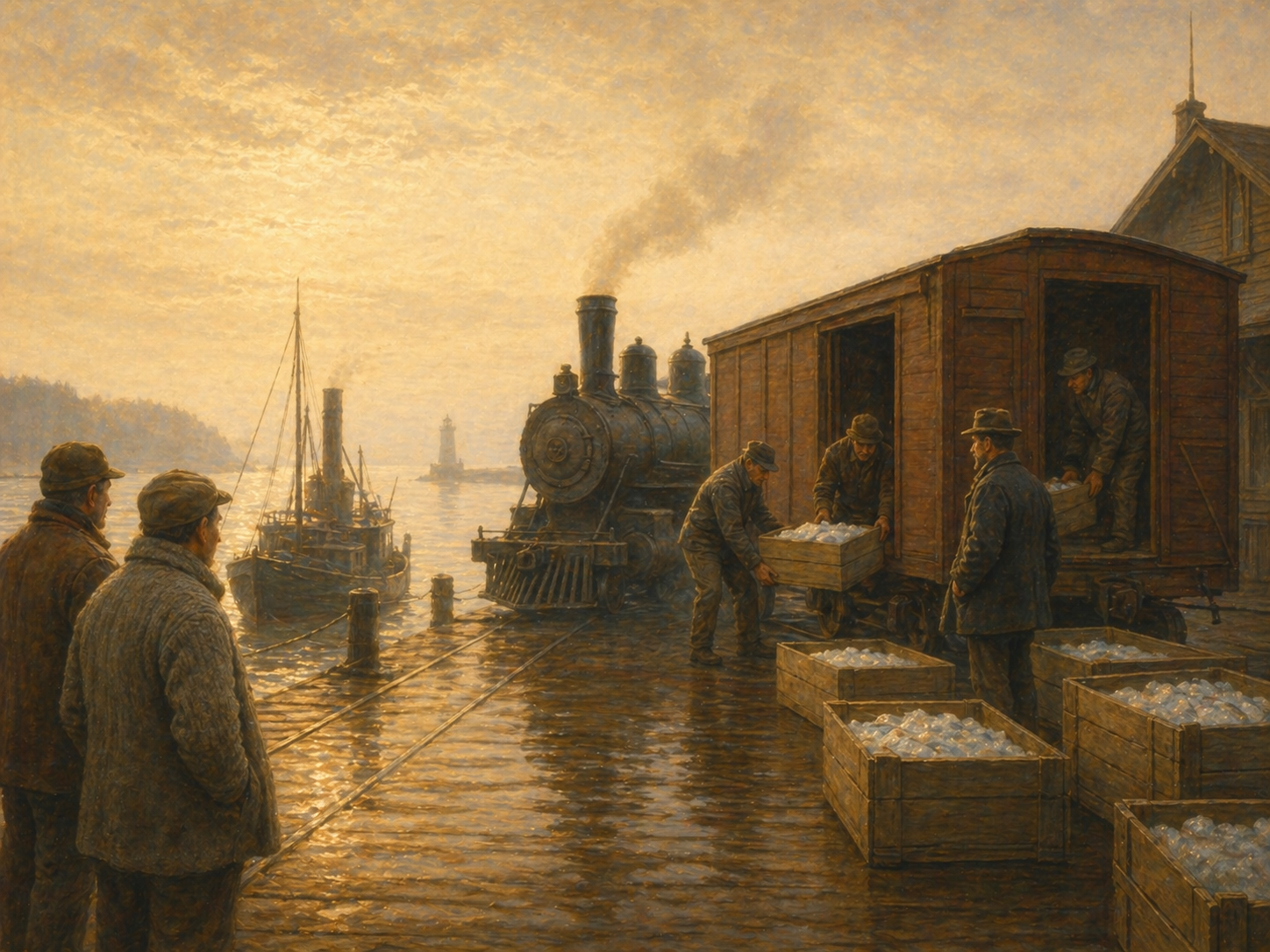
The fish that built this fishery is not from here. Oncorhynchus mykiss — rainbow trout, and its sea-run lifeform we call steelhead — evolved on the Pacific drainages, from Baja California up through the Aleutians and across into Kamchatka. There were no steelhead in the Great Lakes when Europeans arrived. There were no rainbow trout. The native salmonid of these waters was the lake trout, Salvelinus namaycush, with brook trout in the cold spring-fed creeks. What runs the Alley today — the chrome ghost that pulls anglers out of bed at four in the morning in November — was carried here, deliberately, in iced railway cars by men who believed the trout was a useful fish and that any cold water in America was a candidate for it.
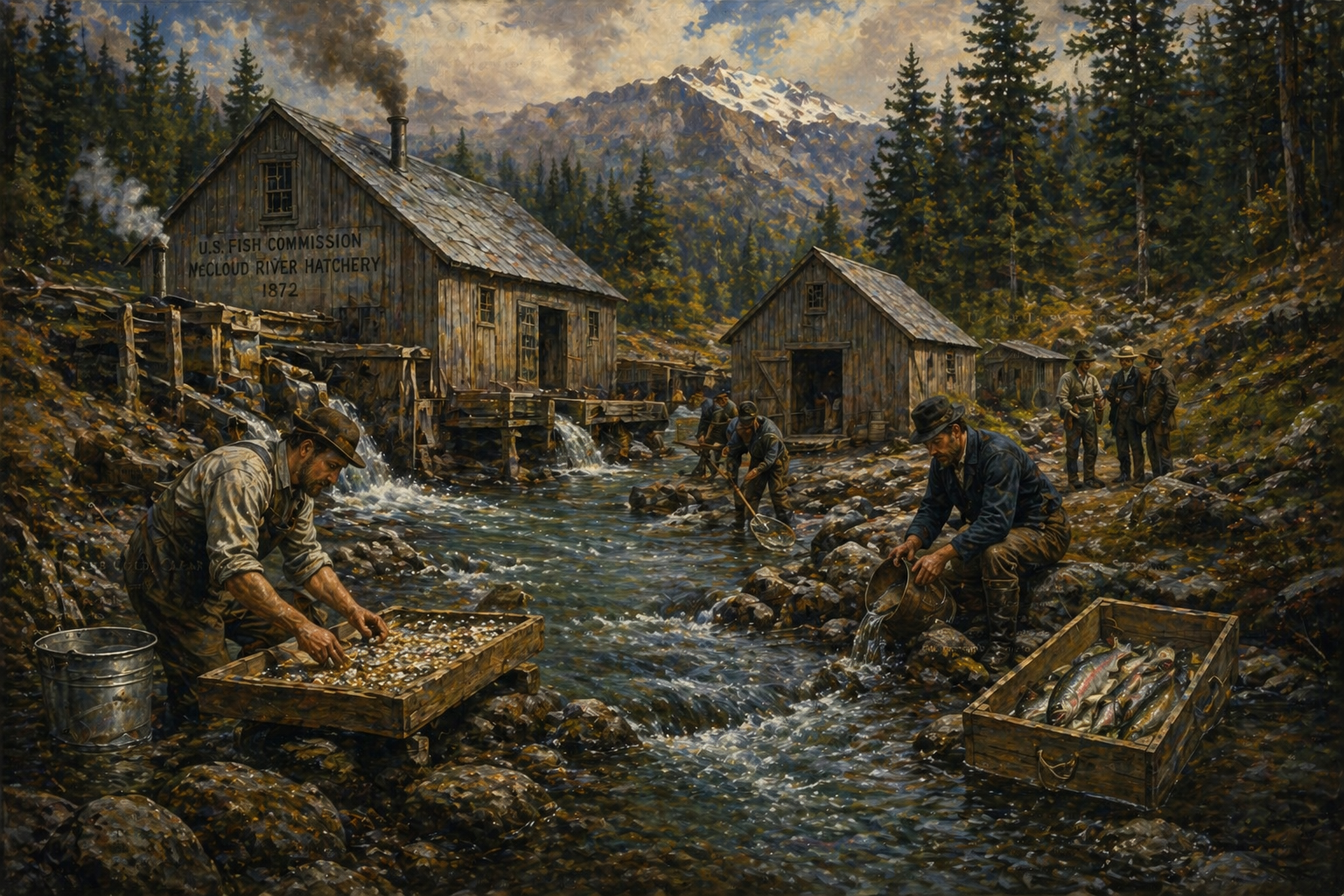
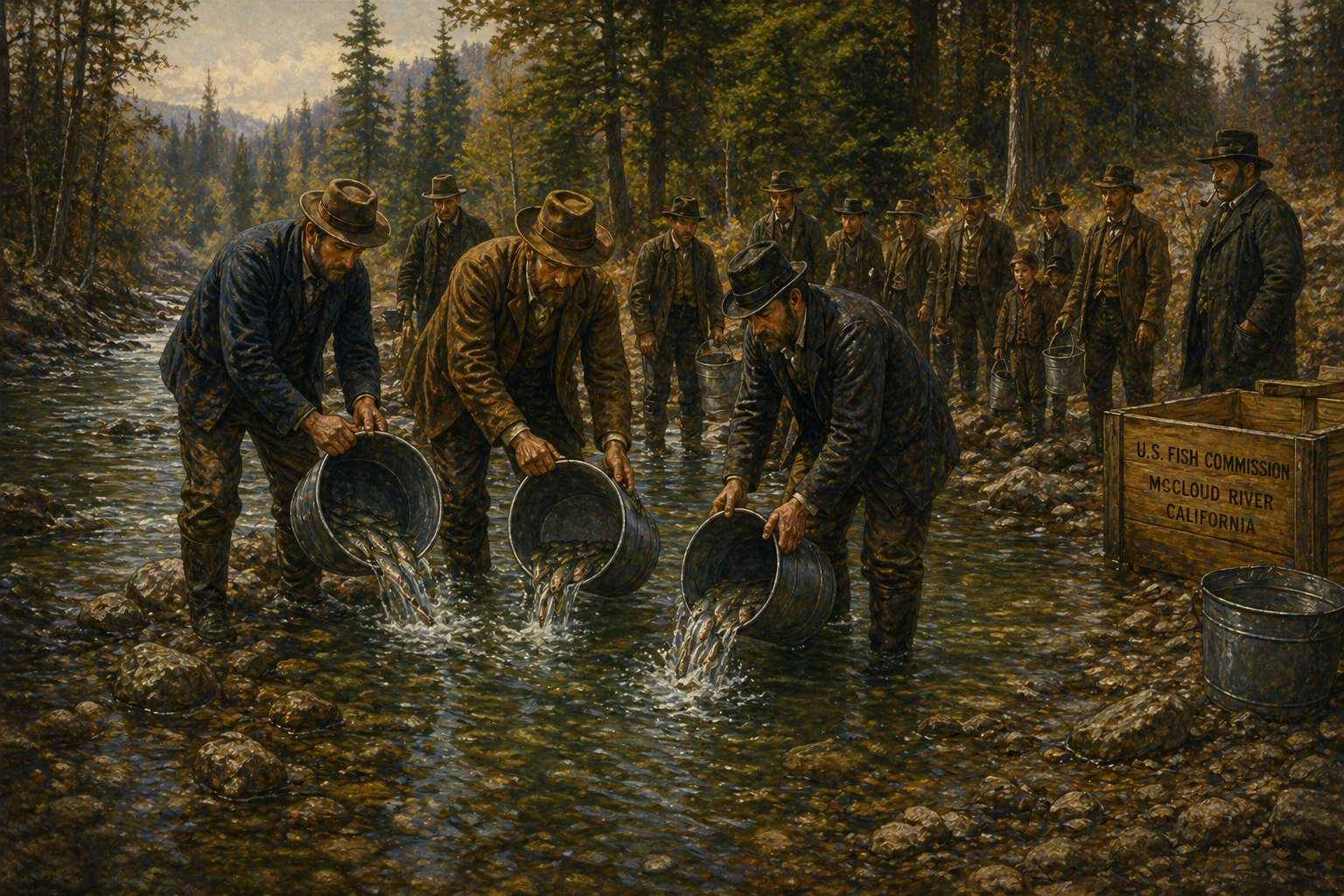
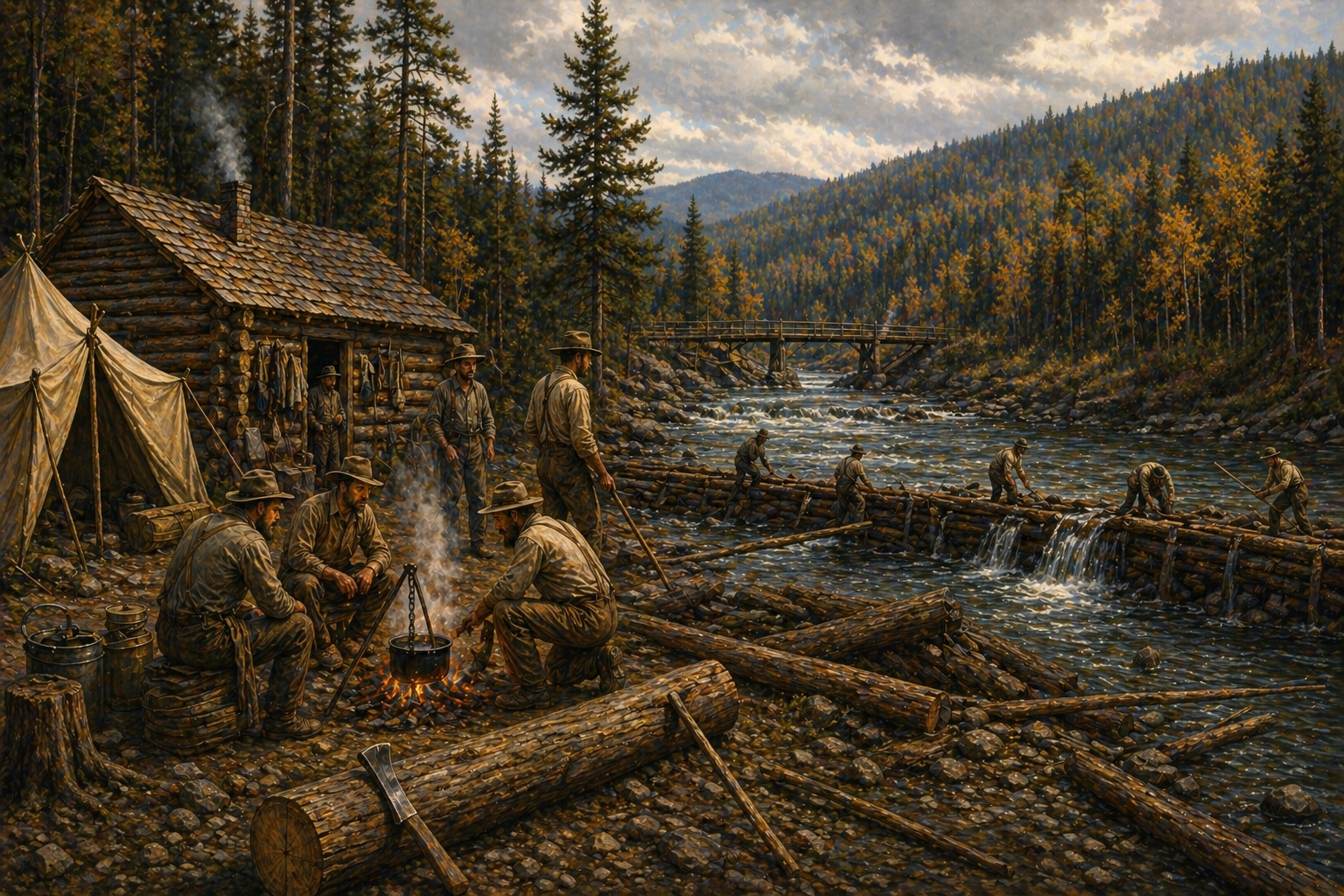
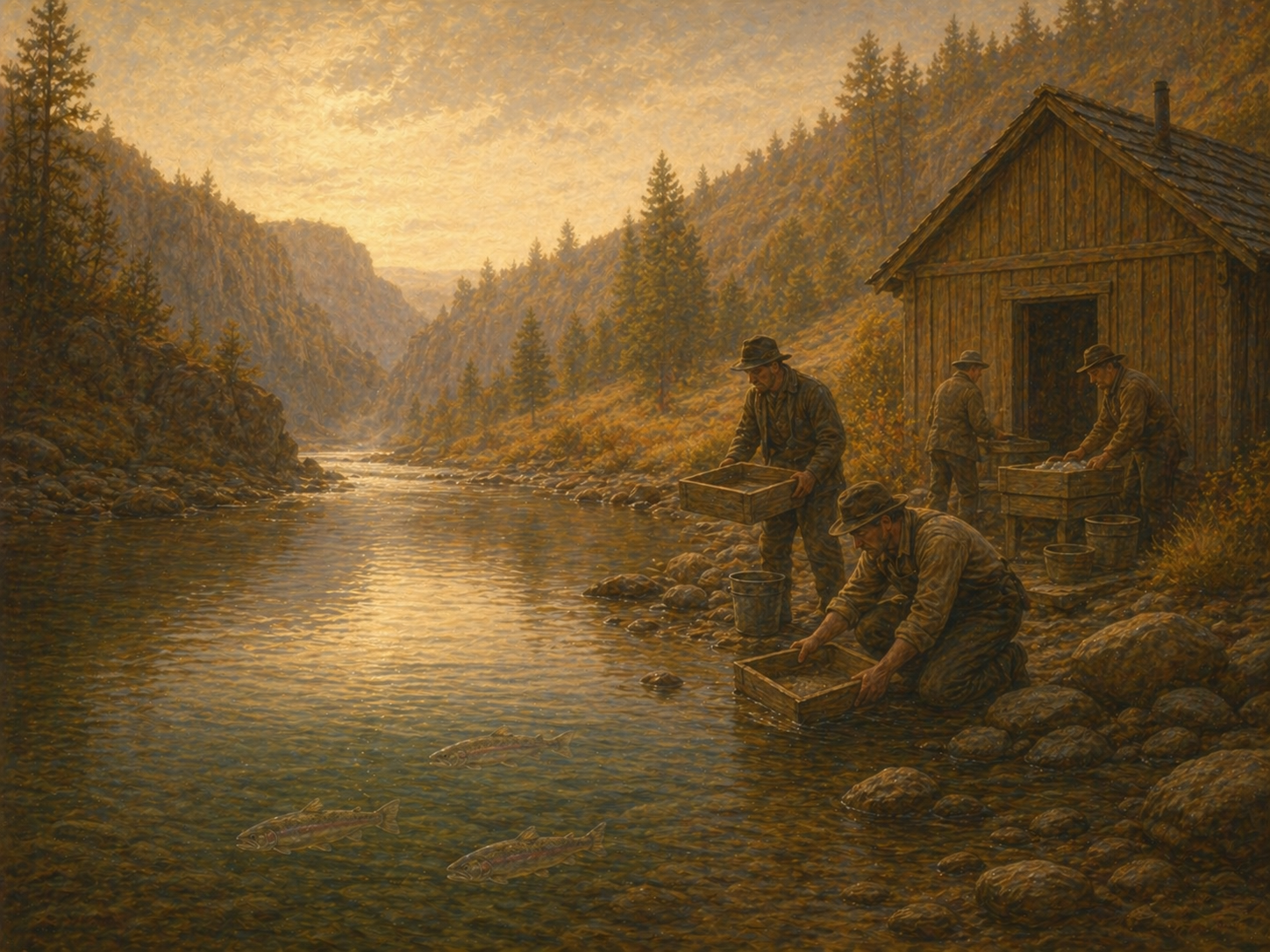
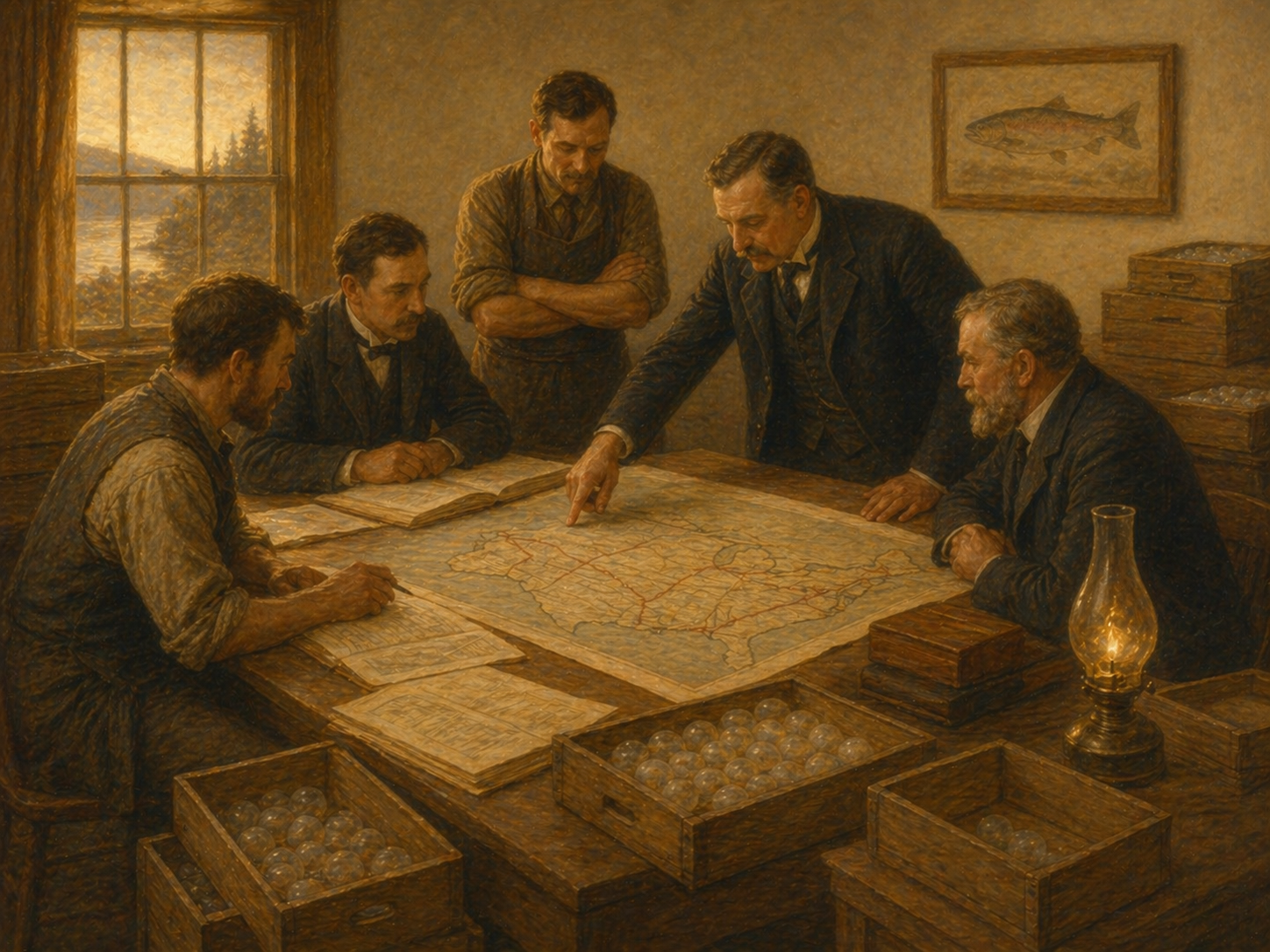
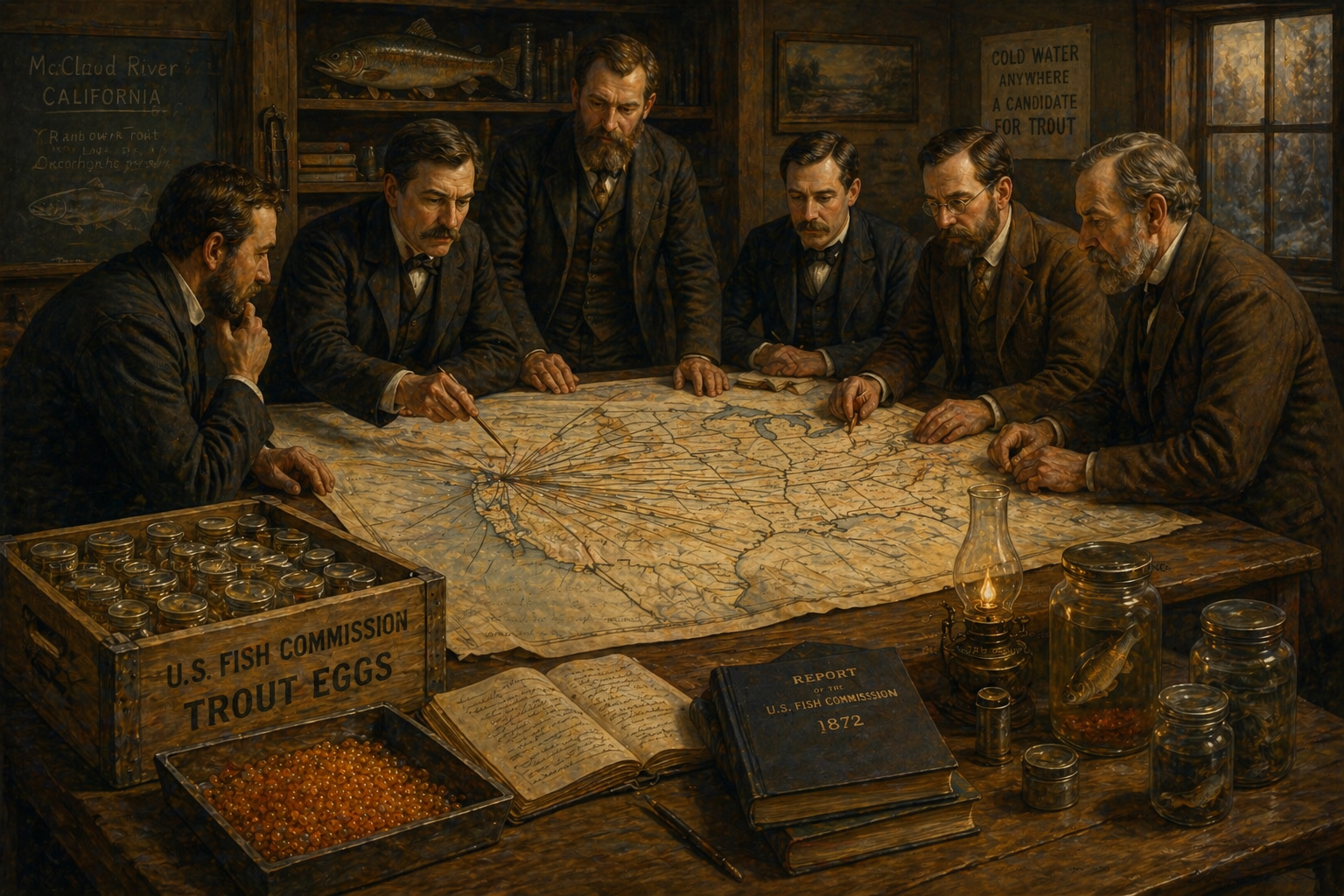
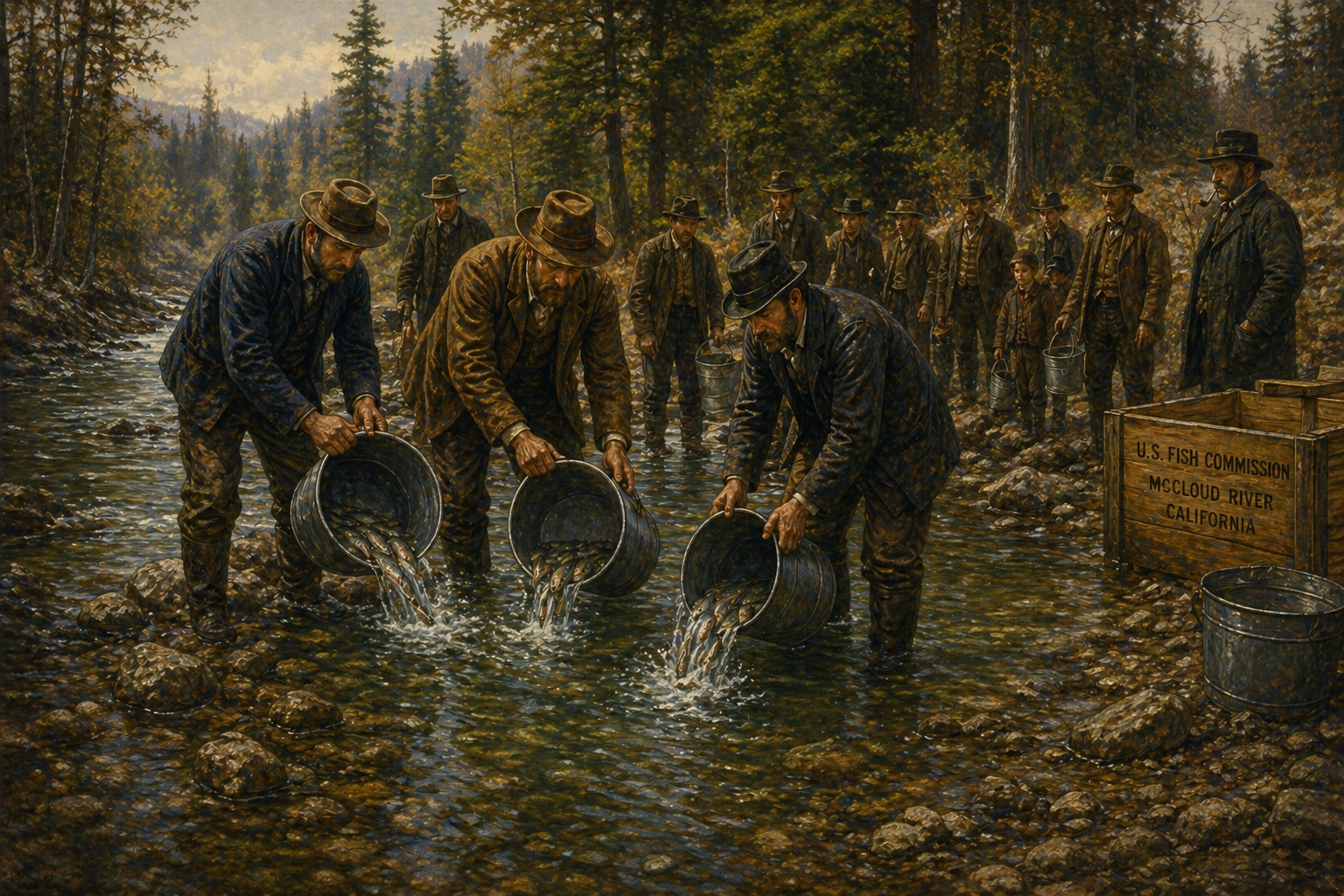
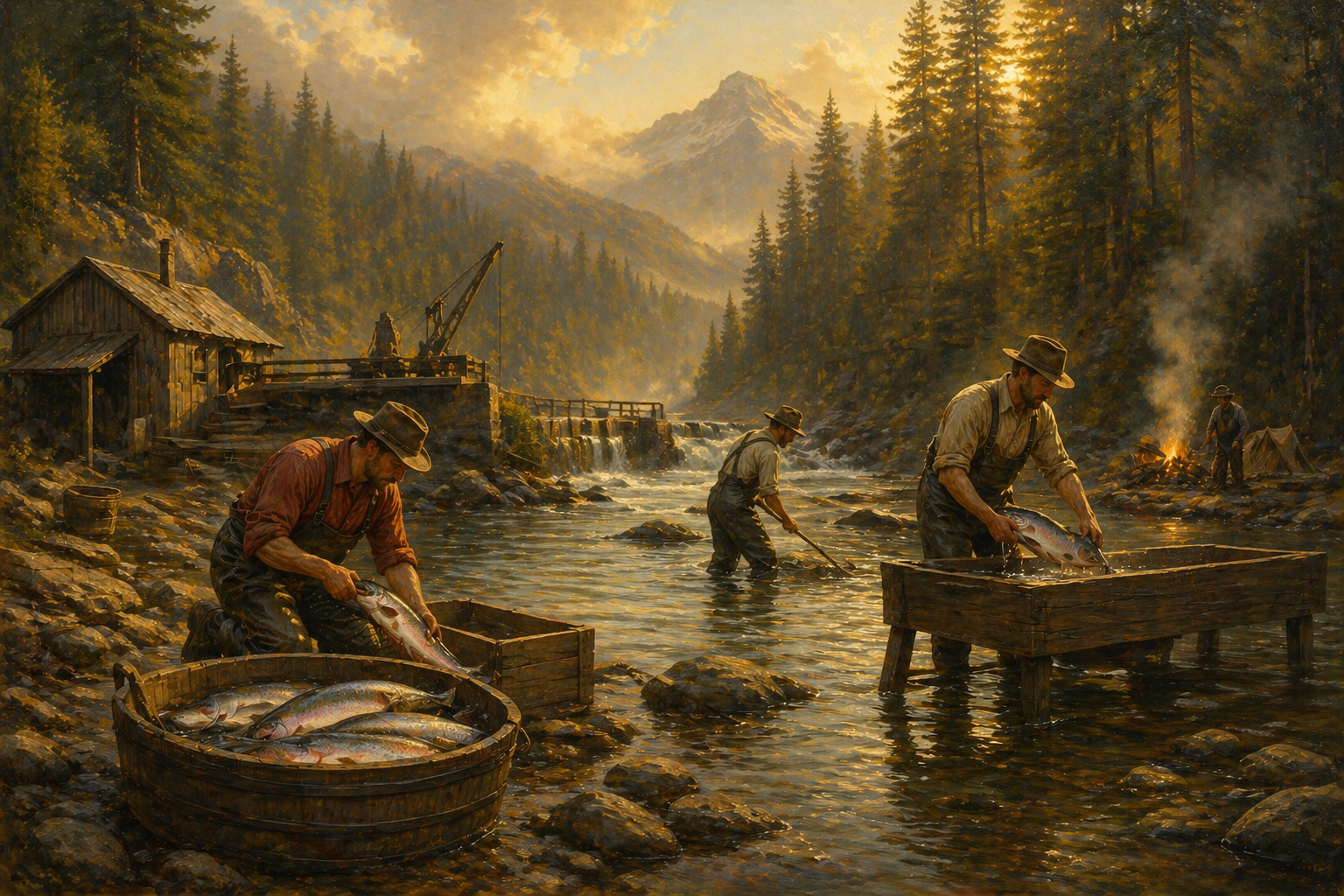
The seed of every Lake Erie steelhead traces, in one way or another, to a single Northern California river: the McCloud, a tributary of the Sacramento. In 1872, the U.S. Fish Commission established a hatchery near the McCloud to harvest eggs from spawning rainbows and ship them across the country. Over the next two decades the Commission, with state cooperators, distributed McCloud-strain rainbow eggs to nearly every state in the union. The fish was treated almost as a public utility — a sport-and-table trout to be planted wherever water seemed cold enough to hold one.
 04
04
The first plants in the Great Lakes basin
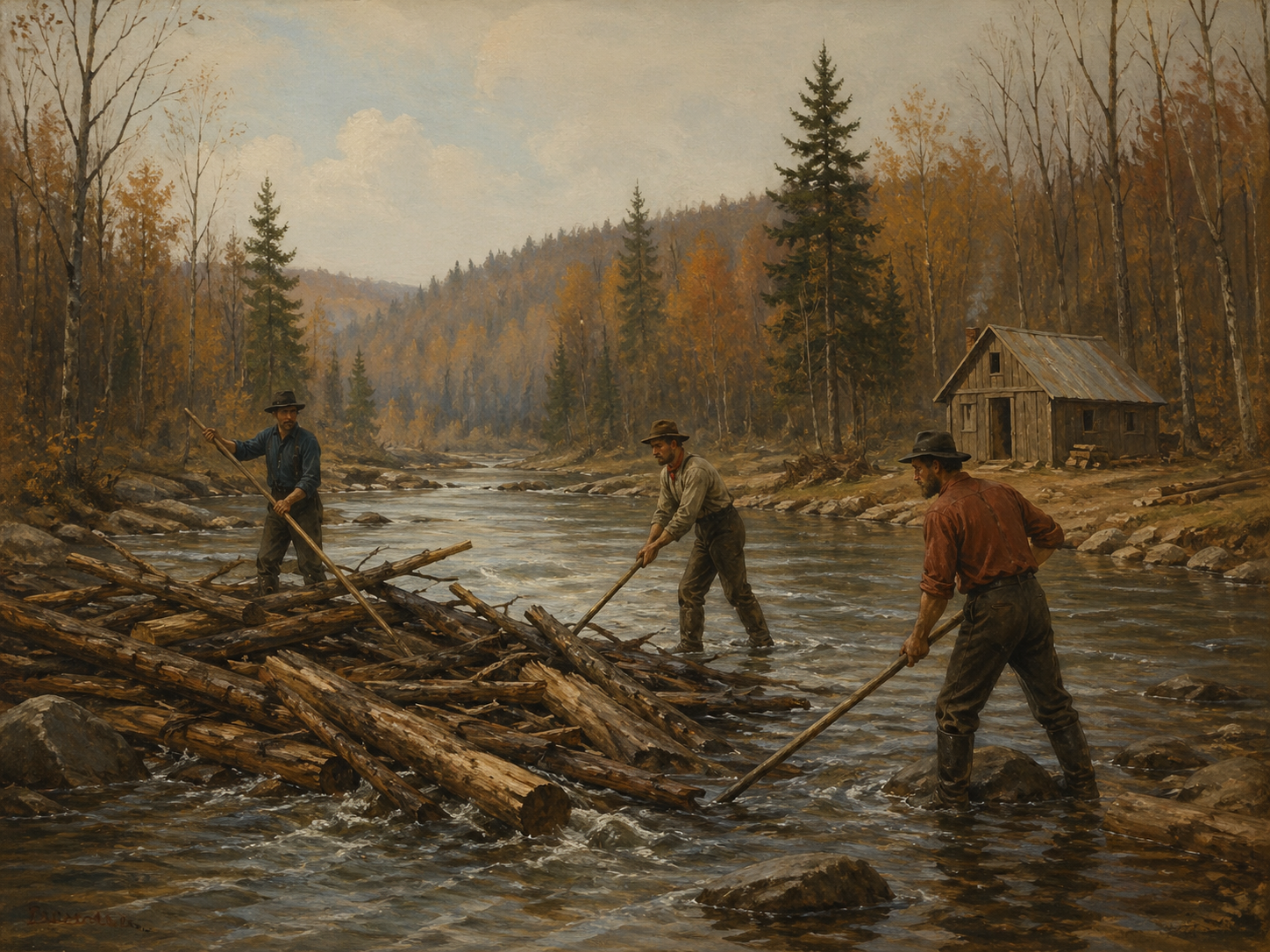
Rainbow trout reached the Great Lakes basin in the early 1880s. The earliest documented plants in Great Lakes tributaries are generally placed in the mid-1880s on Michigan's Au Sable and adjacent rivers; from there, fish escaped, dispersed, and naturalized. The Lake Superior tributaries took to them most readily — cold, gravel-bottomed streams that flowed into a deep, cold lake. Within a few decades, self-sustaining steelhead populations existed in Superior's North Shore rivers and along Michigan's Lake Michigan drainages.
 09
09
 16
16
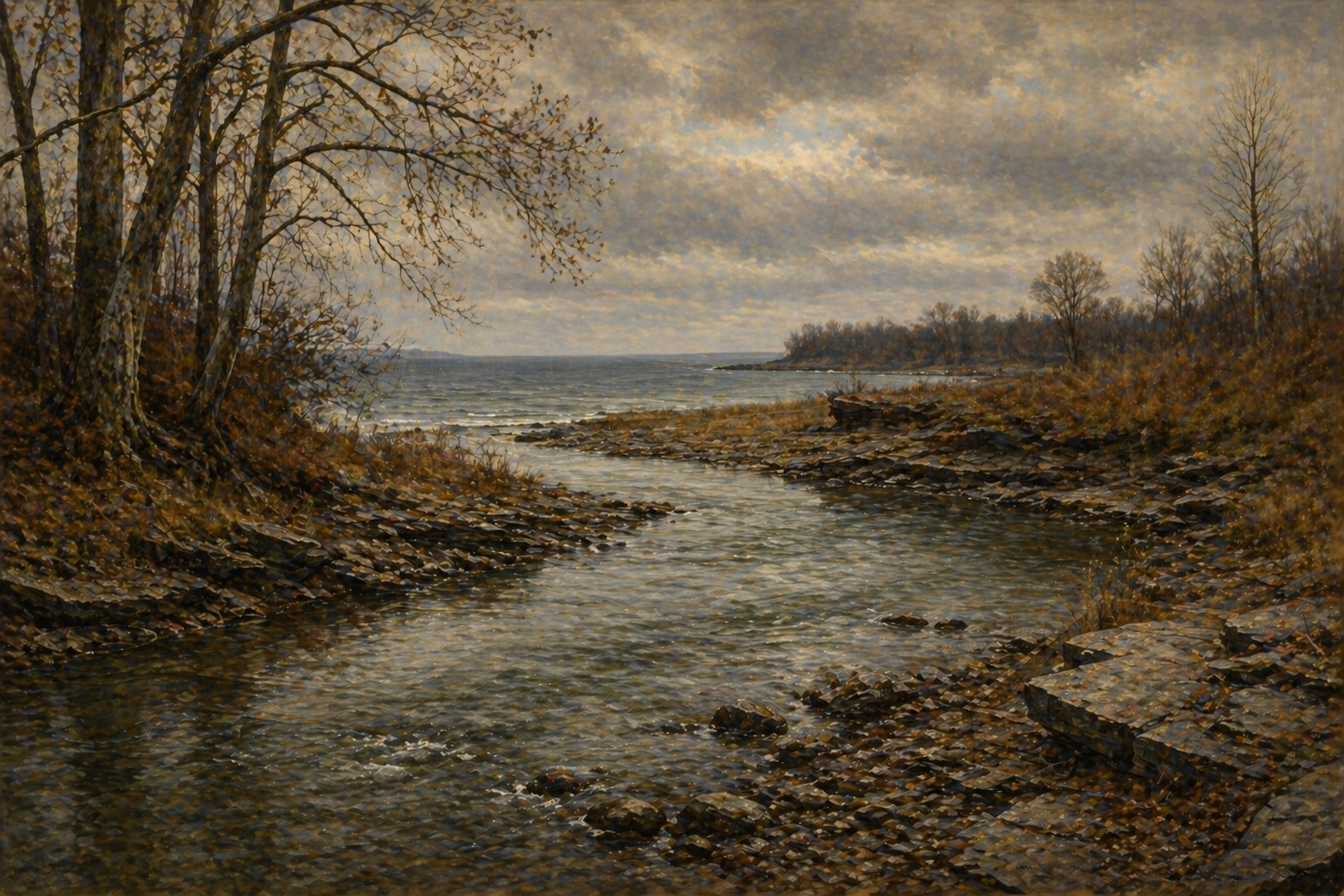
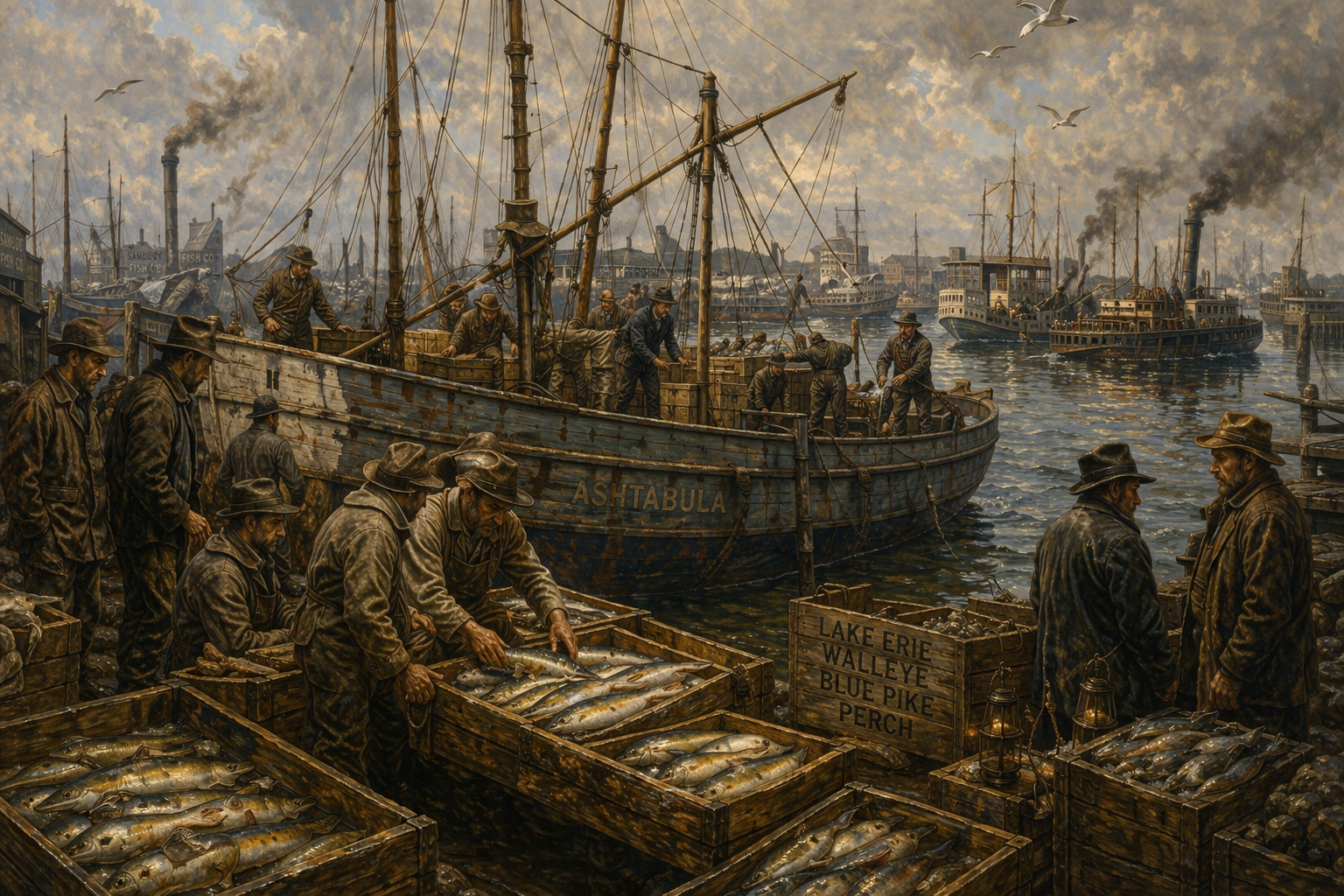
Lake Erie was a different proposition. The shallowest of the Great Lakes, with the warmest summer surface waters and a bottom that turned anoxic on bad years, Erie was not a steelhead lake. Its big fishery — the one the towns along its south shore lived on through the late 1800s and early 1900s — was a commercial walleye, blue pike, and yellow perch fishery, prosecuted with gill nets out of harbors at Sandusky, Vermilion, Lorain, Cleveland, Ashtabula, Conneaut, Erie, and Dunkirk. There were trout in some of the tributaries — brook trout in the cold headwater feeders of the Chagrin and Grand, and a sporadic, mostly resident rainbow population descended from early stockings — but there was no steelhead Alley. The fishery as we know it had not been invented yet.
 10
10
What broke the lake open
Three things, in sequence, made the modern fishery possible.
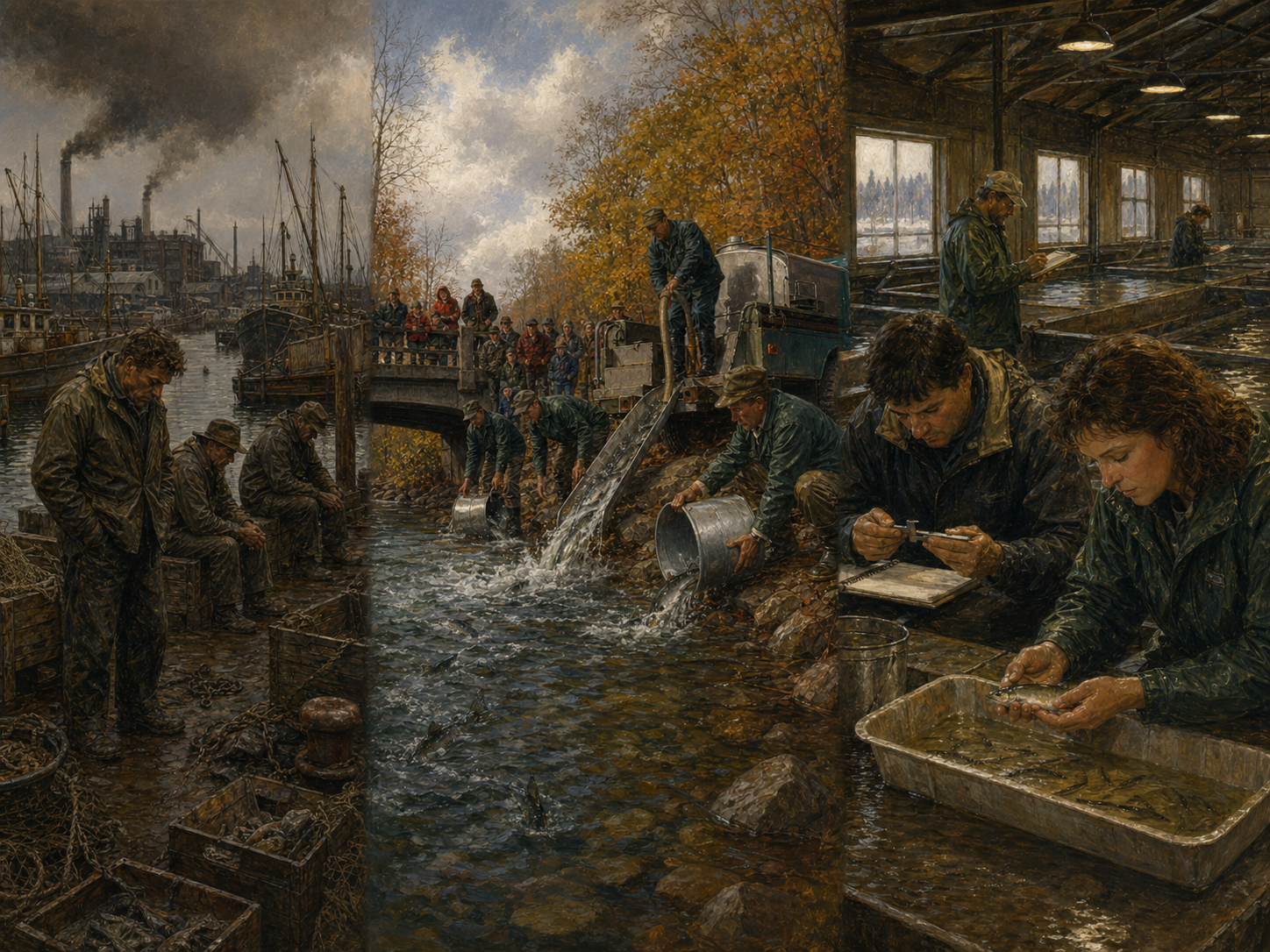
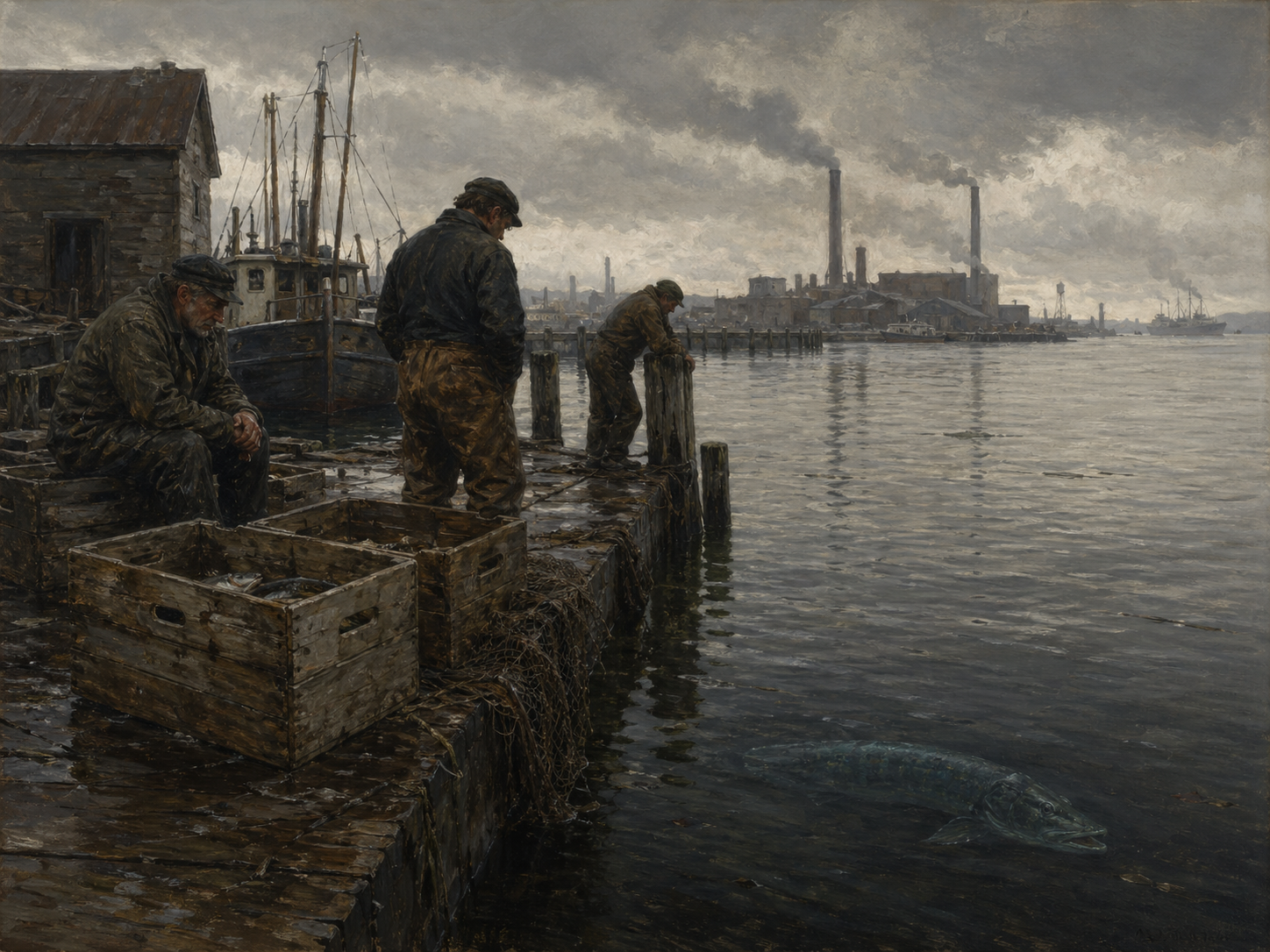
The first was the catastrophic mid-twentieth-century collapse of Lake Erie's commercial fishery. Eutrophication, industrial pollution, and the sea lamprey invasion through the Welland Canal hammered the lake's native predators. The blue pike — once the iconic Erie commercial species — was extinct by the 1980s. The lake's fish community had a hole in it.
 18
18
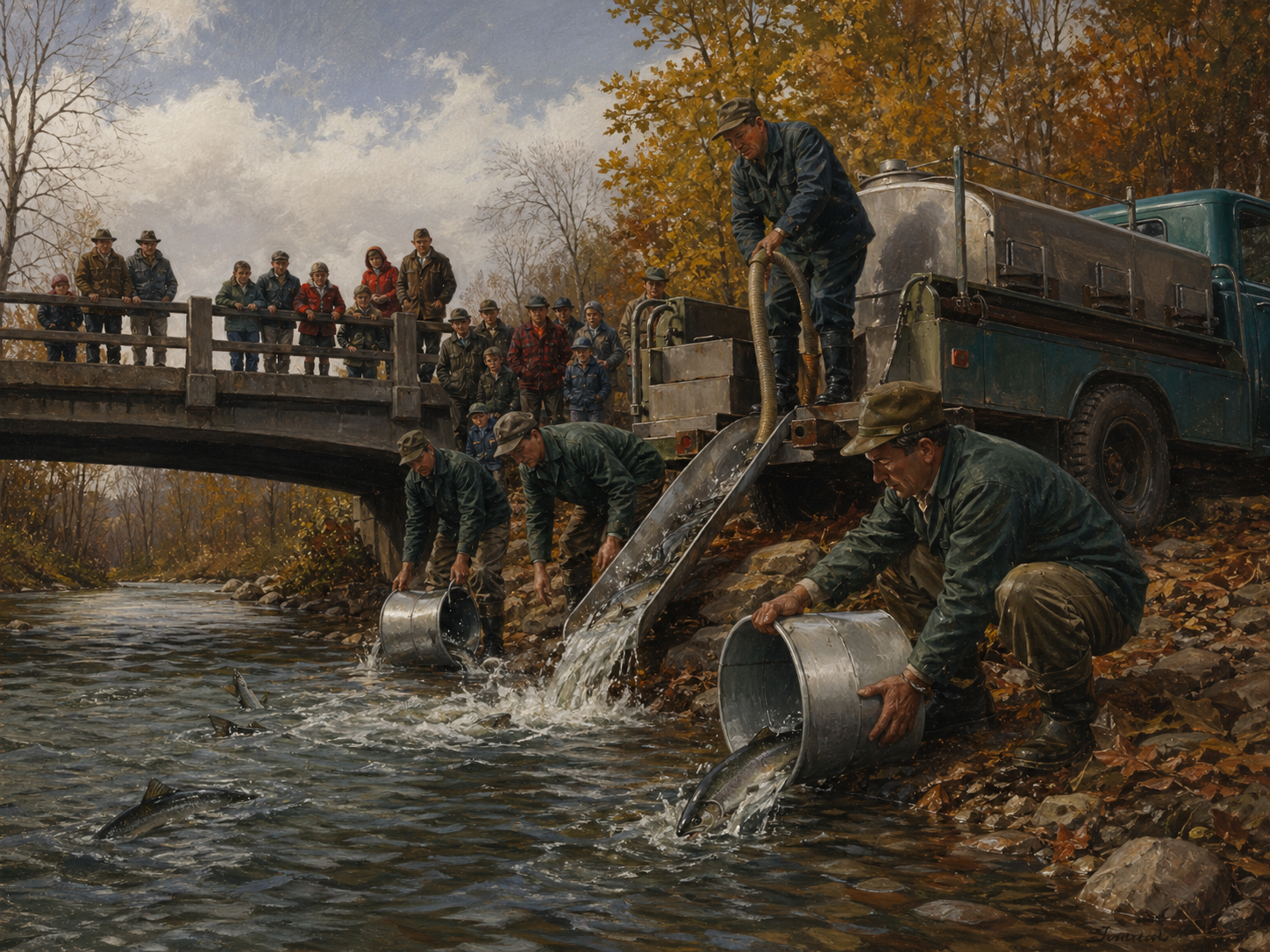
The second was the salmonid stocking revolution that swept the Great Lakes in the late 1960s. Michigan, beginning with its 1966 coho-salmon plants in Bear Creek, demonstrated that big Pacific salmonids could be put into the lakes and would thrive on the alewife forage base that the lamprey-weakened lake trout had failed to control. Within a decade, every Great Lakes state and Ontario was running a salmonid stocking program. The Pacific coast trout was no longer a curiosity — it was a management tool.
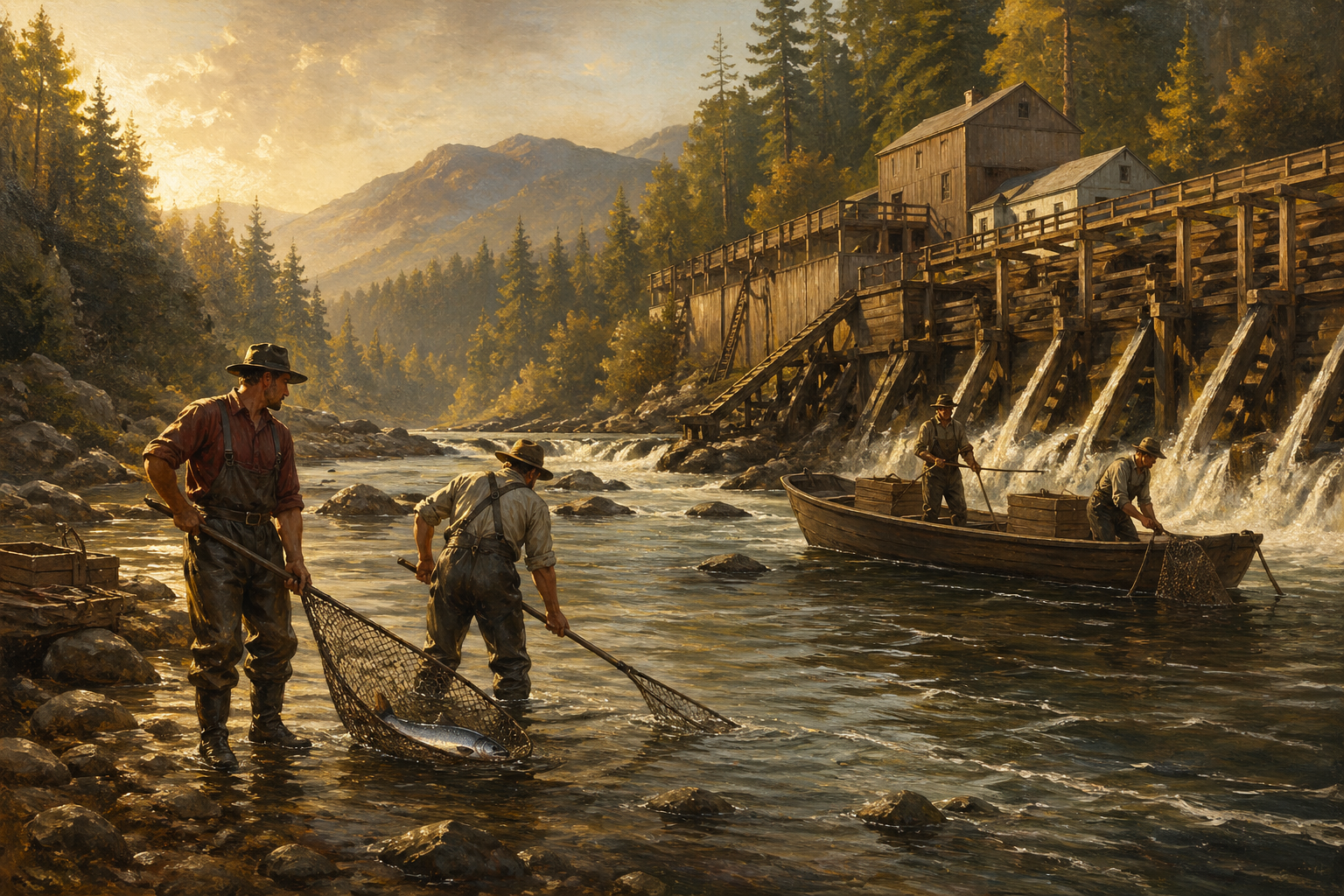
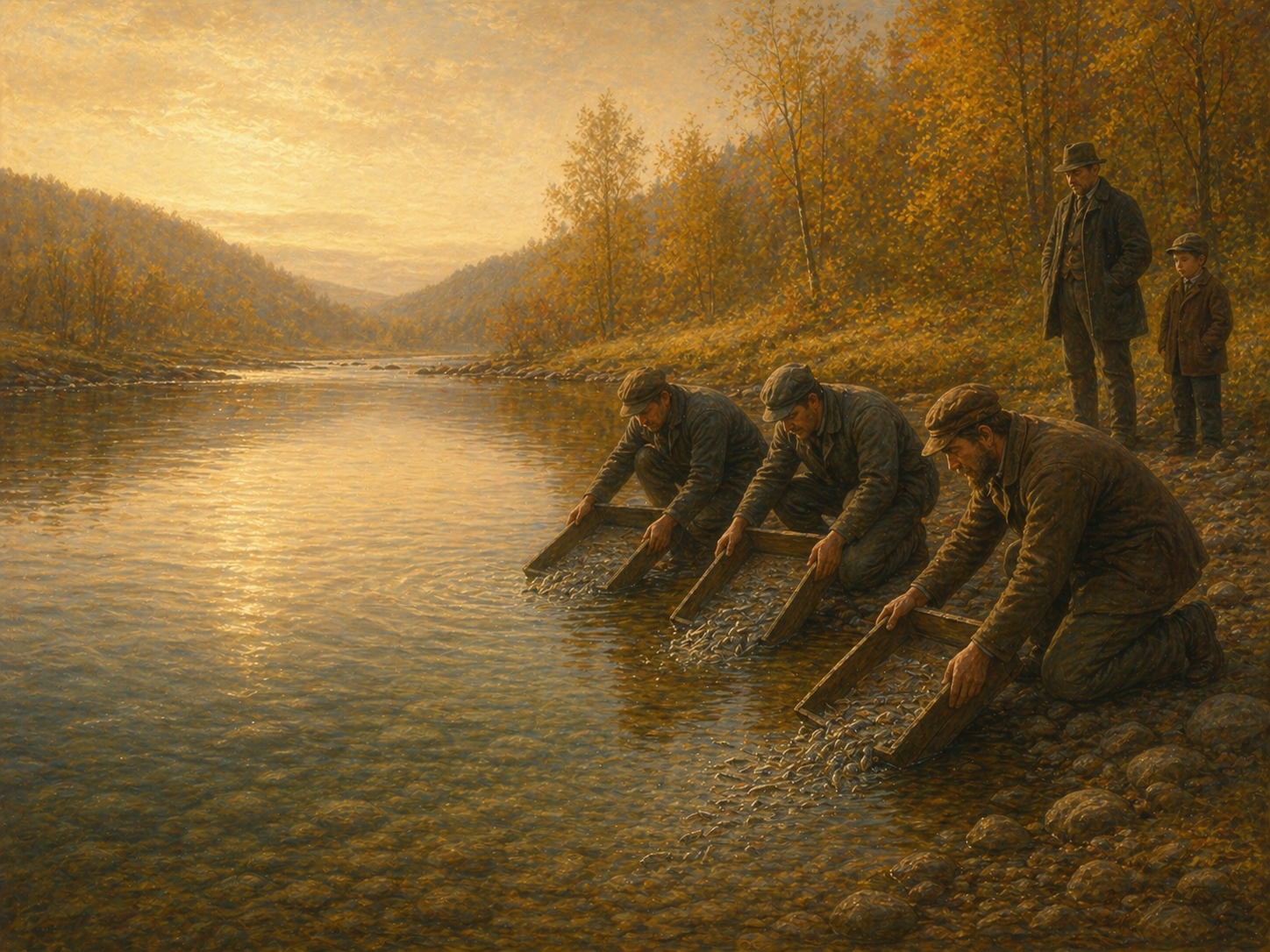
The third was the patient, often underfunded work of state hatchery biologists who proved that even Lake Erie's warm, shallow basin could support a put-grow-take steelhead fishery if the smolts were stocked at the right size and the strain was matched to the lake's thermal regime. Ohio's Division of Wildlife, Pennsylvania's Fish & Boat Commission, and the New York State Department of Environmental Conservation each found their way to a workable program through the 1980s and 1990s, settling — over time, and with regional variation — on a Manistee River strain originally collected from Michigan's Little Manistee. The Manistee strain ran in the fall, held in the rivers through winter, and produced the long, cold-month fishery that distinguishes Steelhead Alley from the spring-dominant runs of the Pacific Northwest.
 25
25
The fishery as we know it had not been invented yet. It was a forty-year project, prosecuted by people most anglers will never know the names of, and it produced — almost as a side effect — one of the most accessible big-water salmonid fisheries on the continent.
What we owe
It is easy, standing in a Conneaut riffle in late October with a fresh chrome buck on, to forget that none of this is natural in the strict sense. The fish is a stocked one. The run is a managed one. The towns and shops and parking access points that scaffold our weekends are the accumulated work of agencies, conservation groups, dam-removal advocates, riparian-easement negotiators, and a handful of stubborn private hatchery operators who kept the program funded through lean budget years.
 30
30
This archive is, in part, an attempt to put their names where the fish are. The chapters that follow take up the rivers, the towns, the personalities, and the species adjacent to the steelhead — smallmouth, walleye, the resident browns, the muskie nobody talks about — that share these waters. The point is not to romanticize. The point is to remember that the run we fish was made.
 28
28
From the workshop
Field notebook · twenty-seven studies for one chapter.