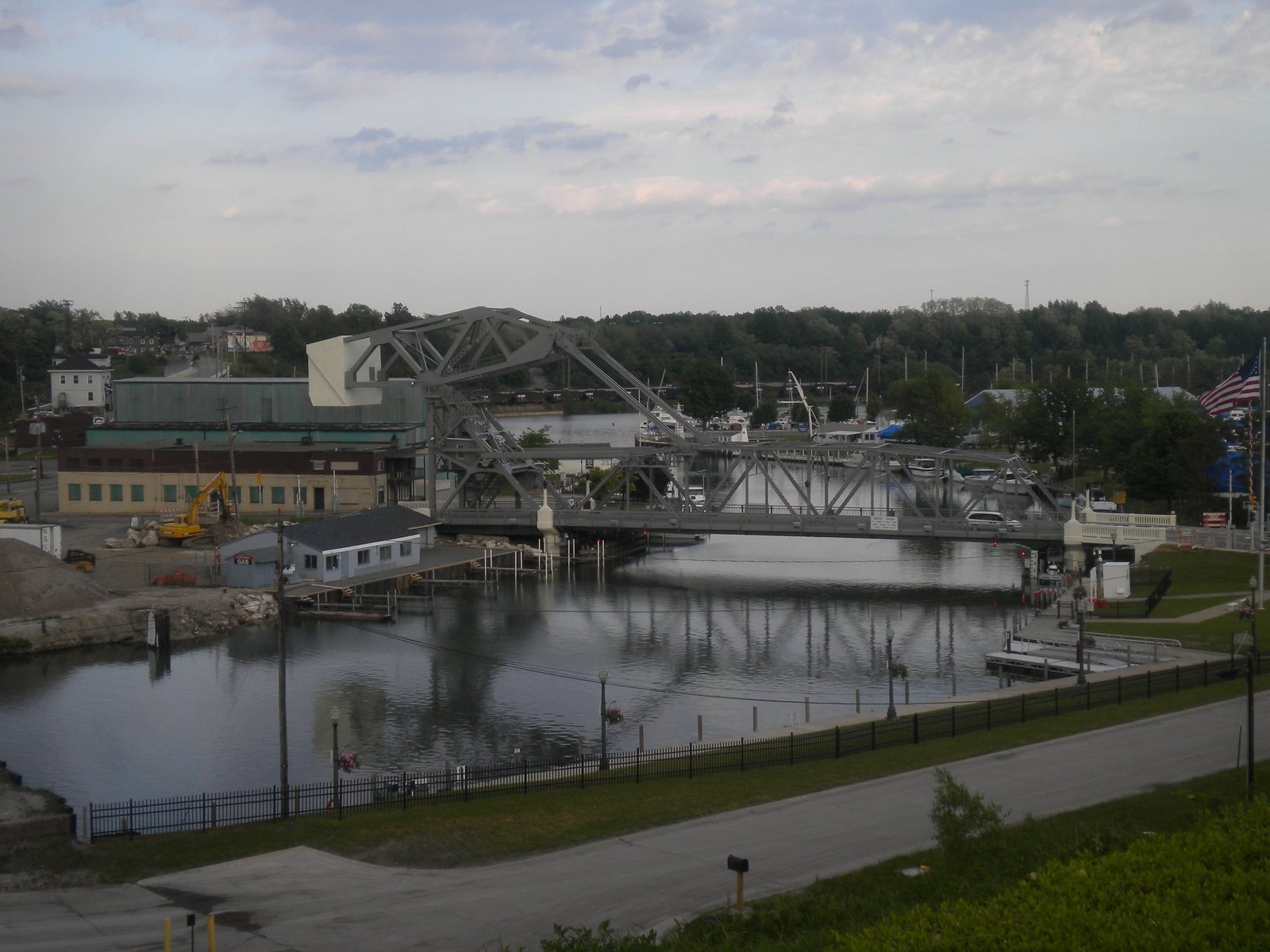
Ashtabula is the working harbor town of the Ohio Alley. Not a destination steelhead trib in itself, but the natural midpoint base for multi-river trips and the place where the south shore's industrial-port character persists alongside the angling economy.
Ashtabula is the working harbor town of the Ohio Alley. Population roughly seventeen thousand, with a metropolitan area extending across Ashtabula County, the city sits at the mouth of the Ashtabula River and serves as the active commercial port for what remains of Lake Erie's industrial-shipping economy. Coal, iron ore, and aggregates still move through the harbor. The Ashtabula Lift Bridge — a 1925 vertical-lift span over the river that anglers pass under on their way to the lake — is one of the iconic structures of the south shore.
Ashtabula's relationship to the steelhead fishery is quieter than Conneaut's a few miles to the east or the larger Cleveland-area towns to the west. The Ashtabula River itself is a fishable trib but a less productive one than the bigger Conneaut, Grand, or Chagrin systems — partly because of the river's smaller watershed and partly because Ashtabula relies on a hydrological proxy gauge for its flow data, which limits the precision of real-time decision-making for anglers. The town is not a destination steelhead spot in the way the Pennsylvania creeks or the Catt are.
Why Ashtabula matters anyway
What Ashtabula offers, instead of a flagship trib fishery, is geographic position and industrial-historical character. The city is roughly the midpoint of the Ohio Alley — equidistant from the Cleveland-area tribs to the west and the Conneaut-PA cluster to the east — which makes it the natural overnight base for anglers running multi-river trips on the Ohio shore. The motels along Route 20 and the lodging in the harbor district fill in October and November with anglers fishing the Ashtabula one morning, the Conneaut the next, the Grand or the Rocky on the way home.
The harbor district itself is unusual. Most Alley towns have lake-shore parks or beach areas that face away from working infrastructure; Ashtabula's harbor district places the visiting angler directly inside the still-functioning industrial port — the Bessemer dock, the bridge, the freight rail, the small-business diners that have served harbor workers for a century. It is the kind of place where, in November at five a.m., the angler getting coffee at the diner is sharing the counter with a freighter crew. That is a different texture than the more gentrified angling-town atmospheres further east in Pennsylvania or further west in the Cleveland suburbs.
The Ashtabula Bridge Trail
The Ashtabula Bridge Trail and the harbor walking corridor have, over the past two decades, developed as a soft tourism asset that complements the fishery. The historical society's harbor-district interpretive markers, the murals along the lift-bridge approaches, and the small museums (the Maritime Museum of the Great Lakes at the lighthouse) anchor a slow-tourism circuit that runs in parallel with the angling season.
Ashtabula was also a significant Underground Railroad station in the antebellum period — Conneaut and Ashtabula Counties were among the most active Underground Railroad corridors in northeastern Ohio, with substantial documented activity in the 1840s and 1850s. This history is preserved in the Underground Railroad sites scattered through the county and is worth registering as part of any honest account of these towns.
Ashtabula is the working harbor town of the Ohio Alley. The motels fill, the diners open early, the lift bridge goes up for a freighter, and the angler running a Conneaut-Grand-Chagrin loop sleeps in the middle of an industrial port that does not pretend to be anything else.
Ashtabula's place in the archive
Including Ashtabula here is deliberate. An archive of the Alley fishery that focuses only on the destination towns — Pulaski, Erie, the Pennsylvania creek towns — misses the working-harbor character that runs through the south shore's history. Ashtabula represents the older, industrial face of the lake that still persists alongside the angling economy. The two coexist in close proximity, and the angler who has fished the Ashtabula Alley for a decade and never noticed the lift bridge or the harbor district is, in some real sense, missing half of what makes the south shore the south shore.
For visiting Ashtabula as a destination — the bridge trail, the harbor district, the Underground Railroad sites, the local angling — the destination guide at Ashtabula, Ohio covers the practical side.