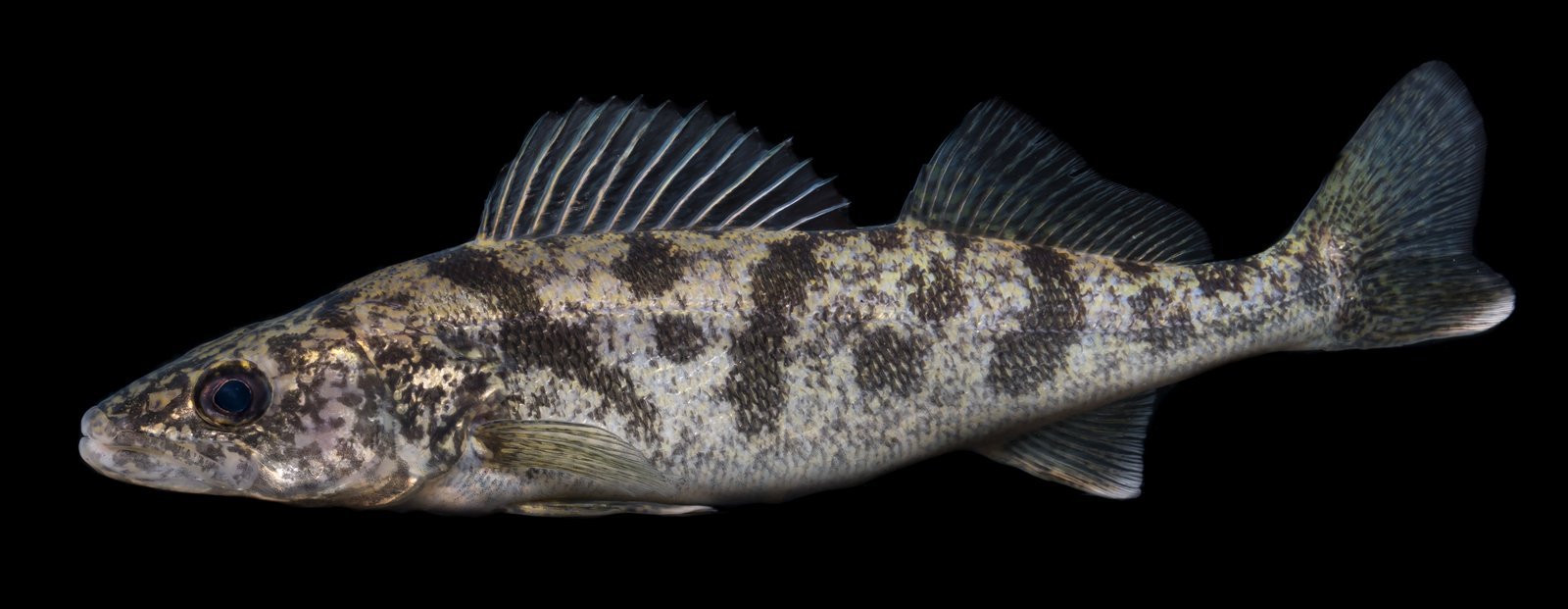
Before there was a steelhead fishery, there was a walleye fishery — the largest freshwater walleye industry in North America. The lakeside towns now full of charter boats and tackle shops were, two generations ago, gillnet ports. The walleye collapse and recovery is the older story this lake has to tell.
Before there was a steelhead fishery on Lake Erie, there was a walleye fishery. Before there was a walleye sport fishery, there was a walleye commercial fishery — the largest freshwater walleye industry in North America, supplying restaurants and fish markets from Chicago to New York with what was then almost universally called by its market name, "yellow pike." For roughly a century, from the late 1800s into the 1960s, walleye was the economic engine of Lake Erie's south-shore towns. The steelhead anglers who now park along the tributaries are using lots that, two generations ago, were owned by commercial fishing families.
The boom
Lake Erie's walleye productivity is biological luck. The lake is the shallowest, warmest, and most productive of the Great Lakes — a vast biological soup with the right thermal mix and forage base for a walleye fishery at scales unmatched anywhere else. Through the late nineteenth and early twentieth centuries, gillnet fleets out of Sandusky, Vermilion, Lorain, Cleveland, Ashtabula, Conneaut, Erie, and Dunkirk pulled walleye in tens of millions of pounds per year. The fishery was so dense that the smaller "blue pike" — a separate variety that we'll cover in its own chapter — was treated as a second-tier byproduct rather than a co-equal species.
The collapse
Several pressures converged in the mid-twentieth century. Industrial pollution and agricultural runoff drove the lake's eutrophication, with summer dead zones expanding through the central basin. The sea lamprey, having entered the upper Great Lakes through the Welland Canal, was less of a direct factor on Erie than on the deeper lakes, but it disrupted the broader Great Lakes predator-prey balance. Overharvest by an unrelenting commercial fleet did the rest. By the 1970s, Lake Erie's walleye population had crashed to the point where Ohio, Pennsylvania, New York, and Ontario coordinated a moratorium on commercial walleye harvest in U.S. waters — a decision that was, at the time, politically agonizing for the lakeside towns whose entire economies depended on the fishery.
The moratorium worked. Walleye populations recovered through the 1980s and 1990s, and Lake Erie became, by the 2000s, the most productive sport-walleye fishery in North America. The economic transition — from commercial-take communities to recreational-charter communities — reshaped the south-shore towns in ways that still mark them. The marinas full of charter boats running Western Basin walleye trips did not exist before 1980; the gillnet fleets they replaced are mostly only memorialized in town historical-society archives.
The tributary fishery
What concerns this archive most is the spring tributary walleye fishery — the runs that pull walleye from the open lake into the lower stretches of the south-shore creeks and rivers each March and April. The Maumee, Sandusky, Vermilion, Rocky, Cuyahoga (now), Grand, and other Ohio tribs all see varying levels of walleye spawning entry. The Sandusky and Maumee runs are large enough to support a destination fishery in their own right; the smaller eastern tribs see lighter but consistent spring spawning use.
This matters to a steelhead-focused archive because the walleye and steelhead share these waters. A steelhead angler chasing late-winter chrome and a walleye angler working a March egg-pattern at a trib mouth are working the same gravel from different angles. Many of the access points, parking lots, and informal community knowledge networks serve both fisheries. The Ohio Division of Wildlife manages the resource as a single multi-species portfolio; anglers who treat it as such get more out of the year.
The steelhead anglers who now park along the tributaries are using lots that, two generations ago, were owned by commercial fishing families. Walleye is older to this lake than the run we drove three hours to fish.
What the walleye chapter teaches
The walleye story is the proof-of-concept that the south-shore fish community is recoverable when management catches up to it in time. The mid-century collapse looked, in 1970, irreversible. It was not. The same regulatory and management apparatus that rebuilt the walleye fishery is what now sustains the steelhead program — the Ohio Lake Erie Fisheries Research Unit, the PFBC and NYDEC equivalents, the Lake Erie Committee of the Great Lakes Fishery Commission. The institutional infrastructure is older than the steelhead fishery and was built around the walleye crisis.
For walleye biology and how to target them, see the Walleye species profile. For seasonal targeting, the spring tributary push usually peaks in late March on the warmer western Ohio rivers and through April on the cooler eastern tribs, depending on water temperature and lake-shore wind direction.