The Tug Is the Drug
Why swinging flies is the pinnacle of steelhead fishing.
There is a moment in swinging flies that has no equivalent anywhere else in freshwater fishing. Your fly is out there — somewhere below the surface, sweeping across the current on a tight line. You can feel it pulsing through the rod. You can feel the river's heartbeat. And then, without warning, the rod loads to the cork and the line goes tight and something enormous is on the other end and it is angry.
That is the tug. That is why people rearrange their lives around this method. The eat on the swing is not the subtle dip of a float or the gentle tightening of a nymph indicator — it is a detonation. A steelhead that takes a swung fly has made a decision. It has left its hold, chased your fly broadside through the current, and committed. There is nothing passive about it. The fish chose violence, and your entire body felt the moment it did.
You can nymph a hundred fish for every one you swing up. But you will remember the swung fish when you've forgotten all the rest.
Swinging flies is the hardest way to catch a steelhead. Full stop. On a good day of nymphing the Great Lakes tributaries, a skilled angler might hook a dozen fish. On a good day of swinging, you might hook two. On most days of swinging, you hook none. And yet the anglers who commit to this method are the ones who talk about it with a faraway look, the ones who build shrines of exotic feathers and flash on their tying benches, the ones who wake up at 4 AM to drive three hours for the chance — just the chance — of one grab.
That is because swinging flies for steelhead is not a numbers game. It is an experience. The beauty of a spey cast unrolling across the river at dawn. The meditation of the step-and-cast rhythm — cast, mend, swing, step, cast, mend, swing, step — a walking prayer through moving water. The cathedral quality of a Great Lakes tributary in November, fog on the water, leaves in the current, and you alone in a run that might hold a chrome freight train or might hold nothing at all. The swing asks you to be present. It asks you to care about the process more than the outcome. And when the outcome arrives — that rod-bending, reel-screaming, heart-stopping moment — it feels earned in a way that nothing else does.
This guide covers everything you need to start swinging flies for Great Lakes steelhead. Whether you're a nymph fisher ready to try something different, a trout angler stepping up to chrome, or a complete beginner drawn to the romance of the method, the swing is waiting. For a broader overview of fly-fishing techniques for steelhead, see our companion article: Swing Into Action: Mastering the Art of Fly Fishing for Great Lakes Steelhead.
The Mechanics of the Swing
Cast across, mend, and let the river do the work.
The swing is deceptively simple in concept. You cast your fly across the current — anywhere from 45 to 90 degrees — mend your line to control the speed of the drift, and let the current sweep your fly in an arc across the river. The fly rides broadside through the water column, pulsing and breathing, moving at a pace that says "I am alive and I am not paying attention to you." When the fly completes its arc and hangs directly below you in the current, you strip in, take two or three steps downstream, and do it again.
This is the "down and across" presentation, and it has been catching steelhead and Atlantic salmon for centuries. The mechanics are simple. The mastery is not.
The Swing Sequence
-
🐟
Cast. Throw your fly 45-90 degrees across the current. On a spey rod, this is a sustained anchor cast (snap-T, double spey, etc.). On a single-hand rod, a roll cast, water-loaded cast, or overhead cast will do — if you need to brush up on your casting fundamentals, see our guide on how to master the basics of fly casting. The angle matters — more downstream angle = slower swing, more across = faster swing.
-
🐟
Mend. Immediately after the fly lands, throw an upstream mend to slow the swing and let the fly sink. In fast current, you may need two or three big mends. In slow water, one small mend or none at all. The mend is your throttle — it controls how fast and how deep the fly fishes.
-
🐟
Swing. Follow the fly with your rod tip, keeping a tight connection. The line forms a belly in the current that pulls the fly in a broadside arc. The fly is swimming, pulsing, alive. Keep your rod tip low and pointed toward the fly — any slack here and you will miss the take.
-
🐟
The hang down. When the fly completes its arc and hangs directly below you, don't pick it up immediately. Let it hang for 5-10 seconds, give it a few short strips. Fish follow. Fish eat on the hang. This is free fishing — don't waste it.
-
🐟
Step and repeat. Strip in your line, take 2-3 steps downstream, and cast again. Each cast covers new water. Each step moves you through the run systematically. This is the rhythm — cast, mend, swing, hang, step. Over and over. The river unspools in front of you one strip of water at a time.
The reason the swing triggers aggressive takes is physics and instinct. A swung fly moves across the current — it looks like something fleeing, something alive, something worth chasing. A nymphed fly drifts naturally with the current, and steelhead eat it almost reflexively, the way they would inhale a passing nymph. But a swung fly provokes a predatory response. The fish has to leave its hold and intercept the fly. It has to commit. And when a 10-pound steelhead commits to chasing something, the resulting take is something you feel in your bones.
The Single-Hand Swing
You don't need a spey rod to swing flies.
Let's kill a myth right now: you do not need a $900 spey rod and a $200 line system to swing flies for steelhead. If you own a 7 or 8 weight single-hand fly rod — the kind you might already use for bass or saltwater — you can swing flies today. Right now. On the same Great Lakes tributaries where the spey casters are wading.
A 9-foot, 7 or 8 weight single-hand rod will handle the vast majority of Great Lakes swing situations. These are not the massive rivers of British Columbia or the Pacific Northwest — most Ohio, Pennsylvania, and New York tributaries are 30-60 feet wide, often wadeable bank to bank. You do not need to cast 80 feet. You need to cast 30-50 feet, and a single-hand rod does that comfortably.
Single-Hand Swing Techniques
-
🐟
The water load. Instead of a backcast (which snags trees on brushy tributaries), let the current load your rod by sweeping the line downstream, then punch a forward cast across the current. This is essentially a single-hand version of a spey cast and it works brilliantly in tight quarters.
-
🐟
Roll casting. The bread and butter of single-hand swinging. Lift the rod, let the line belly behind you on the water, and roll it forward across the current. Not glamorous. Extremely effective. Practice roll casting with weighted flies and sink tips — it's a different feel than roll casting a dry line.
-
🐟
Shooting line. Strip off extra line and hold it in your line hand. After the roll or water-loaded cast, release the extra line on the forward stroke and shoot it through the guides. This adds 10-15 feet to your effective range and lets a 9-foot rod cover water that would otherwise require a 12-foot spey.
-
🐟
Line choice. For single-hand swinging, a standard weight-forward floating line with a 10-foot sink tip (Type 3 or Type 6) is the simplest system. Alternatively, a sinking-head line like the RIO InTouch Streamer Tip covers most situations. You do not need Skagit or Scandi systems on a single-hand rod.
The single-hand swing is the entry point for most Great Lakes steelheaders. It is where you learn to read swing water, to control your fly speed with mends, to feel the line tighten and know it is a rock versus a fish. Start here. You can fall down the spey rabbit hole later — and you probably will — but a single-hand rod and a willingness to step through a run is all you need to experience the tug.
The Flies
Works of art that swim through dark water toward a chrome jaw.
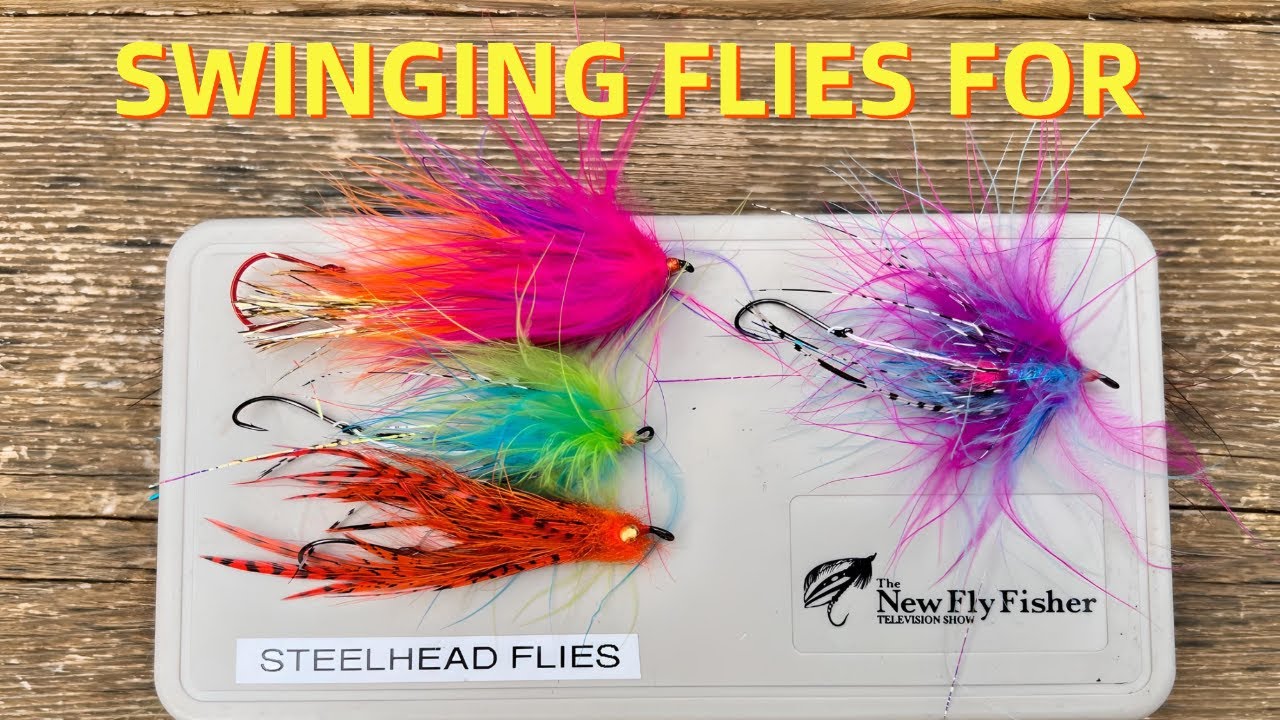
Steelhead swing flies are some of the most beautiful creations in all of fly fishing. They are tied not just to catch fish but to move — to pulse and breathe and swim in the current like living things. Marabou that undulates with every micro-current. Flash that catches light in stained water. Rabbit strips that flow and wave like an eel. Where trout flies are tied to imitate, steelhead swing flies are tied to provoke. They are suggestions of life, not imitations of it. And tying them is an addiction unto itself.
Essential Swing Flies
-
🐟
Intruders. The modern king of steelhead swing flies. Big, articulated, flashy — tied on shanks with trailing hooks, 3-4 inches long. They push water and attract attention from distance. Black/blue and olive/orange are the two essential color combos. Learn to tie the Bead Intruder — it is deadly on Great Lakes chrome.
-
🐟
Woolly buggers. The fly that catches everything also catches steelhead on the swing. Sizes 4-8, weighted with a bead head or lead wraps. Black, olive, and purple are the go-to colors. A woolly bugger swung on a sink tip through a run has caught more Great Lakes steelhead than most anglers want to admit. Do not overlook this fly.
-
🐟
String leeches. Rabbit strip flies on long-shank hooks. They swim with an undulating, eel-like action that steelhead find irresistible. Tied sparse on a size 2-4 hook with a rabbit zonker strip tail — they move more water than their profile suggests. Black, olive, and white are the staples.
-
🐟
Marabou speys. Soft-hackle flies with marabou and ostrich herl that breathe like nothing else in the water. These excel in slower, clearer conditions where an Intruder would be too much. Sizes 4-6. Purple, pink, and black are classic.
-
🐟
Temple Dogs & Hoh Bo Speys. Pacific Northwest patterns that have migrated east with devastating effectiveness. Temple Dogs are tied with Arctic fox and flash on tubes — they are slender and sparse and fish beautifully in clear water. Hoh Bo Speys are quick to tie, cheap on materials, and deadly.
-
🐟
Classic steelhead wets. The Green Butt Skunk. The Purple Peril. The Signal Light. The General Practitioner. These are the patterns that built steelhead fly fishing — tied on wet-fly hooks with married wings, tinsel bodies, and soft hackle. They catch fish. They also connect you to a tradition that stretches back a century. Sizes 4-8 for the Great Lakes.
Fly Selection by Water Condition
| Condition | Size | Color | Pattern |
|---|---|---|---|
| High & stained | Large (2-4") | Black, purple, dark olive | Intruders, string leeches, large buggers |
| Normal & steelhead green | Medium (1.5-2.5") | Black/blue, olive/orange, purple | Intruders, temple dogs, marabou speys |
| Low & clear | Small (0.75-1.5") | Sparse naturals, pink, white | Soft hackles, small speys, classic wets |
| Dropping & clearing | Medium (1.5-2") | Black/blue, chartreuse | Prime time. Intruders, buggers, Hoh Bo Speys |
The golden rule of swing fly selection: big and dark in dirty water, small and sparse in clear. When in doubt, tie on a black woolly bugger. It will not let you down.
Lines & Tips
The system that puts your fly in the zone — and keeps it there.
The line system is the engine of the swing. More than the rod, more than the fly, your line choice determines how deep your fly fishes, how fast it swings, and how much water you can effectively cover. Understanding swing lines is not optional — it is the difference between fishing productively and dragging a fly through water where no steelhead has ever held.
The basic system has three components: a running line (thin, coiled in your stripping basket), a shooting head (the heavy section you cast), and a tip (which controls sink rate). Think of it as a modular system — you keep the running line on the reel and swap heads and tips to match the water in front of you.
The Swing Line System
-
🐟
Floating line + sink tip. The simplest setup and the starting point for most anglers. Your main fly line floats, and you add a 10-15 foot sinking section (Type 3, 6, or 8) between the fly line and the leader. Type 3 (3 inches per second) for shallow runs, Type 6 for moderate depth, Type 8 for deep, fast water. This is all you need on a single-hand rod.
-
🐟
Skagit heads. Short, heavy shooting heads designed for two-handed rods. They load the rod quickly with minimal backcast space and turn over heavy flies and sink tips with ease. The workhorse of Pacific Northwest steelheading, and equally effective on the Great Lakes. Grain weight should match your rod's Skagit rating. For a deeper dive, see our Spey & Two-Hand Guide.
-
🐟
Scandi heads. Longer, lighter shooting heads designed for smaller flies and more delicate presentations. They excel with floating tips or light sink tips in shallower, clearer water. If Skagit is a sledgehammer, Scandi is a scalpel. Great for late-season clear water on tributaries like the Grand or Cattaraugus.
-
🐟
MOW tips. Modular, interchangeable sink tips with different density sections — for example, a 5-foot floating section attached to a 5-foot T-14 (fast-sinking) section. MOW stands for McCune, O'Donnell, Ward — the anglers who developed the system. MOW tips let you fine-tune your sink rate by combining sections: float/hover for shallow, intermediate/T-11 for moderate, T-14/T-17 for deep. The most versatile system available.
The key principle: match your tip weight to your fly weight and the water depth. A heavy tip with a light fly will sink too fast and drag on the bottom. A light tip with a heavy fly will ride too high. A heavy tip in shallow water will snag. A light tip in deep water will never reach the fish. Start with a Type 6 sink tip and a medium-weight Intruder and adjust from there — heavier tip or heavier fly to go deeper, lighter tip or smaller fly to fish higher in the column.
Reading Water for the Swing
Not all water swings. Learning to see the difference is half the game.
Swing water and nymph water are different. The pocket water, deep plunge pools, and broken riffles where nymph fishers thrive are often poor swing water. The swing needs room to work — a long enough run for the fly to complete its arc, even enough current to move the fly at a consistent speed, and enough depth to hold fish but not so much that your fly never reaches them.
Classic swing water looks like this: a long, even run with walking-speed current (about the pace of a brisk walk), 3-6 feet deep, with a relatively uniform bottom. No giant boulders breaking the swing. No rapids that would rip your fly to the surface. Just a clean sheet of moving water, ideally with a slight inside bend that concentrates fish on the near bank. When you find it, you know it. The water invites you to step in and start working downstream.
What to Look For
-
🐟
Long, even tailouts. The bottom third of a pool where the water shallows gradually and accelerates slightly before the next riffle. Steelhead stack up here. The swing is devastatingly effective through a tailout because the even depth and moderate current let your fly swing at a consistent speed and depth across the entire width.
-
🐟
Inside bends. Where the river curves, the inside bank has slower, shallower water — often 3-5 feet deep with moderate current. Steelhead rest here because the current is manageable and the depth provides cover. The swing works perfectly on inside bends because you can wade the shallow inside and swing your fly toward the deeper outside.
-
🐟
Gravel flats. Long sections of even gravel bottom at uniform depth. These look featureless to the untrained eye, but steelhead use them as highways between pools. A swung fly covering a gravel flat systematically will find traveling fish that nymph fishers walk right past.
-
🐟
Soft seams. Where faster current meets slower — not a violent whitewater-to-pool break, but a gradual transition. Steelhead hold on the soft side and feed into the faster current. Swing your fly from the fast water into the slow — the speed change makes the fly hesitate and change angle, which often triggers a take.
Water to skip (or nymph instead): Pocket water with boulders that break the swing into fragments. Deep, slow pools where the fly hangs lifeless. Fast, shallow riffles under 2 feet deep (though these can fish well with a surface fly — see Advanced Tactics). Extremely wide, shallow flats where fish have no reason to hold. Use our real-time river conditions to find rivers at fishable flows — you want moderate flows where the best swing runs are at wadeable depth.
The Rotation
Sacred protocol. Learn it before you enter the water.
The rotation is the social contract of swing fishing, and it is one of the things that makes this method special. On a good swing run — the kind of water that everyone on the river wants to fish — the rotation system ensures that every angler gets a fair shot. It is a simple, elegant system that has been practiced on steelhead and salmon rivers for generations, and violating it is the fastest way to mark yourself as someone who doesn't belong.
Here is how it works.
Rotation Protocol
-
🐟
Enter at the top. Always start at the top of the run. Never walk in halfway down, no matter how empty it looks. The angler ahead of you is working downstream systematically and has already covered the water above.
-
🐟
Cast, step, cast. Make your cast, fish it through the swing, then take 2-3 steps downstream and cast again. Keep a consistent pace. If there are others in the rotation, match their pace — don't rush through or linger.
-
🐟
Walk back at the bottom. When you reach the bottom of the run, reel up and walk well back from the water — not through the run, not along the bank at the water's edge — back to the top. If others are fishing, wait your turn to re-enter.
-
🐟
Spacing. Maintain at least 30-50 feet between you and the next angler, more if the run allows it. Never crowd. If you arrive and the rotation is full (3-4 anglers in a typical Great Lakes run), wait at the top or find another run.
-
🐟
Hooking up. If you hook a fish in the rotation, step out of the run to fight it — move downstream and toward the bank so other anglers can continue fishing through. Do not fight a fish in the middle of the swing line. Once you land or lose the fish, walk back to the top and rejoin the rotation.
The rotation is not universal — on many small Great Lakes tributaries, you will be alone in a run and can fish it however you please. But on popular swing water during prime season — the Cattaraugus in October, the Salmon River in November, the Grand in a fall push — rotations form naturally, and understanding the etiquette separates the respected anglers from the ones who get cold stares and colder shoulders. When in doubt, ask. Most swing fishers are generous teachers to anyone who shows respect for the water and the tradition.
Advanced Swing Tactics
For the angler who's swung through the basics and wants more.
Once you've spent a season swinging flies and you've felt the tug — once you understand the rhythm and can read the water and have committed the rotation to muscle memory — there is a world of advanced tactics that can turn a slow day into a memorable one. These are the techniques that the experienced swing anglers deploy when the standard presentation isn't producing.
Next-Level Swing Techniques
-
🐟
The dry-line swing (skating flies). This is the summit. A large, buoyant fly — a Muddler, a Bomber, a waking pattern — swung on a floating line across the surface, creating a V-wake. The fly skates and dances and pushes a tiny wave. When a steelhead rises from the depths to explode on a surface fly, it is the single most violent and breathtaking strike in all of freshwater fishing. Water temp must be above 45 degrees and ideally in the low 50s. Not productive in winter, but deadly in October and late March.
-
🐟
The wet-fly swing. Scale everything down. A soft-hackle wet fly — size 6-10, sparse, with a dubbed body and a single turn of hen hackle — swung on a floating line through shallow runs. This is how steelhead were caught on flies a hundred years ago. It is still devastatingly effective in clear, low water when fish have seen everything else. The take is often a subtle tightening, not a yank — set the hook on anything that doesn't feel like current.
-
🐟
Stripping streamers. Not a traditional swing, but a close cousin. Cast across and slightly downstream, let the fly sink, then strip it back in short, aggressive pulls. The fly darts and pauses, darts and pauses — mimicking a baitfish in distress. Works well in tailouts and slower pools where a standard swing would be too passive. Black and olive Zonkers and Deceivers are the strip-and-rip flies of choice.
-
🐟
The extended hang down. Most anglers let the fly hang for 5 seconds at the end of the swing and pick up. Extend it to 30 seconds. Give the fly micro-strips — 2-inch pulls with long pauses. Slowly hand-twist retrieve it back upstream for 10 feet. Some of the biggest steelhead of the year are caught on the hang down because they followed the fly through the entire swing and only committed when it stopped and became vulnerable. This is free water — fish it.
-
🐟
Night fishing the swing. Legal on many Great Lakes tributaries (check regulations). Steelhead that refused flies all day become aggressive after dark. Fish a large, dark pattern (black Intruder, black string leech) on a heavy tip through the best runs at a slow swing speed. You won't see the take — you will feel it. The night take on the swing is primal. Wade carefully. Know the water in daylight first. Fish with a partner.
-
🐟
The greased-line swing. A speed-control technique from Atlantic salmon tradition. By throwing downstream mends instead of upstream mends, you speed the fly up through certain sections of the swing. Conversely, feeding line into the drift during the swing can slow the fly in a specific zone. This lets you present the fly at different speeds through different parts of the same cast — slow through the soft seam where fish hold, faster across the open gravel.
When the Swing Works Best
Timing is everything. Fish the swing in the right window and the river rewards you.
The swing is not equally effective year-round. Understanding when steelhead are most willing to chase a fly — and when they are better targeted with other methods — is critical to not wasting your limited days on the water.
Season by Season
Fall (October - November) — Prime Time
This is the window. Fresh chrome is pushing into the tributaries from Lake Erie and Lake Ontario. These are aggressive, ocean-bright fish that have been feeding in the open lake and are wired to chase. Water temperatures are in the sweet spot — 42-52 degrees — and fish will move 3-6 feet to intercept a swung fly. Stained water from fall rains gives you cover to swing big, flashy flies. If you only swing flies one month a year, make it October.
Winter (December - February) — Tough Swinging
Water temps drop below 40 degrees and steelhead become lethargic. They won't move far to chase a fly — maybe 6 inches instead of 6 feet. The swing can still work on warmer days (above 38 degrees), but you need to fish it low and slow: heavy sink tips, small flies, slow swing speed. Most dedicated swing anglers switch to nymphing in the deep winter and wait for the river to warm. Honest advice: nymph in January. Your time is limited. Use it wisely.
Spring (March - April) — The Second Coming
As water temps climb back above 40 degrees, the swing comes alive again. Fresh spring runners mix with overwinter fish that are now energized by warming water. Spring fish are often the strongest fighters of the year — spawning energy combined with months of holding in cold water creates explosive fish. The dry-line swing can produce in late March and April when temps push into the mid-40s. Check our real-time conditions to time the warming trend.
Beyond the season, pay attention to the daily window. The first two hours of light are magical for the swing. Steelhead that held tight all day become active in low light — they move to feeding lies and their aggression peaks. The last hour of light offers the same window. Midday swinging can produce, especially under cloud cover, but dawn and dusk are when the swing truly shines.
Water conditions matter enormously. The swing is at its best on dropping, clearing water after a rain event — flows coming down from a spike, visibility improving from muddy to stained. Fish have been pushed around by high water and are settling into new lies, aggressive and reactive. This is when you call in sick, drive to the river, and swing through every run you can reach.
Common Mistakes
Six ways to swing flies all day and have nothing to show for it.
The Six Deadly Swing Sins
-
1
Swinging too fast. The most common mistake by far. Your fly is ripping across the current like a jet ski instead of swimming through it like a baitfish. More upstream mends, a more downstream casting angle, or both. The fly should move at a slow, deliberate pace — slower than you think. If you can see your fly wake on the surface, it's going way too fast.
-
2
Wrong depth. Your fly is swimming 6 inches below the surface in 5 feet of water. Steelhead are holding near the bottom. You are fishing to empty water. Get a heavier sink tip. Get your fly down to where the fish are. If you're not ticking bottom occasionally, you're probably too shallow. The exception is surface skating, which is a deliberate choice — not an accident.
-
3
Fishing the wrong water. Not all water swings. Spending an hour swinging through a deep, slow pool or a broken, boulder-strewn pocket run is an exercise in futility. Be honest about whether the water in front of you is actually swing water. If it's not, move or switch to nymphing. Ego costs fish.
-
4
Trout-setting the hook. When a steelhead grabs a swung fly, your instinct will scream "SET THE HOOK!" Don't. The fish has turned on the fly and the current is pulling against it — the hook sets itself against the tension of the swing. A hard, fast strip-set will often rip the fly out of the fish's mouth before the hook has a chance to find purchase. Keep the rod low, let the fish load the rod, then sweep to the side. Trust the tight line.
-
5
Skipping the hang down. You cast, you swing, the fly reaches directly below you, and you immediately rip it out of the water for the next cast. You just wasted the last 10 seconds of every swing — the hang down, where following fish commit. Let. It. Hang. Give it strips. Count to ten. Some days, half your grabs come on the hang.
-
6
Swinging when you should be nymphing. There is a pride thing in swing fishing — the purist ethos that says swinging is the "right" way and nymphing is lesser. That pride blanks you on cold winter days when the fish are holding tight to the bottom with their mouths barely open. There is no shame in rigging a nymph when water temps are 35 degrees. There is only shame in stubbornness disguised as commitment.
Gear Recommendations
Three tiers for single-hand swinging — real prices, no fluff.
- Echo Base 8wt 9' rod ($100)
- Redington Behemoth 7/8 reel ($80)
- RIO Mainstream WF8F line ($30)
- 10' Type 6 sink tip ($15)
- Woolly buggers, assorted ($15)
Gets you swinging. A woolly bugger on a sink tip catches steelhead. Period.
- TFO Pro III 8wt 9' rod ($200)
- Lamson Liquid 8 reel ($130)
- RIO InTouch Streamer Tip line ($90)
- Assorted sink tips (T3, T6, T8) ($40)
- Intruder materials + hooks ($30)
The setup that covers 90% of Great Lakes swing situations.
- G. Loomis IMX-PRO 8wt 9' rod ($350+)
- Nautilus XL reel ($250+)
- RIO InTouch Streamer Tip + extra spools ($120+)
- MOW tip set + wallet ($60+)
- Stripping basket ($30+)
Ready for the spey upgrade. See our Spey & Two-Hand Guide.

FROGG TOGGS Men's Classic Pro Advantage Waterproof Breathable Rain Bib
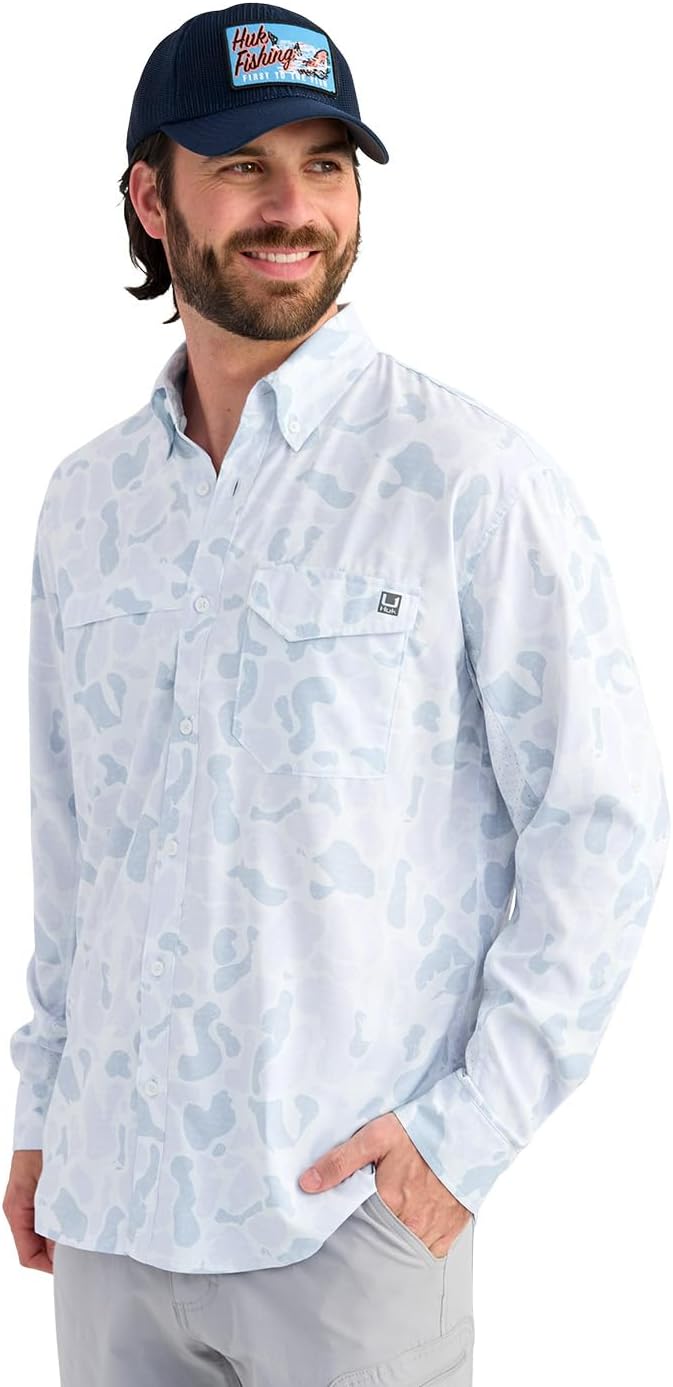
HUK Men's Tide Point Solid Long Sleeve Button Down Shirt (Available in 3X-Large)
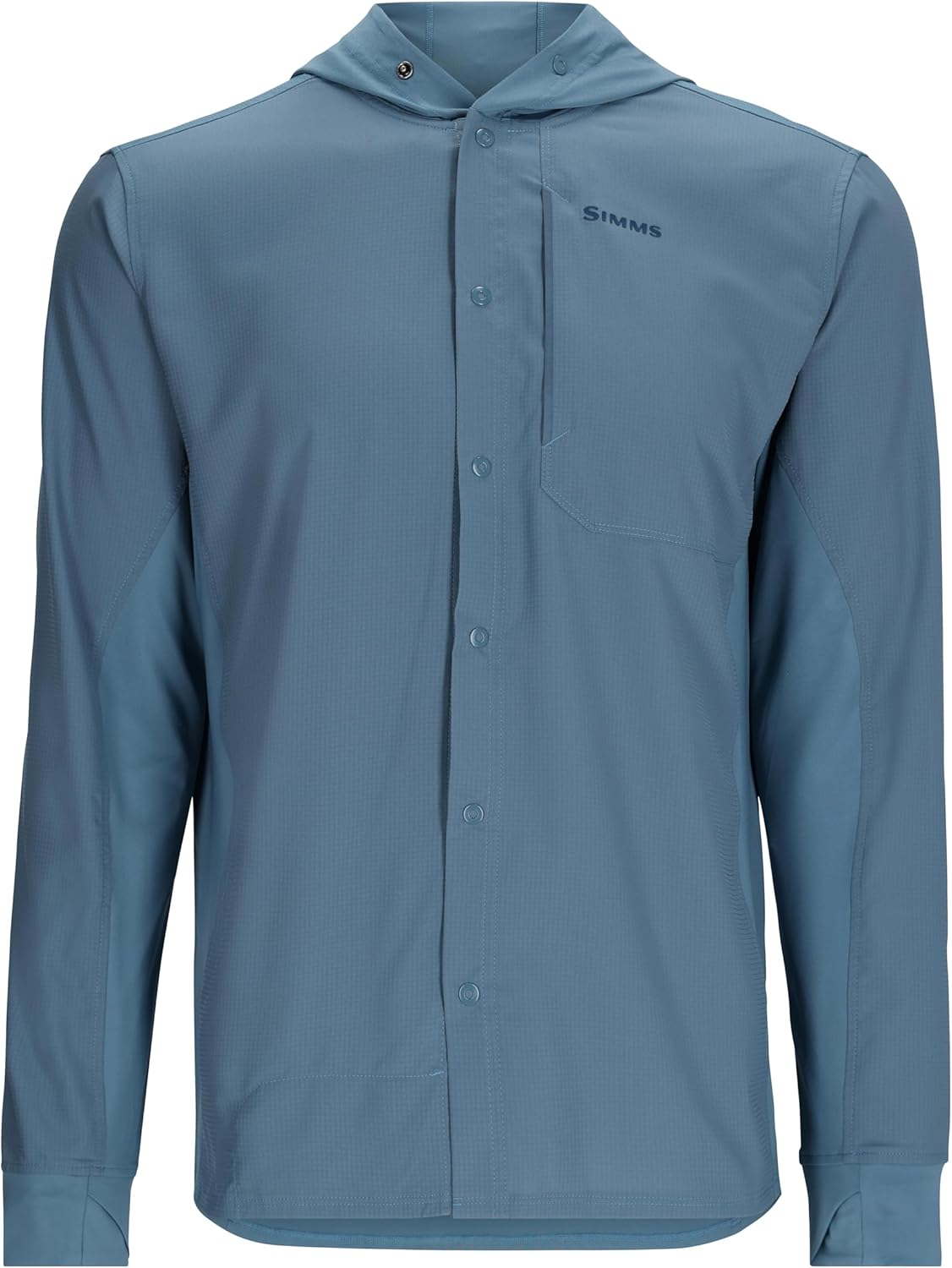
Simms Men's Intruder® Hoody (Neptune, X-Large)
$99.95

BASSDASH Men's Performance Fishing Hiking Shirt UPF 50 Button Down Long Sleeve Quick Dry FS21M
$34.98
As an Amazon Associate, we earn from qualifying purchases.
Further reading: Swing Into Action: Complete Fly Fishing Guide · Geared Up for Steelhead · Browse all gear recommendations
Frequently Asked Questions
The questions we hear most from anglers curious about swinging flies.
Ready to Swing?
Check real-time conditions on all 31 rivers. Flow tells you which tip to run. Clarity tells you which fly. The Chrome Clock tells you when to be there.
"Forecasting Bad Decisions Since First Ice"
Recommended Gear
Hand-picked products for this guide. Prices and availability may change.

SF 10# 12# 14# 16# Fly Tying Hooks Kit Assortment Micro Barbed High Carbon Steel Standard Dry Curved Nymph Scud Pupa Fly Fishing Hook 240Pcs with Waterproof Magnetic Hook Box
$25.29

Okuma Crisium Fly Rod
$69.99

Aventik Fly Line Skagit Shooting Heads Ultra Low Stretch Float Fly Fishing Line with Welded Loops Line ID from 20FT 300 grain/23 FT 550 Grain
$16.69

Wapsi Ostrich Herl
$9.95

Trout Magnet Trout Slayer 28 Piece Fishing Kit, Includes 20 Crawdad Bodies and 8 Size 6 Long Shank Hooks, Great for Small Streams and Lakes, Catches All Species, White
$8.26

Outdoor Planet 12/24 Fly Fishing Flies Kit Fly Assortment, Dry Flies Wet Flies Streamers Nymphs Flies, Fly Fishing Assortment Kit for Bass Trout Salmon Fishing
$9.99

Cortland Indicator Mono Leader Material Fly Fishing
$12.95

Hares Dubbing Dispenser 15 Colors Assorted Rabbit Hair Fly Tying Dubbing Dispenser Nymph Fly Tying Materials
$16.99
As an Amazon Associate, we earn from qualifying purchases.
Browse All Gear →