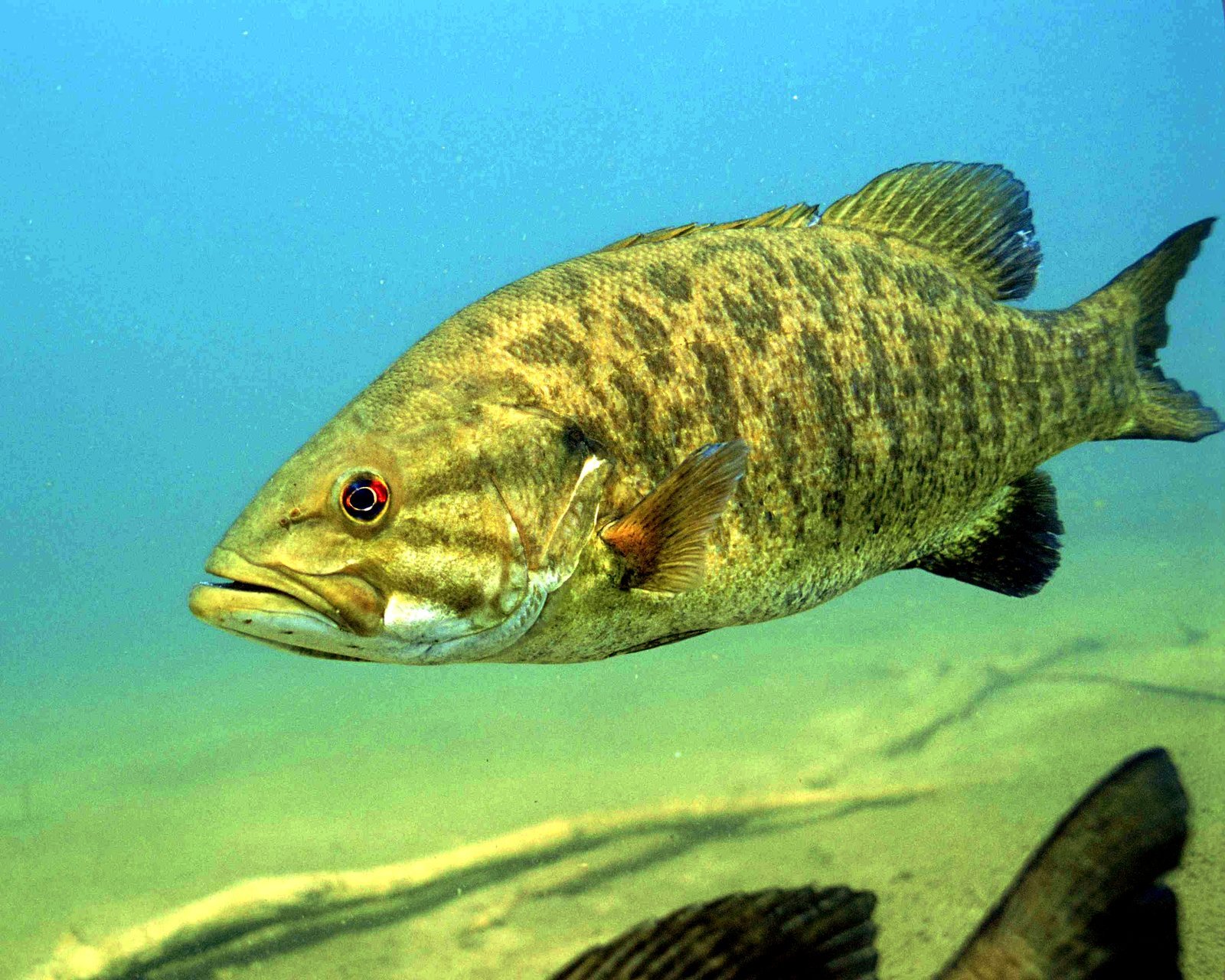
Smallmouth are native to these waters, survived the industrial era better than most species, and quietly produce a season-long fishery in the same trib pools that hold chrome in November. Lake Erie's open-water smallmouth, separately, is among the strongest on the continent.
The smallmouth bass is, by some measures, the south shore's most underappreciated sport fish. Lake Erie's smallmouth fishery — particularly in the western basin reefs and around the islands — is among the strongest on the continent, regularly producing tournament-quality catches, multiple-pound average sizes, and aggressive surface action through the warm-water months. The tributary smallmouth fishery, meaning the fish that move into the lower steelhead creeks through summer and fall, is a parallel resource that gets overshadowed by the run-fish program but stands on its own as a legitimate angling target.
The native fishery
Unlike the steelhead, which had to be carried here, the smallmouth is native to the Great Lakes basin. It was here when the Erie people fished these waters. It survived the industrial nineteenth century reasonably well in the rocky shorelines and tributary reaches that were less affected by the worst of the eutrophication. When the lake's overall biological condition began recovering through the late twentieth century, the smallmouth population responded faster than most species.
The smallmouth in the Erie tributaries occupy a different ecological niche than the ones around the islands. Trib smallmouth tend to be smaller on average — fish in the one-to-three-pound range are typical, with occasional larger fish — but they are willing, aggressive, and accessible. The steelhead pools that hold chrome in November hold smallmouth in July. The same gravel runs, the same boulder pockets, the same tail-outs.
Why it gets overshadowed
A few factors. The smallmouth fishery happens during the warmer months when the steelhead-focused angling community is largely off the water — many of the dedicated steelhead anglers in the Alley do not bass-fish, and many of the bass-tournament fishermen who work the open lake do not particularly target tributary smallmouth. The cultural overlap is thinner than it could be. Add to that the obvious gravity of the steelhead — the run-fish drama, the chrome obsession, the rod-and-reel infrastructure built around it — and the smallmouth quietly persists as the season-long resident that most south-shore anglers vaguely know is there but never quite get around to chasing.
This is changing. As the Alley's angling community has grown and as content production around the fishery has multiplied through the 2010s and 2020s, more guides are running spring smallmouth trips on the trib mouths and lower Catt, more shops are stocking smallmouth tackle alongside the egg patterns, and more crossover anglers are working out that the same skill set transfers.
The big-water reputation
It is worth acknowledging what most of this audience knows already: the open-lake smallmouth fishery on Lake Erie's western basin — the reefs north of Marblehead, Kelleys Island, Pelee Island and the Pelee Passage — produces some of the largest, most consistent smallmouth in North America. World-class is not too strong a phrase. The bass-tournament infrastructure that has grown up around this resource is a separate ecosystem from the tributary steelhead world, but it shares the lake. The same Lake Erie that produces our chrome holds, in its deeper reefs and rocky shorelines, the smallmouth that supports the BASSmasters and Major League Fishing tournament circuits.
The steelhead pools that hold chrome in November hold smallmouth in July. Same gravel, same boulder pockets, same tail-outs — different season, different fish, same river.
What this chapter is not
This chapter does not pretend to settle the open vs. tributary smallmouth debate or to inventory every notable Erie smallmouth fishery. It registers, simply, that the south-shore tributary system the steelhead fishery is built on supports a parallel native warm-water fishery with its own season, its own cultural moment, and its own merit. For an Alley angler who has been fishing November chrome for twenty years and never picked up a smallmouth on the same water in July, this is, more than anything, an invitation.
For smallmouth biology, behavior, and how to target them in the Alley, see the Smallmouth Bass species profile.