Why Conservation Matters for Steelheaders
This fishery was built by human hands. It survives by human choice.
Here's the truth that every Great Lakes steelheader needs to internalize: the fish you love chasing are almost entirely put there by someone. Steelhead are not native to the Great Lakes basin. They were first introduced from the Pacific Northwest in the late 1800s, and the modern fishery — the one that draws hundreds of thousands of anglers to tributaries across Ohio, Pennsylvania, and New York every fall through spring — is sustained overwhelmingly by state hatchery programs. In most tributaries, natural reproduction is minimal to nonexistent. The steelhead running the Chagrin, the Rocky, the Vermilion, the Walnut, the Elk — those fish exist because a hatchery raised them, a truck delivered them, and tax dollars and license fees paid for the whole operation.
That's not a criticism. It's a reality check. And it carries a profound implication: if the investment stops, the fish stop. Cut the hatchery budget, degrade the rivers, ignore the habitat, and within a few years the runs dwindle. Within a decade, they're gone. There's no wild, self-sustaining population to fall back on in most of these streams. The steelhead fishery of Steelhead Alley and the Lake Ontario tributaries is a managed resource — a partnership between state agencies, volunteer organizations, and the anglers who fund it through license purchases and advocacy.
The economic stakes are enormous. Great Lakes sport fishing generates an estimated $5.1 billion in annual economic impact across the basin states, supporting tens of thousands of jobs in tackle shops, guide services, lodging, restaurants, and the broader tourism economy. In the small towns along Lake Erie's south shore and Lake Ontario's western shore, steelhead season isn't just recreation — it's an economic lifeline. When you wade into a river in November and see the parking lots full, the fly shops busy, and the diners packed with anglers ordering breakfast, you're looking at conservation in action. Healthy rivers mean healthy fish runs, and healthy fish runs mean healthy communities.
"We do not inherit the river from our parents. We borrow it from our grandchildren."
— Every angler who's watched a chrome steelhead disappear back into the current
Conservation isn't something that happens to someone else. It's not a line item in a state budget or a project led by biologists in waders. It's your responsibility every single time you step into a river. How you handle fish. Whether you pick up the tangled monofilament on the bank. Whether you speak up when regulations are under review. Whether you teach the next generation to respect the resource. The fishery was built by people who cared enough to create something from nothing. It will be sustained — or lost — by people like you.
New to steelhead? Start with Before You Go: The Complete First Trip Guide
Catch & Release Best Practices
Every fish you release correctly is a fish that can spawn, fight again, and make someone else's day.
Catch-and-release mortality is real. Studies on steelhead and salmonids show that improper handling can result in delayed mortality rates of 5-15%, even when the fish swims away looking fine. The damage is often internal — stress hormones, lactic acid buildup, gill damage from dry air exposure, and fungal infections from lost slime coat. But when done correctly, catch-and-release mortality drops to under 2%. The difference is entirely in your hands — literally.
The Release Protocol
-
🐟
Barbless hooks. Pinch your barbs or buy barbless. Barbed hooks require more handling time to remove, cause more tissue damage, and dramatically increase mortality. A barbless hook slides out in seconds — often without even touching the fish. You'll lose a few more fish during the fight, but every fish you land will have a better chance of surviving release. This is the single highest-impact change you can make.
-
🐟
Rubber mesh nets only. Knotted nylon nets strip slime coat, tangle in gills, and break fins. A rubber mesh landing net protects the fish's slime layer (its immune system), doesn't tangle hooks, and cradles the fish safely while you remove the hook. If you're serious about releasing healthy fish, a quality rubber net is non-negotiable.
-
🐟
Wet your hands. Before touching any fish, dip your hands in the river. Dry hands strip slime coat on contact. Gloves are worse — the textured surface is like sandpaper on a fish's skin. Wet, bare hands. Every time.
-
🐟
The 15-second rule. From the moment the fish leaves the water, you have 15 seconds. That's your window for a photo. After 15 seconds of air exposure, steelhead begin experiencing physiological stress equivalent to you holding your breath underwater. If you can't get the shot in 15 seconds, put the fish back and try again on the next one. No photo is worth a dead fish.
-
🐟
Proper revival technique. Face the fish upstream into gentle current. Support its belly — never squeeze. Hold it upright and let water flow across the gills. Wait for the fish to kick away on its own power. If it rolls on its side, it's not ready — cradle it back upright and keep waiting. A properly revived steelhead will give one strong kick and disappear. A poorly revived one will drift downstream and die behind a rock where you can't see it.
-
🐟
No lip-gripping devices. Boga Grips and similar lip-grabbing tools are designed for bass and saltwater species with tough jaw structures. Steelhead have comparatively delicate maxillary bones. A lip gripper can fracture the jaw, which prevents the fish from feeding and leads to starvation. Support the fish horizontally — one hand under the belly, one near the tail.
Fight time matters too. Playing a steelhead to exhaustion on ultralight tackle might feel sporting, but it builds up lethal levels of lactic acid in the fish's muscles. Use appropriate gear for the water — don't bring a 3-weight trout rod to a big river just to prove a point. Land the fish efficiently, handle it quickly, and get it back in the water. The goal is a healthy release, not a marathon fight for your ego.
Water temperature awareness. When water temps exceed 65°F (18°C), catch-and-release mortality spikes dramatically. Warm water holds less dissolved oxygen, and stressed fish in warm water recover poorly. During summer holdover periods or unusually warm fall conditions, consider stopping fishing entirely if water temps are above 65°F. The fish are already stressed — adding the trauma of being caught and handled can push them past the point of recovery.
The Stocking Programs
The hatcheries that keep the dream alive — and the decisions behind the numbers.
Three state agencies are responsible for the steelhead you catch across the 31 tributaries we cover. Each runs its own hatchery program with different strategies, different strains, and different stocking numbers. Understanding these programs isn't just trivia — it's context for why some rivers fish better than others, why run timing varies, and why advocacy for continued funding matters.
State Stocking Programs
-
🐟
Ohio ODNR — Castalia State Fish Hatchery. Ohio stocks approximately 400,000+ steelhead yearlings annually into Lake Erie tributaries — the Rocky, Chagrin, Grand, Conneaut, Vermilion, Cuyahoga, and others. The Castalia hatchery raises Manistee-strain steelhead, which produce the strong fall-through-spring runs Steelhead Alley is famous for. Ohio's program is funded primarily through fishing license sales and federal Sport Fish Restoration funds. Every Ohio fishing license you buy directly funds the hatchery that puts fish in your rivers.
-
🐟
Pennsylvania PFBC — Fairview and Tionesta hatcheries. Pennsylvania stocks steelhead into Elk Creek, Walnut Creek, Twenty Mile Creek, and Crooked Creek, along with direct lake stocking at Presque Isle Bay. Pennsylvania uses a mix of domestic and Washington-strain steelhead. The PFBC's Erie steelhead program is one of the most heavily utilized fisheries in the state, drawing anglers from Pittsburgh, Buffalo, and Cleveland. Lake Erie fishing permits fund the program.
-
🐟
New York DEC — Salmon River and Lake Ontario tribs. New York operates the largest Great Lakes stocking program, planting steelhead across both the Lake Erie tributaries (Cattaraugus Creek, Chautauqua Creek, Eighteen Mile Creek) and the Lake Ontario system (Salmon River, Oak Orchard Creek, Genesee River, Sandy Creek, and others). The Salmon River Fish Hatchery near Altmar is one of the most important salmonid facilities in the eastern United States, producing Skamania and Washington-strain steelhead alongside chinook and coho salmon.
How stocking decisions are made. State agencies don't just pick numbers out of thin air. Stocking rates are determined by creel surveys (angler catch data), electrofishing population assessments, habitat capacity studies, and return-to-creel ratios — the percentage of stocked fish that survive to be caught by anglers. When creel data shows declining returns on a particular river, agencies may increase stocking, investigate habitat issues, or shift fish to more productive waters. When anglers participate in voluntary creel surveys — those clipboard-carrying biologists at the access points — they're contributing data that directly influences how many fish get stocked and where.
The Steelhead Alley Association's role. The SAA has been instrumental in advocating for Ohio's steelhead program for decades. They work directly with ODNR on stocking numbers, push for habitat improvements, organize volunteer efforts, and serve as the political voice for steelheaders when budget decisions are being made in Columbus. When ODNR considered reducing steelhead stocking numbers in the early 2000s, it was angler advocacy — led in part by the SAA — that kept the program funded. That kind of engagement is the reason you still have fish to catch.
River Cleanup & Volunteer Days
The rivers gave you chrome. Time to give something back.
Walk any popular steelhead access point after a busy weekend and you'll see the problem: tangled monofilament in the brush, bait containers in the grass, egg sac mesh caught on branches, beer cans in the eddy. Some of it's carelessness. Some of it's ignorance. All of it degrades the resource and the experience. River cleanups are the most direct, immediate way to make a tangible difference — and they don't require expertise, equipment, or a biology degree. Just show up with a trash bag and a pair of gloves.
Organizations Running Cleanups
-
🐟
Trout Unlimited chapters. Western Reserve TU, North Coast TU, Chagrin Valley TU, and Erie TU all organize spring and fall cleanup days on their home waters. TU cleanups often combine trash removal with habitat work — placing log structures, planting streamside vegetation, and removing invasive plants. Check your local chapter's event calendar.
-
🐟
Cleveland Metroparks. The Rocky River Reservation, along with the Metroparks' other river corridors, hosts organized cleanup events throughout the year. The Rocky is one of the most heavily fished steelhead rivers in Ohio, and it shows — these cleanups make a visible difference.
-
🐟
Lake Metroparks. Manages access on the Grand River — one of Ohio's best steelhead rivers and one that benefits enormously from volunteer cleanup efforts, particularly around the heavily used access points at Hidden Valley and Harpersfield.
-
🐟
County Soil & Water Conservation Districts. Erie, Lorain, Cuyahoga, Lake, Ashtabula, and Geauga county SWCDs all work on river corridor projects. They often coordinate with landowners on streambank stabilization and riparian planting — projects that directly improve steelhead habitat.
-
🐟
Steelhead Alley Association. The SAA organizes its own cleanup events and coordinates with other organizations. Follow them on Facebook for event announcements — they're typically well-organized and well-attended.
What to bring. Heavy-duty trash bags (contractor grade — river debris is sharp and heavy), work gloves, wading boots or knee boots, and a willingness to get dirty. Some organizations provide all materials. Dress in layers. Bring snacks and water. Plan for 2-4 hours. You'll be amazed how much trash a group of 20 anglers can pull out of a quarter-mile stretch of river in a morning.
Or just do it yourself. You don't need an organized event. Every time you fish, bring a small trash bag and fill it on your way back to the car. Pick up the monofilament in the bushes. Grab the bait container someone left on the rock. Pull the tangled leader out of the tree branch. It takes five extra minutes, and over a season, individual anglers cleaning as they go removes more trash than all the organized events combined. Make it a habit. Make it automatic.
Habitat Restoration
Clean water, cold water, connected water — the three pillars of a healthy steelhead river.
A river can be stocked to the gills, but if the habitat is degraded, the fish won't hold, won't feed, and won't return. Habitat restoration is the long game of conservation — projects that take years to plan and decades to show full results, but which fundamentally transform the quality of a river system. Across the Great Lakes tributaries, some of the most exciting conservation work in a generation is happening right now.
Active Restoration Projects
-
🐟
Riparian buffer planting. Trees and native vegetation along riverbanks shade the water (keeping it cold), filter runoff, stabilize banks against erosion, and provide habitat for the invertebrates that steelhead eat. Every foot of unshaded, eroded bank raises water temperature and degrades the food web. TU chapters across Steelhead Alley run annual planting days — you don't need to be an arborist, just someone willing to dig a hole and drop in a willow or sycamore sapling.
-
🐟
Dam removal. The Cuyahoga River has been the poster child for dam removal in northeast Ohio. Removing obsolete low-head dams restores fish passage, reconnects upstream spawning habitat, and allows natural sediment transport that creates the clean gravel steelhead need for reproduction. The Gorge Dam removal on the Cuyahoga — completed in recent years — opened miles of cold-water habitat that steelhead haven't accessed in over a century. Similar projects on other tributaries are in various stages of planning and permitting.
-
🐟
Streambank stabilization. Eroding banks dump sediment into rivers, smothering spawning gravel and degrading water clarity. Stabilization projects use a combination of natural materials (root wads, live stakes, coir logs) and engineered solutions to armor failing banks while maintaining natural habitat. These projects are technical and expensive, but they permanently improve water quality downstream.
-
🐟
Cold water refuge protection. As tributaries warm under climate change, the cold-water seeps and groundwater upwellings that steelhead depend on during summer holdover become critically important. Identifying and protecting these thermal refugia — through land acquisition, conservation easements, and development restrictions — is one of the most forward-looking conservation strategies for Great Lakes steelhead.
Climate change is the elephant in the river. Great Lakes tributary temperatures are trending upward. The thermal window for steelhead — roughly 33-65°F for active feeding and movement — is narrowing at the warm end. Spring runs are arriving earlier. Fall runs are starting later. Summer holdover fish are squeezed into smaller pockets of cold water. The long-term projections aren't catastrophic for most Lake Erie tributaries (steelhead are adaptable), but they demand that we protect every cold-water resource we have and stop making the problem worse through habitat degradation.
Protecting Spawning Fish
The next generation of chrome is in that gravel. Walk around it.
When a hen steelhead selects a spawning site, she fans the riverbed with her tail to create a depression in clean gravel — a redd. She deposits thousands of eggs into that nest, a buck fertilizes them, and she covers them with gravel. Those eggs will incubate for 4-7 weeks depending on water temperature. During that time, they're vulnerable to everything: siltation, trampling, temperature swings, predation, and — most relevantly to this discussion — anglers who wade through the redd without knowing it's there.
Behaviors That Harm Spawning Fish
-
1
Targeting fish on redds. Yes, you can see them. Yes, they'll bite — out of aggression, not hunger. But hooking a spawning fish pulls it off the redd, interrupts the spawn, and subjects an already-stressed fish to additional trauma. In some tributaries, the natural reproduction that does occur is the seed stock for future wild runs. Every redd you disturb is a generation you might have had.
-
2
Wading through spawning gravel. Redds look like clean, light-colored patches of gravel in otherwise darker substrate. If you see a suspiciously clean patch of gravel in a tailout or riffle — especially from February through May — walk around it. Your boots can crush eggs buried just inches below the surface. One careless step through a redd can destroy hundreds of viable eggs.
-
3
Crowding spawning pairs. Standing too close to actively spawning fish — even without casting — disrupts the process. Steelhead will abandon a redd if harassed enough. Give spawning fish a wide berth. Watch from the bank if you want to observe, but don't wade within casting distance of an active redd.
-
4
Keeping spawned-out fish. A dark, thin, beaten-up steelhead that's clearly post-spawn has already contributed its genetics. Keeping it is legal in most jurisdictions, but it's terrible eating and removes a fish that might survive to spawn again next year. Steelhead are iteroparous — unlike Pacific salmon, they can survive the spawn and return for multiple seasons. Let the dark ones go. They've earned it.
How to identify a redd. Look for an oval-shaped depression in gravel, typically in the tail of a pool or in a riffle with moderate current and a gravel substrate. The gravel inside the redd will be noticeably cleaner and lighter than the surrounding substrate — the hen's fanning action removes sediment and algae. Redds are often 2-4 feet in diameter. You may see a mound of displaced gravel on the downstream edge (the tailspill). During peak spawn, you'll often see the fish themselves — a large hen holding over the redd, sometimes with one or more bucks nearby.
The argument for seasonal closures. Some waters, like sections of the Salmon River in New York, have seasonal closures to protect spawning steelhead and salmon. These closures work — they demonstrably increase egg survival and juvenile recruitment. In Ohio, where most Lake Erie tributaries remain open year-round, the burden falls on individual anglers to self-regulate. Fish the runs, fish the pools, fish the heads — but leave the spawners alone. There's plenty of chrome in the river that isn't sitting on a redd.
Invasive Species
The threats you carry on your boots and the ones swimming toward us.
The Great Lakes ecosystem is under constant assault from invasive species — organisms that weren't here historically and now outcompete, predate, or parasitize native and stocked fish. Some of these threats are massive and systemic (Asian carp, sea lamprey). Others are microscopic and hitchhike on your wading gear (didymo, whirling disease). As anglers who move between watersheds regularly, we are both potential vectors and potential defenders.
Invasive Threats to Know
-
🐟
Sea lamprey. These parasitic jawless fish attach to steelhead and other salmonids, feeding on blood and body fluids. The Great Lakes Fishery Commission spends tens of millions annually on sea lamprey control — barriers, lampricides, and sterile male releases. Without this program, Great Lakes salmonid populations would collapse. The GLFC estimates that each dollar spent on lamprey control returns $8-$12 in sport fishing economic benefit.
-
🐟
Asian carp (bighead and silver). Still primarily a threat in the Mississippi River basin, but the potential invasion of the Great Lakes via the Chicago Sanitary and Ship Canal would be catastrophic. Asian carp outcompete native fish for plankton, the base of the food web. Massive federal infrastructure projects (the Brandon Road Lock and Dam) are underway to prevent their entry. If they establish in Lake Erie, the entire food web that supports steelhead could be disrupted.
-
🐟
Didymo (rock snot). A freshwater diatom that forms massive, unsightly mats on river bottoms. Didymo smothers invertebrate habitat and degrades the food base for steelhead. It spreads on wet gear — felt-soled wading boots are particularly efficient vectors because the porous material traps and transports cells between watersheds. This is why several states have banned felt-soled boots and why cleaning your gear between rivers matters.
-
🐟
Round goby. Already well-established in the Great Lakes and many tributaries. Gobies compete with juvenile steelhead for food and habitat, but they also serve as prey for adult steelhead in the lake. The ecological impact is complex — gobies are both a problem and a food source. Fly anglers have noticed that goby-pattern streamers have become effective steelhead flies in some river mouths, which tells you how thoroughly these fish have integrated into the food web.
Clean, Drain, Dry. The single most important thing you can do to prevent spreading aquatic invasive species is to clean your gear between watersheds. Remove all visible mud, plant material, and organisms from boots, waders, nets, and boats. Drain all water from equipment. Let everything dry completely before fishing a different river — most aquatic invasives can't survive desiccation. If you fish the Grand River on Saturday and the Rocky on Sunday, your boots are a potential transport vector. A 5-minute scrub with a brush and a full day of drying eliminates the risk.
The felt boot debate. Felt soles provide superior traction on slippery rocks — there's no denying it. But felt is nearly impossible to fully decontaminate between uses. Rubber-soled boots with tungsten studs offer comparable traction and can be cleaned and dried effectively. If you still fish felt, at minimum maintain a dedicated pair for each watershed you fish regularly, and never wear felt boots between different river systems without thorough decontamination. New Zealand banned felt soles entirely. Several U.S. states restrict them. The science is clear — felt spreads invasives more effectively than any other boot material.
Angler Ethics Beyond the Law
Regulations are the minimum. The community standard should be higher.
Game laws tell you what you can't do. Ethics tell you what you shouldn't do. The gap between those two is where the character of a fishery's culture lives. On the best steelhead rivers in the world — British Columbia's coastal streams, the Olympic Peninsula — the angling culture itself enforces standards that go far beyond what's written in the regulations. Steelhead Alley can be that, too. It starts with each of us deciding that being a good steelheader means more than just following the rules.
The Unwritten Rules
-
1
Give other anglers space. If someone is working a run, don't wade in 30 feet below them. Don't high-hole the pool they're approaching. Don't cast across their drift. On busy days, patience and communication go a long way. Ask "mind if I fish below you?" rather than just barging in. Respect the water someone is already fishing.
-
2
Don't crowd the pool. When you pull up to a parking lot and see 15 anglers in a 100-yard stretch, keep driving. Find your own water. The fish are spread across the entire river system — they're not all stacked in the one pool everyone can see from the road. Walking a quarter mile to find unpressured water is better for you, better for the other anglers, and better for the fish.
-
3
Pick up trash — even if it's not yours. Especially if it's not yours. Nothing degrades the reputation of anglers faster than trash-strewn access points. Landowners who see garbage on their property close access. Park managers who see litter at trailheads restrict hours. Every piece of trash you pick up is a vote for continued access.
-
4
Respect private property. Many Great Lakes tributaries flow through private land. Don't trespass. Don't park where you're not supposed to. Don't leave gates open. If a landowner asks you to leave, leave — politely. Access is a privilege that can be revoked, and one bad interaction can close a stretch of river for years. Ohio's stream access laws are more restrictive than many western states — know the rules before you wade.
-
5
No spot-burning on social media. You caught a beautiful chrome steelhead. You want to share it. That's fine — but geo-tagging the exact pool, naming the specific run, or posting coordinates so your 5,000 followers can descend on the spot next weekend? That's spot-burning, and it concentrates pressure on specific fish and specific landowners in ways that damage the resource. Share the fish, share the river name if you want, but keep the exact spots to yourself. The fish were there because nobody else was. Don't change that.
-
6
Mentor, don't gatekeep. When a new angler shows up with the wrong gear, wading in the wrong spot, making rookie mistakes — that's not a threat to your fishing. That's an opportunity to grow the community. Help them. Show them proper catch-and-release technique. Point them to better water (without burning your spot). An angler who learns respect for the resource on day one is an ally for decades.
The harvest question. Legal harvest is a personal choice, and we're not here to shame anyone who keeps a fish within regulations. But consider the math: in a river where most steelhead are stocked, keeping fish reduces the return-to-creel ratio, which can influence future stocking decisions. In a river where natural reproduction is occurring, keeping wild fish removes genetics from a fragile population. Many experienced steelheaders practice selective harvest — keeping the occasional hatchery fish (identified by a clipped adipose fin, where applicable) while releasing wild fish. It's a reasonable middle ground that respects both the tradition of harvest and the biological reality of the fishery.
Organizations to Support
Your money, your time, your voice — they all count.
You can't fix a river by yourself. But you can fund, volunteer for, and amplify the organizations that do. Every organization on this list is actively working to improve the rivers, the fish, and the fishing across the Great Lakes tributaries we cover. Some need your money. Some need your hands. All of them need your support.
Organizations Worth Your Support
-
🐟
Trout Unlimited (national + local chapters). The 800-pound gorilla of coldwater conservation. TU's national organization lobbies for clean water policy, funds habitat restoration, and fights legal battles to protect rivers. Your local TU chapter does the on-the-ground work — cleanups, planting days, habitat projects, youth education. A TU membership is the single most impactful $35 you can spend as a steelheader. Key chapters: Western Reserve TU, North Coast Steelheaders TU, Chagrin Valley TU, Erie TU.
-
🐟
Steelhead Alley Association (SAA). Focused specifically on Lake Erie steelhead advocacy. The SAA works directly with Ohio ODNR on stocking programs, habitat projects, and access issues. They're the political voice of Steelhead Alley anglers when state budgets are being debated and regulations are being set.
-
🐟
Great Lakes Fishery Commission (GLFC). The binational organization (U.S. and Canada) responsible for sea lamprey control and coordinated fishery management across the Great Lakes. Their work is foundational — without lamprey control, the entire salmonid stocking program would be undermined.
-
🐟
Local Metroparks and conservancy districts. Cleveland Metroparks, Lake Metroparks, Geauga Park District, and the county Soil & Water Conservation Districts manage the public land and riverfront access that makes steelhead fishing possible for most anglers. Supporting their levies, attending their events, and volunteering for their programs directly improves the rivers you fish.
-
🐟
CoolWater Task Force. Focused on protecting and restoring cold-water habitats in the Great Lakes basin. As climate change pushes tributary temperatures upward, organizations that specifically target thermal refuge protection become increasingly critical.
-
🐟
Friends of the Rocky River / Friends of the Chagrin River. Watershed-specific organizations that work on water quality monitoring, riparian restoration, and public education along two of Ohio's premier steelhead rivers. These groups know their rivers intimately and direct resources where they're needed most.
-
🐟
Great Lakes Sport Fishing Council. Advocates for sport fishing interests across the Great Lakes at the state and federal level. They monitor policy, testify at regulatory hearings, and coordinate among state fishing organizations to protect the resource.
Membership matters more than you think. When a state agency is deciding whether to fund a hatchery program, or when a county council is voting on a park levy, or when a federal representative is weighing in on clean water legislation — the number of organized constituents matters. Ten thousand TU members in a congressional district carry more weight than ten thousand unaffiliated anglers who never show up, never call, and never vote. Organizations convert individual passion into collective political power. Your $35 membership isn't just a donation — it's a political statement.
Getting Involved
Ten concrete things you can do this season. No excuses.
Reading about conservation is easy. Doing something about it is where most people stop. Don't be most people. Here are ten specific, actionable things you can do — not in some hypothetical future, but this season. Some cost money. Some cost time. Some cost nothing but a few minutes of attention. All of them make a measurable difference.
Your Conservation Action Plan
-
🐟
Join your local TU chapter. $35/year for a national membership. Most local chapters have no additional dues. You'll get meeting invites, cleanup notifications, and a voice in the organization that does more for coldwater conservation than any other in the country.
-
🐟
Attend one public comment period this year. When ODNR, PFBC, or NYDEC holds a public comment period on fishing regulations, show up — in person or online. Agencies listen to the anglers who participate. If you want barbless-only regulations, or catch-and-release stretches, or higher stocking numbers, this is where that conversation happens.
-
🐟
Volunteer for one cleanup. Just one. Three hours of your time, one Saturday morning. You'll fill trash bags, meet other anglers who care, and walk away knowing the river is cleaner than you found it. After the first one, most people come back for more.
-
🐟
Participate in a creel survey. When you see a biologist with a clipboard at the access point, stop and talk to them. Answer their questions honestly — how many fish you caught, how many you kept, how long you fished. That data drives stocking decisions. Every angler who participates makes the data more accurate.
-
🐟
Switch to barbless hooks. If you haven't already, pinch your barbs or switch to barbless patterns. It costs you nothing, slightly increases the sport, and dramatically reduces handling time and injury to released fish.
-
🐟
Carry a trash bag every trip. Stuff a plastic grocery bag in your vest pocket. Fill it on the walk back. Five minutes of effort, zero cost, immediate impact. Do this every time and you'll remove hundreds of pieces of trash from the riverbank over a season.
-
🐟
Teach a kid to fish — and to respect the river. Youth fishing programs through TU, state agencies, and local parks introduce the next generation to the sport. Volunteer as a mentor or just take your own kid, nephew, or neighbor's child. Teach them not just how to cast, but why we release fish, why we clean up, and why the river matters.
-
🐟
Buy your license — even if you barely fish. License sales directly fund state fishery programs. If you fish one day a year, buy an annual license anyway. It's the cheapest conservation investment you can make, and the aggregate numbers influence state budget allocations.
-
🐟
Clean your gear between rivers. Adopt the Clean-Drain-Dry protocol. A brush, a bucket, and 10 minutes of drying time between rivers prevents the spread of didymo, whirling disease, and other aquatic invasives. It's basic hygiene for the ecosystems you're entering.
-
🐟
Vote for clean water. At every level — local, state, federal. Park levies, sewer upgrades, clean water legislation, EPA enforcement. These aren't abstract policy issues when you're standing waist-deep in a river that drains through suburbs and agricultural land. The ballot box is a conservation tool.
The Future of the Fishery
Where we're headed — and what it'll take to get there with chrome still in the rivers.
The Great Lakes steelhead fishery is at an inflection point. Climate change, evolving management strategies, shifting angler demographics, and new technology are all reshaping what this fishery will look like in 20, 50, 100 years. The honest answer is: nobody knows exactly. But the trends are knowable, and the choices we make now will determine whether our grandkids wade into these same rivers and feel the same tug that hooked us.
Climate projections. Lake Erie surface temperatures have risen approximately 3.5°F (2°C) over the past 50 years, and the warming trend is accelerating. For tributaries, this means warmer base flows, shorter winter ice periods, and more variable hydrology — bigger floods, longer droughts. Steelhead are more adaptable than most coldwater species (they evolved in the variable climate of the Pacific Northwest), but there are limits. The tributaries that will remain viable steelhead rivers 50 years from now are the ones with the strongest groundwater inputs, the most intact riparian corridors, and the most protected cold-water refugia. That's a list we can influence today through habitat restoration and land protection.
Evolving stocking strategies. State agencies are getting smarter about how they stock fish. Instead of dumping fingerlings into any available tributary, modern stocking programs use genetic data, habitat capacity models, and return-to-creel analysis to optimize where fish go and what strains they use. Some agencies are experimenting with delayed-release programs (holding smolts longer in the hatchery before release) that improve survival rates. Others are exploring strains with better thermal tolerance for a warming climate. The science is advancing — but it needs funding, and funding comes from license sales and legislative advocacy.
Wild reproduction — the dream and the reality. In a handful of Great Lakes tributaries, steelhead reproduce naturally. The Salmon River, certain sections of Cattaraugus Creek, and portions of the Grand River (Ontario side) support documented natural reproduction. The dream of many conservationists is to establish self-sustaining steelhead runs that don't depend on hatchery inputs. It's a worthy goal, but the reality is that most Lake Erie tributaries lack the consistent cold-water habitat, clean spawning gravel, and protected juvenile rearing areas needed for reliable natural reproduction. The path forward likely involves both: continued stocking as the backbone of the fishery, with targeted habitat improvements that allow natural reproduction to supplement stocked fish in the best rivers.
Technology as a conservation tool. This is where we see our own role. When SteelHeadAddiction.com publishes real-time flow data, clarity conditions, and fishing recommendations for 31 rivers across three states, we're not just helping you catch fish — we're helping distribute angling pressure across the entire system. An angler who checks our conditions page and drives past the crowded, blown-out river to fish a smaller tributary in better shape is making a conservation decision, even if they don't think of it that way. Tools that give anglers better information lead to better decisions: fishing when conditions are optimal (shorter trips, higher success), avoiding rivers during high-stress periods, and distributing pressure across more water. Technology won't save the fishery by itself, but it's a multiplier for every other conservation effort.
"The best time to plant a tree by the river was twenty years ago. The second best time is this weekend at your TU chapter's planting day."
— Adapted wisdom for steelheaders
The fishery's future isn't guaranteed. It never was — it was always a choice, made by people who decided that Great Lakes rivers should hold chrome-bright steelhead. The stocking programs, the habitat work, the regulations, the volunteer hours — all of it is a deliberate investment in something that doesn't exist naturally and won't persist without continued effort. But that's also what makes it worth protecting. This fishery is a testament to what happens when anglers, agencies, and communities decide that a river should be more than just a drainage channel. It can be a place where a 10-pound steelhead eats a fly on a cold November morning and changes someone's life. That's worth fighting for.
Frequently Asked Questions
Common questions about steelhead conservation in the Great Lakes.
The River Needs You
Check real-time conditions on all 31 rivers. Make better decisions. Fish smarter. Leave the river better than you found it.
"Tight Line, Loose Plans"
Recommended Gear
Hand-picked products for this guide. Prices and availability may change.

Fly-Hooks-for-Fly-Tying-Dry-Wet-Barbless-BL-Nymph-Flies Curved Czech Scud Fishing Hooks 10# ~16# Assortment Pack of 100-240 Hooks with Box
$23.99

Woanger 2 Rolls Fishing Soft Spawn Net 3'' x 157.5'' Spawn Sac Netting Sack Catfish Fishing Bait Mesh Holder Accessories for Roe Bags
$8.49

BASSDASH Trout Fly Fishing Flies Tenkara Wet Dry Flies Nymphs Sakasa Kebari 12pcs Assortment Barbless Barbed Hooks
$12.98

Daniel's Spawn Sac Netting - 4" x 15' Roll
$6.99

ATLAS-MIKE'S Spawn Net Parent
$9.68
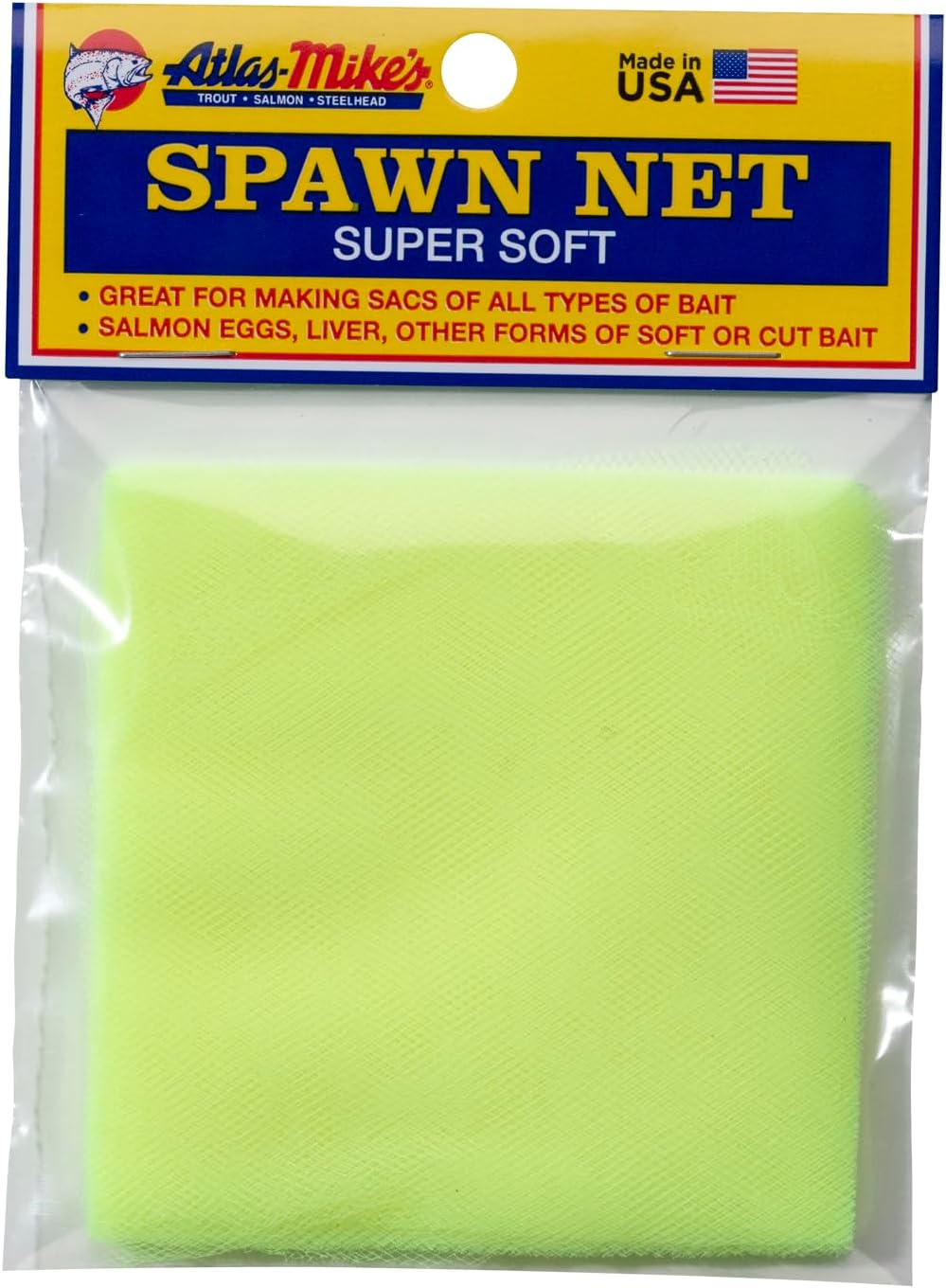
ATLAS SPAWN NET 3" X 3" - 250 Ct - Ideal for Bait Sacs - Salmon Eggs, Liver, Soft & Cut Bait - Versatile Aquatic Mesh for Fishing Enthusiasts - Premium Quality for Successful Fishing Ventures - Yellow
$25.80

Eupheng Prime Assortment Barbless Fly Fishing Hooks Dry Wet Nymph Streamer Caddis Shrimp Pupea Jig Collection High Carbon Competition
$9.99

Trout Magnet Trout Slayer 28 Piece Fishing Kit, Includes 20 Crawdad Bodies and 8 Size 6 Long Shank Hooks, Great for Small Streams and Lakes, Catches All Species, White
$8.26
As an Amazon Associate, we earn from qualifying purchases.
Browse All Gear →