The Call of Chrome
A $5.1 billion fishery, 1.4 million anglers, and one migration that changes everything.
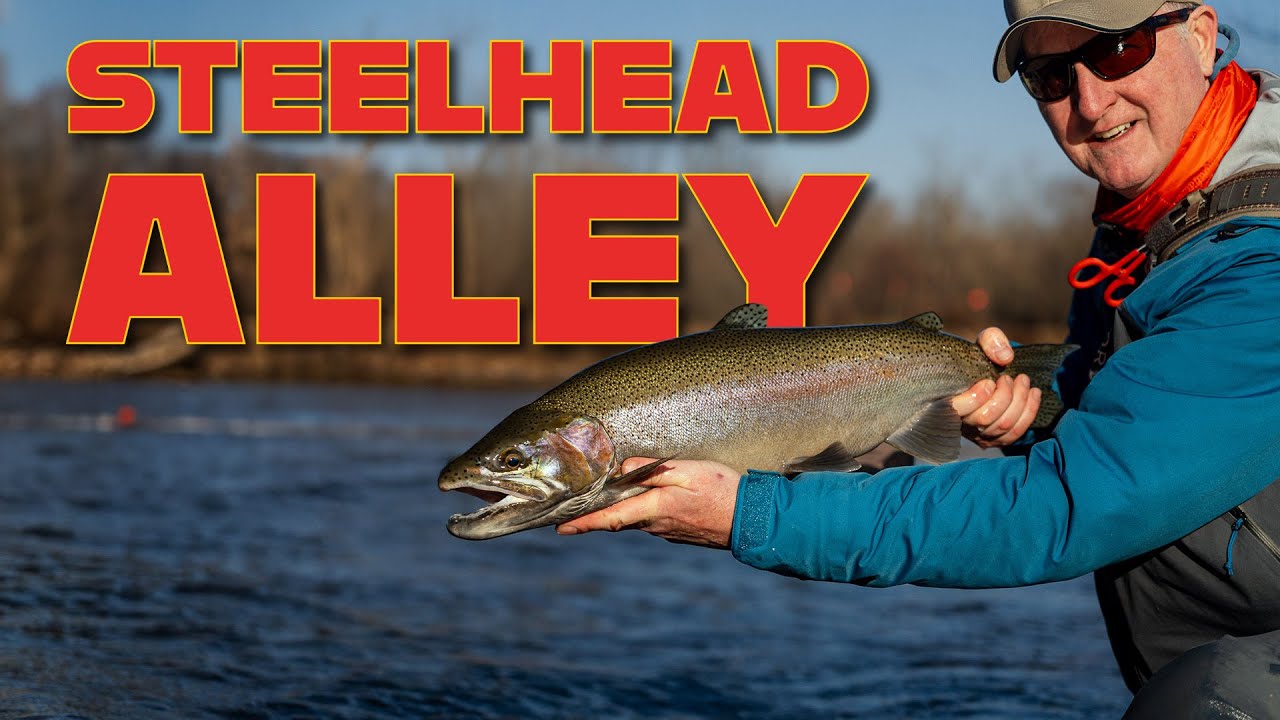
Somewhere between the first hard frost and the last leaf, something stirs in the cold tributaries of the Great Lakes. Steelhead — lake-run rainbow trout that spend their lives growing powerful in open water — begin their migration home. They push upstream through rivers that most people drive over without a second glance, and for a certain kind of angler, that migration is the most important event on the calendar.
If you've been thinking about it — reading about it, watching videos, asking questions in forums at 2 AM — you already feel the pull. You're not alone. Over 1.4 million recreational anglers fish the Great Lakes every year, generating $5.1 billion in annual economic impact and supporting 35,800 jobs across the region. Steelhead fishing alone contributes an estimated $30 million to Ohio's regional economy, drawing anglers from 25+ states and as far as Europe.
This isn't a niche hobby. It's a culture. And it's waiting for you.
"I've always wanted to try steelhead fishing."
— Every future steelheader, right before they become one
We hear that sentence every week. This guide is written for the person who says it. Not for the expert who's been swinging flies for 20 years. For you — standing at the edge, wondering if it's worth the cold, the early alarm, the investment. It is. And here's everything you need to know before you take that first step into the current.
Further reading: Steelhead Alley: Chasing Great Lakes Silver on the Fly
What to Expect (Honestly)
The cold, the early alarms, the skunk — and the moment that makes all of it worth it.
Let's start with the truth, because the truth is what builds trust — and trust is what brings you back.
The Hard Parts
-
🐟
It's cold. Steelhead season runs October through April in the Great Lakes. You'll fish in rain, snow, sleet, and the kind of damp 35-degree wind that cuts through three layers. Your guides will freeze. Your fingers will go numb. You'll question your life choices at least once per trip.
-
🐟
It's early. The best fishing often happens at first light. That means a 4 AM alarm, a dark drive, and rigging up by headlamp in a parking lot while the rest of the world sleeps.
-
🐟
You might get skunked. Steelhead are called "the fish of a thousand casts" for a reason. The current catch rate in Ohio's tributaries is 0.23 fish per angler-hour — which means you can reasonably expect to hook a fish every 4-5 hours of focused effort. Some days you'll touch nothing. The skunk is part of the deal.
The Payoff

And then it happens.
Your float dips. Your indicator stops. Something heavy and alive pulls back — and suddenly, a 28-inch chrome missile is tearing line off your reel in a river you could throw a rock across. A steelhead's first run is unlike anything in freshwater fishing. They jump. They shake. They fight with a ferocity that humbles anglers who've caught a thousand bass and never felt anything like this.
That moment — that first fish — rewrites the equation. The cold stops mattering. The early alarm becomes an investment. The skunk days become the stories you tell between hookups, and every one of them makes the next fish sweeter.
Ohio's steelhead program has improved the catch rate from 0.05 fish/hour in 1984 to 0.3-0.4 fish/hour in peak years — a nearly eight-fold improvement driven by better stocking, habitat restoration, and smarter angling techniques. The fish are there. The opportunity is real. You just have to show up.
It's Supposed to Be Fun
One more thing before we go further: remember to enjoy it.
Steelhead culture can feel intense — the predawn obsession, the gauge-checking, the Instagram hero shots. But underneath all of that, this is a person standing in a river, watching water move, breathing cold air, and waiting for something beautiful to happen. It is, at its core, a meditation. A reason to be outside. A way to connect with something older and wilder than your daily routine.
Don't let the pressure to catch fish ruin the experience of being on the water.
Some of the best days on the river involve zero fish and a thermos of coffee shared with a friend while herons fish the far bank.
Stop. Look around. Breathe. You're standing in a river. That alone is worth the alarm.
Further reading: Reading the Water: A Guide to Chasing Great Lakes Steelhead This Spring
Know Your Level
You don't need to be an expert. You just need to know where you're starting.
Steelhead fishing accommodates every experience level — you absolutely do not need to be a fly fishing expert to catch chrome. But knowing where you stand helps you choose the right approach, the right gear, and the right expectations.
Where Do You Fall?
Complete Beginner
You've never fished, or only fished casually as a kid. You don't own gear. Start with: a guided trip where everything is provided. Or borrow a spinning rod and try bobber-and-jig from the bank.
Freshwater Angler
You've caught bass, walleye, or trout in lakes/ponds. You own a spinning rod. Start with: float fishing with a spinning setup. The transition is natural — you already know how to cast, set a hook, and play a fish.
Fly Fisher (Trout)
You've fly fished for trout but never targeted steelhead. Start with: nymphing with an indicator (it's just Euro-nymphing on steroids) or try swinging streamers. Upgrade to a 7-8 weight rod.
Returning Angler
You fished years ago and want to get back. The gear has changed, but the fish haven't. Start with: a refresher guided trip and modern gear. You'll be amazed how quickly it comes back.
The most important thing: you don't need to fly fish to catch steelhead. Spinning rods, center pin reels, and conventional tackle all catch chrome. Fly fishing gets the most attention online, but the majority of Great Lakes steelhead are caught on bobber-and-jig, float-fished spawn sacks, or simple inline spinners. Start with what you're comfortable with and evolve from there.
Physical Fitness
Steelhead fishing is more physical than most people expect. You'll be wading in moving water over uneven, slippery rocks, often in cold conditions. Good balance, reasonable mobility, and the ability to stand for several hours are the baseline. If you have mobility concerns, guided drift boat trips keep you in the boat and are equally productive.

Should You Hire a Guide?
A good guide compresses years of learning into a single day. Here's what it costs and what you get.
For your first 1-3 trips: yes. Unequivocally.
A good steelhead guide doesn't just put you on fish — they compress years of learning into a single day. They know which runs are holding fish right now, how to read the water at today's specific flow, what the fish are eating this week, and how to keep you safe in water you've never waded. For a beginner, a guide is the difference between a frustrating day of random casting and a transformative experience.
What a Guide Provides
-
🐟
Water knowledge — which runs, at what flow, at what time of day
-
🐟
Technique coaching — casting, mending, drift, hook set, fight management
-
🐟
Terminal tackle — flies, jigs, spawn, leaders, tippet
-
🐟
Safety — they know the river's hazards, safe wading lines, and emergency protocols
-
🐟
Confidence — the hardest part of steelhead fishing is trusting that a fish is about to eat. A guide's presence changes the psychology entirely.
Guide Pricing in the Great Lakes Region
| Trip Type | Duration | Price Range | Anglers |
|---|---|---|---|
| Walk & wade | Full day (6-8 hrs) | $350-$425 | 1-2 |
| Drift boat / float | Full day (6-8 hrs) | $450-$700 | 1-2 |
| Half day (wade) | 4 hours | $300-$400 | 1-3 |
| Additional angler | — | +$50-$100 | — |
Prices reflect 2025-26 rates across Ohio, Pennsylvania, and New York guide services. Gratuity (15-20%) not included. Most guides require a $150 deposit.
Questions to Ask a Potential Guide
-
1
What gear is included vs. what should I bring?
-
2
Do you accommodate beginners who've never fly fished (or never fished at all)?
-
3
What's your cancellation policy for weather?
-
4
What rivers will we fish, and how do you decide?
-
5
Do you provide waders? If not, can I rent them?
Further reading: Cast Like a Pro: 2024 Orvis Guide of the Year's Secrets
Essential Gear (Without Overdoing It)
What you actually need, what you'll want, and three budget tiers from $200 to $1,000+.

The gear rabbit hole is real. You can spend $5,000 before you've caught a single fish. Don't. Here's what you actually need, organized by priority — not by what looks good on Instagram.
The Non-Negotiables
-
🐟
Waders + boots. This is the single most important purchase. Cold, wet legs end trips. Breathable chest waders with felt-soled or rubber-soled boots (check your state's regulations — some states ban felt for invasive species concerns). Entry-level breathable waders from Frogg Toggs start around $80; mid-range options from Redington, Simms, and Orvis run $200-$500 and will last years. Always wear a wading belt. It's the most critical piece of safety equipment you'll own — and it usually comes with the waders.
-
🐟
A rod and reel. For spinning: a 9-10' medium-heavy spinning rod with a quality reel spooled with 8-12 lb monofilament. Combos from Ugly Stik, Fenwick, or St. Croix start at $50-$80. For fly fishing: a 7-8 weight, 10' nymphing rod with a large arbor reel — entry-level combo kits from Echo, Redington, or TFO run $150-$250. For center pin: a 13' float rod with a center pin reel.
-
🐟
Terminal tackle. Bobbers/floats (Thill or Drennan), split shot assortment, jigs (1/16 - 1/8 oz in black, pink, chartreuse), egg patterns or spawn sacks, and a selection of nymphs if you're fly fishing. Budget $20-$40 for a season's worth of terminal tackle. See our article on tying the Bead Intruder — one of the most effective steelhead flies you can make yourself.
-
🐟
Layering system. Moisture-wicking base layer (merino wool or synthetic — never cotton), insulating mid-layer (fleece or puffy), waterproof/windproof outer shell. Cotton kills — it holds moisture, loses all insulating value when wet, and accelerates hypothermia. A good layering system for steelhead costs $100-$200 and doubles as everyday winter wear. Shop cold weather gear →
-
🐟
Accessories that matter: Forceps/hemostats for hook removal, nippers for cutting line, polarized sunglasses (non-negotiable — you need to see into the water), a quality landing net with a rubber bag, and a waterproof phone case. Don't forget sunscreen — winter sun reflecting off water burns just as badly as summer.
Budget Tiers
- Budget waders ($60-$80)
- Spinning rod/reel combo ($40-$60)
- Terminal tackle assortment ($20-$30)
- Polarized sunglasses ($15-$25)
- Layers from your closet
Gets you on the water. Upgrade as you commit.
Quick Picks
 HISEA Deck Rain Boots for Men, Waterproof Fishing Rubber Boots with High Traction, Men's Ankle Saltwater Chelsea Boots for Gardening, Boating, Sailing (Grey, 8)
$37.99
HISEA Deck Rain Boots for Men, Waterproof Fishing Rubber Boots with High Traction, Men's Ankle Saltwater Chelsea Boots for Gardening, Boating, Sailing (Grey, 8)
$37.99
 Extremus MudRidge Hunting Boots by KastKing, Men’s Waterproof Insulated Rubber Boots with 6mm Neoprene, All-terrain Anti-slip Sole, Warm Cold Weather Hunting, Fishing, Hiking & Farm Boots (Black, 10)
$63.73
Extremus MudRidge Hunting Boots by KastKing, Men’s Waterproof Insulated Rubber Boots with 6mm Neoprene, All-terrain Anti-slip Sole, Warm Cold Weather Hunting, Fishing, Hiking & Farm Boots (Black, 10)
$63.73
- Quality breathable waders ($150-$200)
- Dedicated steelhead rod/reel ($100-$150)
- Wading boots with studs ($60-$80)
- Cold weather layers ($50-$75)
- Net, tools, tackle ($40-$60)
Best value for a committed beginner.


- Simms/Orvis premium waders ($300+)
- Quality fly or center pin setup ($300+)
- Korkers boots ($120+)
- Technical layers ($150+)
- Wading staff, pack, accessories
For those who know they're all-in.


Blue Wing Olive Gray Hackle Wet Fly, 6-Pack
$6.99

RIO Fly Fishing Salmon/Steelhead 9' 12Lb Leaders (Pack 3), Glacial Green
$19.99

Outdoor Planet 12/24 Fly Fishing Flies Kit Fly Assortment, Dry Flies Wet Flies Streamers Nymphs Flies, Fly Fishing Assortment Kit for Bass Trout Salmon Fishing
$9.99

Fly-Hooks-for-Fly-Tying-Dry-Wet-Barbless-BL-Nymph-Flies Curved Czech Scud Fishing Hooks 10# ~16# Assortment Pack of 100-240 Hooks with Box
$23.99
As an Amazon Associate, we earn from qualifying purchases.
Further reading: Geared Up for Steelhead: Everything You Need to Fly Fish Ohio's Trophy Rivers · Browse all gear recommendations
Learn Your Knots Before You Go
Nothing ruins a steelhead trip faster than a knot failure on a hot fish. Master these three before your first outing:
River Etiquette: The Unwritten Rules
Seven rules that won't get you arrested but will earn you respect — or enemies.
Steelhead rivers are shared spaces. The unwritten rules exist to make the experience better for everyone — including you. Breaking them won't get you arrested, but it will get you glares, cold shoulders, and a reputation that follows you on a surprisingly small river.
Give Space
If someone is already working a run, don't wade in — not above them, not below them, not across from them. On busy days, ask before entering: "Mind if I fish the tail?" Most anglers will say yes and appreciate the courtesy. On uncrowded water, give at least a full pool-length of distance.
Respect the Rotation
In swing fishing, anglers take turns working through a pool — cast, two steps downstream, cast again. When you reach the bottom, walk back to the top and wait your turn. Watch before joining. Cutting the line is the fastest way to make enemies.
Never Low-Hole
Walking downstream of an angler and fishing the water they're about to reach is the cardinal sin of river etiquette. The angler working downstream has the right-of-way to that water. Period.
Handle Fish With Care
Wet your hands before touching a steelhead. Support the fish horizontally — never by the jaw. Keep it in the water. Camera ready before you lift. Ten seconds out of water maximum. 90% of Great Lakes steelhead anglers practice catch and release.
Pack It Out (Plus One)
Line, leaders, bait containers, coffee cups — if you brought it, it leaves with you. Better yet, pick up one piece of trash that isn't yours. The river gives you a lot. Give something back.
Keep It Quiet
The river is a quiet place. Some anglers drive hours for that quiet. Keep your voice low, your music off, and your presence small.
Don't Burn Spots
If someone shows you a productive run, don't post the GPS coordinates on Facebook. The trust that holds the steelhead community together is built on discretion. Share the experience, not the location.
Safety First, Always
This section isn't optional. Cold water, slippery rocks, and winter conditions create real hazards.
This section isn't optional reading. Steelhead rivers are beautiful, but they are not safe by default. Cold water, slippery rocks, variable flows, and winter conditions create real hazards that have claimed lives.
Critical Safety Facts
-
🐟
Rivers account for 20.3% of all fatal drownings. More than oceans, more than pools.
-
🐟
81% of fatal boating accident victims drowned; 79% were not wearing life jackets.
-
🐟
Cold shock occurs immediately upon immersion in cold water (33-50°F steelhead season water), causing dramatic changes in breathing and heart rate.
-
🐟
Limbs become incapacitated within ~10 minutes of cold water immersion. Hypothermia sets in within ~1 hour.
Wading Safety Essentials
-
🐟
Wear a wading belt. This is perhaps the most vital piece of safety equipment you'll carry. A snug belt prevents your waders from filling with water if you fall in — turning a cold inconvenience into a survivable event rather than a drowning risk.
-
🐟
Use a wading staff. A third point of contact changes everything. Keep two points stable while moving the third. Many experienced anglers who've waded for decades still use a staff — it's not a sign of weakness, it's a sign of wisdom.
-
🐟
Never wade deeper than thigh-deep unless you know the specific water intimately. The force of moving water increases exponentially with depth. Knee-deep in a moderate current is comfortable. Thigh-deep in the same current is dangerous.
-
🐟
Wade at a slight upstream angle, never directly across a strong current. Shuffling your feet (rather than stepping) helps you feel the bottom and maintain balance.
-
🐟
Fish with a partner. If you fall in, a buddy can help. If you're alone, make sure someone knows where you are and when you expect to be back.
-
🐟
Keep spare dry clothes in your vehicle. In winter, wet clothes can become a hypothermia risk before you reach home. A complete change of dry clothes — including socks — in a waterproof bag in your car is non-negotiable.
-
🐟
Phone in a waterproof case. Attached to your body, not in your vest pocket where it'll sink with your waders.
Recommended Gear
Hand-picked products for this guide. Prices and availability may change.
Blue Wing Olive Gray Hackle Wet Fly, 6-Pack
$6.99
RIO Fly Fishing Salmon/Steelhead 9' 12Lb Leaders (Pack 3), Glacial Green
$19.99
Outdoor Planet 12/24 Fly Fishing Flies Kit Fly Assortment, Dry Flies Wet Flies Streamers Nymphs Flies, Fly Fishing Assortment Kit for Bass Trout Salmon Fishing
$9.99
Fly-Hooks-for-Fly-Tying-Dry-Wet-Barbless-BL-Nymph-Flies Curved Czech Scud Fishing Hooks 10# ~16# Assortment Pack of 100-240 Hooks with Box
$23.99

Tungsten Mop Jig Fly Size #10 - Euro Nymph Tied on Hanak Hooks - 6ct Pack
$15.99
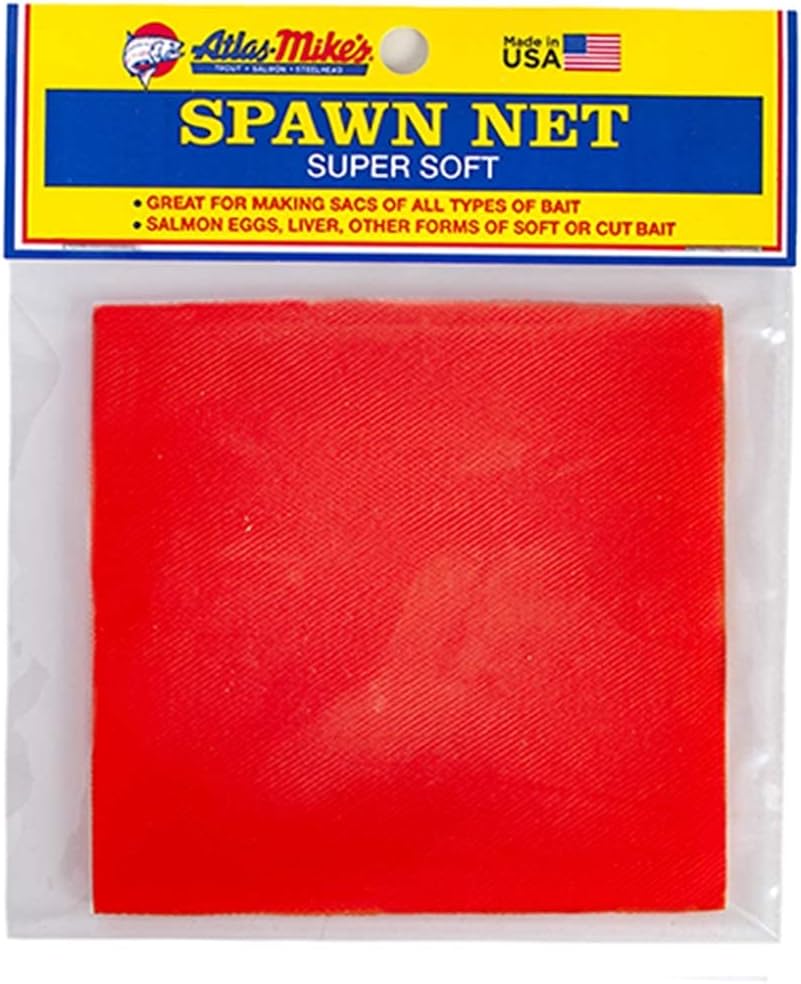
Atlas Spawn Net Squares
$6.50

Bernat BABY BLANKET BB Easter Egg Yarn - 1 Pack of 10.5oz/300g - Polyester - #6 Super Bulky - 220 Yards - Knitting/Crochet
$14.90

25 Pack 2.3mm-7.0mm Multiple Color Options Offset Tungsten Beads for Fly Tying
$6.50
As an Amazon Associate, we earn from qualifying purchases.
Browse All Gear →The Steelhead Calendar
October through April, with two peak windows that every beginner should target.
Timing matters. Steelhead behavior changes dramatically through the season, and understanding the rhythm helps you pick the right window for your first trip.
Season at a Glance
| Period | Months | Conditions | Beginner Rating |
|---|---|---|---|
| Early Fall Run | Oct-Nov | Fresh chrome fish entering tributaries. Aggressive, strong. Best water temps (42-55°F). | Excellent |
| Late Fall | Dec | Fish settled into winter lies. Slower fishing, technical. Cold conditions. | Fair |
| Winter | Jan-Feb | Fish are holding deep. Slowest fishing. Brutal weather. For the dedicated. | Challenging |
| Spring Run | Mar-Apr | Fish staging to spawn. Aggressive feeding. Warming water. High numbers. | Excellent |
| Late Spring | May | Post-spawn dropbacks. Tired but still catchable. Pleasant weather. | Good |
Best bet for your first trip: late October through mid-November, or mid-March through mid-April. These windows offer the best combination of fish numbers, aggressive behavior, and tolerable weather.
Flow and weather matter as much as the calendar. A warm rain in November that raises flows will pull fresh fish into every tributary simultaneously — creating the legendary "push" that steelheaders live for. Our real-time conditions dashboard tracks flow, water temp, and clarity across all 31 rivers so you can time your trip to the water, not just the date.
Check today's conditions: 31 rivers, 53 USGS gauges, updated every 15 minutes · Regional forecasts
Where to Fish
31 rivers across three states — and the beginner-friendly picks in each region.

The Great Lakes steelhead fishery spans three states and 31 tributaries that we track. Here are the most beginner-friendly options in each region.
Ohio — Steelhead Alley
Ohio's north coast tributaries are collectively known as "Steelhead Alley" and receive 466,152 yearling steelhead annually — one of the most aggressive stocking programs in the Great Lakes. Eleven rivers offer public access, with three standing out for beginners:
-
🐟
Rocky River (90,000 stocked/year) — runs through Cleveland Metroparks with excellent parking, paved trails, and easy bank access. The most accessible steelhead river in Ohio.
-
🐟
Chagrin River (90,000/year) — classic steelhead water with a strong local community. Multiple public access points.
-
🐟
Vermilion River (55,000/year) — smaller and more intimate. Less pressure, easier wading.
Ohio fishing license: $25/year resident, $14/1-day. View Ohio forecast
Pennsylvania — Erie Tributaries
Pennsylvania's Erie tributaries — primarily Elk Creek, Walnut Creek, and Crooked Creek — are stocked with approximately 500,000 steelhead annually and draw an estimated 250,000 steelhead fishing trips per year, generating $9.5 million for the Erie community.
-
🐟
Walnut Creek — the most popular PA tributary. Well-maintained access through Fairview State Fish Hatchery. Good for beginners.
-
🐟
Elk Creek — longer with more varied water. Multiple access points along Route 5.
PA fishing license: $27.97/year resident. Lake Erie Combination Permit ($20.97) covers steelhead. View PA forecast
New York
New York offers both Lake Erie and Lake Ontario tributaries, with the Salmon River in Pulaski being one of the most famous steelhead rivers in the eastern United States.
-
🐟
Cattaraugus Creek (Lake Erie) — large volume river with good runs and multiple access points.
-
🐟
Salmon River (Lake Ontario) — legendary for both salmon and steelhead. Can be crowded but the fish numbers are staggering. Guided trips highly recommended for first-timers.
-
🐟
Oak Orchard Creek (Lake Ontario) — less pressure than the Salmon River with excellent spring steelhead runs.
The Community
A solitary act performed inside a community — and the bonds that form on the bank.

Steelhead fishing is a solitary act performed inside a community. You wade alone, but you're never really alone — there's a culture of shared obsession that connects strangers on the bank, in parking lots, and in the fly shops that serve as unofficial clubhouses across the Alley.
How to Connect
-
🐟
Find a mentor. The fastest way to learn is to fish with someone who knows more than you. Buy them coffee. Carry their gear bag. Ask questions and listen. Most steelheaders remember what it felt like to be new, and many are generous with their time and knowledge — if you show respect and genuine interest.
-
🐟
Join a club. Trout Unlimited chapters exist across the Great Lakes region and focus on conservation, education, and community. The Chagrin River chapter (CFRTU) in Ohio is one of the most active in the country. These organizations also host events, clinics, and volunteer restoration days where you'll meet fellow anglers.
-
🐟
Be careful online. Fishing forums and social media groups can be incredible resources — and they can be toxic. Take advice with a grain of salt. Never post specific location details. And remember that the loudest voices online aren't always the best anglers.
Further reading: West Coast Meets Great Lakes: Five Steelhead Addicts Take On Steelhead Alley
Conservation: Give Back to the Resource
1.9 million smolts stocked annually. Every fish you catch exists because someone invested in putting it there.
Every steelhead you catch in the Great Lakes exists because someone invested in putting it there. Ohio alone stocks 466,152 yearlings annually from state hatcheries — fish raised from eggs, grown for a year, and released into tributaries where they imprint before migrating to the lake. The total Great Lakes stocking effort exceeds 1.9 million smolts per year across all jurisdictions.
This fishery is a human-made miracle sustained by angler dollars. Your fishing license fee directly funds hatchery operations, habitat restoration, and research. The Pittman-Robertson Act channels excise taxes on fishing equipment into conservation programs. When you buy a rod, you're funding the future of the fishery.
What You Can Do
-
🐟
Practice catch and release. Use barbless hooks. Keep fish in the water. Revive them fully before letting go.
-
🐟
Buy a license — even if you're just watching. The revenue matters.
-
🐟
Volunteer for stream cleanups and habitat restoration projects.
-
🐟
Support local conservation orgs like Trout Unlimited, the Steelhead Alley Anglers Association, and state wildlife foundations.
-
🐟
Report poaching if you see it. These fish belong to everyone.
Your First Day: A Step-by-Step
From the night-before checklist to the moment your float stops — and everything changes.
The Night Before
-
1
Check conditions. Pull up steelheadaddiction.com/rivers and check the flow, clarity, and Guide's Report for your target river. Green light? Go.
-
2
Pack your gear. Lay everything out. Waders, boots, layers, rod, tackle, net, pliers, nippers, sunglasses, phone in waterproof case, snacks, water, thermos of coffee. Spare dry clothes in the car.
-
3
Set two alarms. You will not want to get up. Set them anyway.
-
4
Tell someone where you're going and when you expect to be back.
On the Water
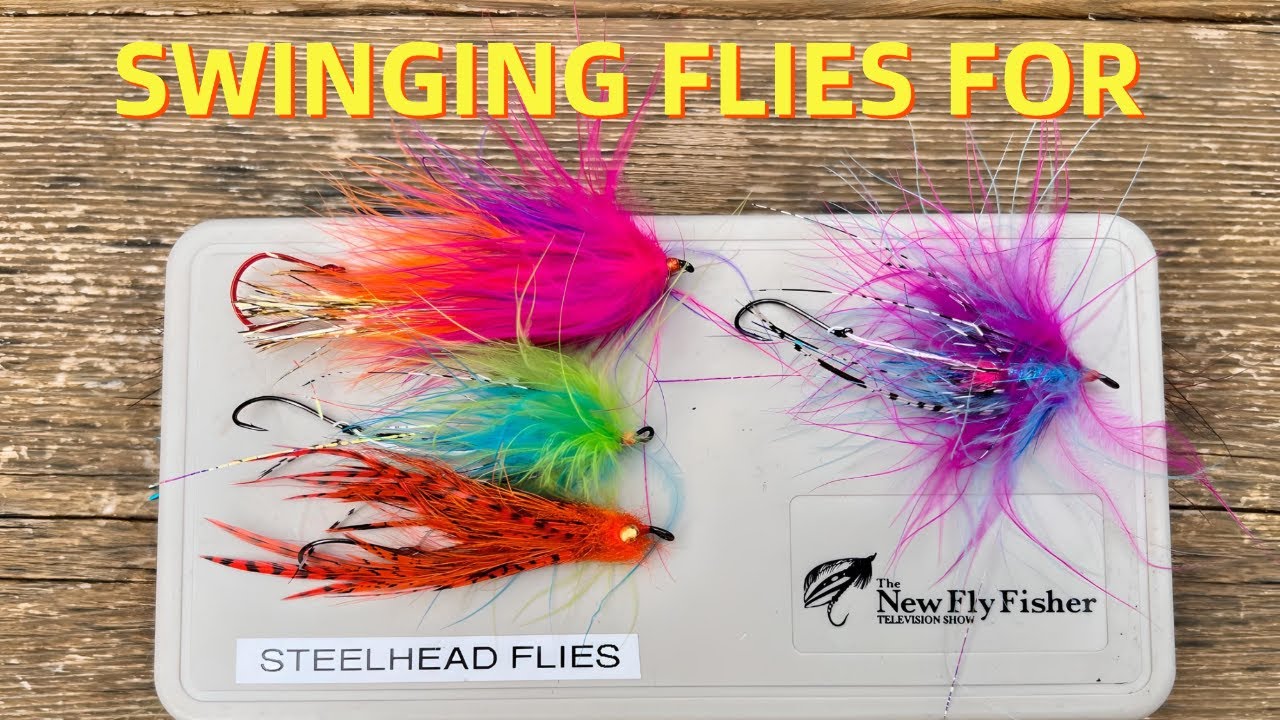
Arrive at first light. Take a moment before you rig up — look at the river. Watch how the current moves. Notice where the water slows, where it deepens, where foam collects. Those seams and tailouts are where steelhead hold.
Rig up. Wade in slowly. Start shallow. Feel the bottom with your feet before you commit your weight. Cast upstream, let your offering drift naturally through the strike zone — that 2-5 foot depth band where steelhead sit. Watch your float or indicator with absolute focus.
And then — maybe on the fifth cast, maybe on the fiftieth — it stops.
Set the hook. Not a bass-fishing rip — a firm lift. The rod loads. Something heavy pulls back. And in that instant, standing in cold water in the gray light of a November morning, you understand why people rearrange their lives around this.
Welcome to the addiction.
Frequently Asked Questions
The questions we hear most from anglers planning their first steelhead trip.
Ready?
Check real-time conditions on all 31 rivers. Flow, clarity, water temp, and the Guide's Report — updated every 15 minutes.
"PTO = Pursuing Trout Obsessively"