White Sucker Life Cycle: The Spring Spawn That Drives Egg Patterns
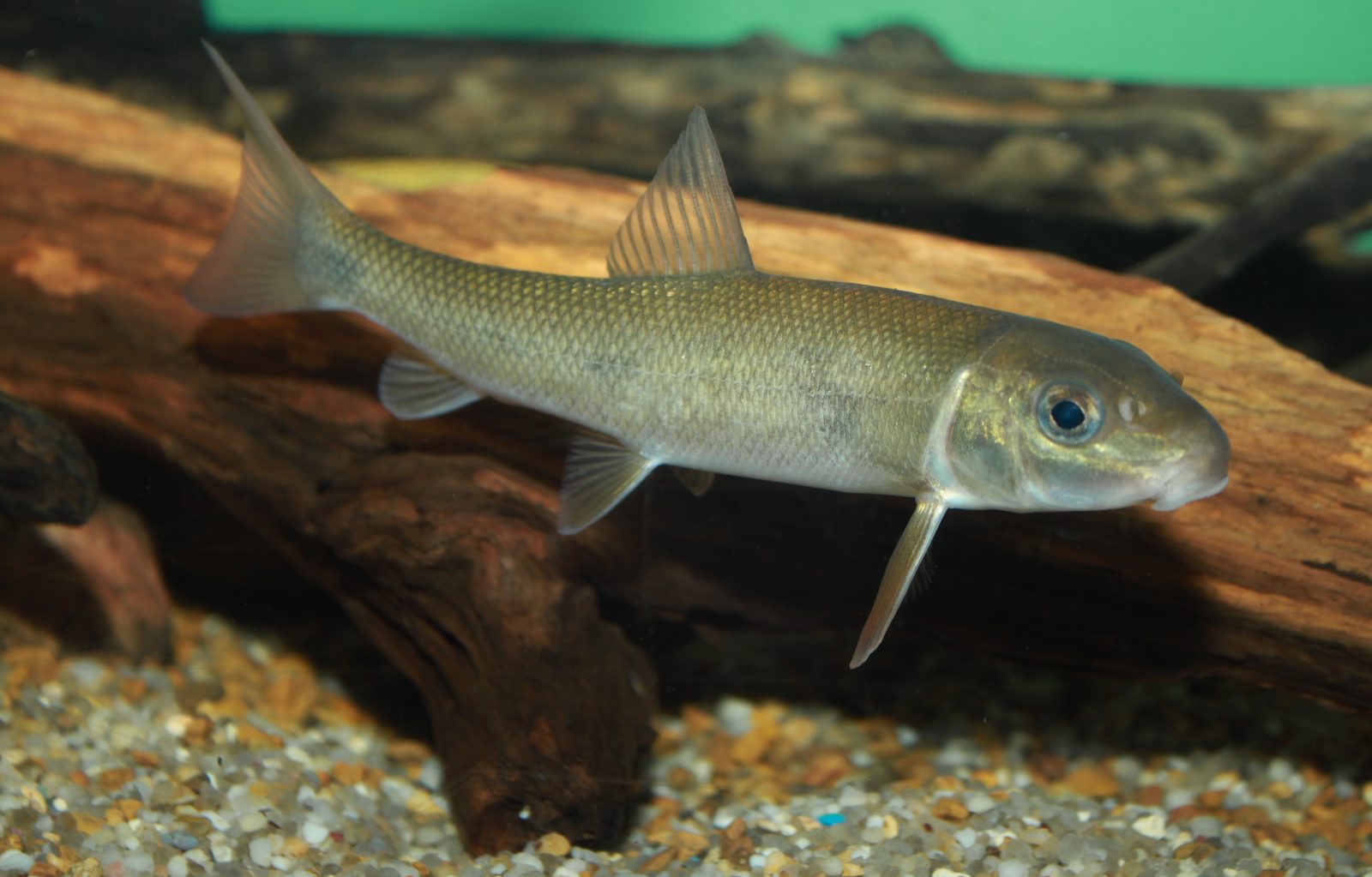
The white sucker (Catostomus commersonii) is the load-bearing spring spawn run on Steelhead Alley tributaries -- the biological event that the entire egg-pattern angler tradition is built on. This pillar walks the lifecycle source-backed and flags every angler-translation step where the Tier 1-3 record goes quiet.
TL;DR -- if you only read one block
Walk into any fly shop on Steelhead Alley in mid-April and the egg patterns are right at eye level: yellow, peach, cream, chartreuse-and-pink. Ask why and you will hear "the suckers are running." This pillar is the source-backed walkthrough of WHAT exactly is running, when, and why the tradition that grew up around it is biologically defensible.
What this pillar is for
The egg-pattern angler tradition on Steelhead Alley rests on one biological event: the white sucker spring spawn run, when a high-fecundity native fish releases tens of thousands of tiny eggs per female onto gravel, in cold water overlapping the steelhead drop-back window. Whether steelhead are quantitatively selective on sucker eggs the way they are on emerald shiners is a question the Tier 1-3 record cannot answer yet -- the GLFC 2004 Lake Erie steelhead diet study sampled July-August, AFTER the April-early-June spawn window. Biology sourced; predator-selectivity structurally gated. This pillar gives you the biology you can defend, and labels the angler-translation lens clearly.
Identity
- Common name: White Sucker
- Scientific name: Catostomus commersonii
- Family: Catostomidae (the suckers)
- Native range: Atlantic, Arctic, Great Lakes, and Mississippi River basins per USGS Nonindigenous Aquatic Species (Tier 3). Native and ubiquitous across eastern North America. White sucker is documented as abundant throughout Ohio per ODNR Sport Fish of Ohio (Tier 1) and broadly distributed in the Great Lakes basin per USGS NAS.
- Maximum size: Up to 64 cm (~25 in) per USGS NAS (Tier 3); PFBC PA Fishes (Tier 1) documents max approximately 24 inches / 5 pounds; ODNR Sport Fish of Ohio (Tier 1) notes they may grow to more than 20 inches.
- Regional aliases: "sucker" (generic), "mullet" (informal), "common sucker", "black mullet" (older usage). These are angler-vernacular and are heuristic, not formal taxonomy.
Sources:
USGS Nonindigenous Aquatic Species, Catostomus commersonii species profile (revised July 2019) -- Tier 3
ODNR Division of Wildlife, Sport Fish of Ohio field guide (Pub. 334) -- Tier 1
PFBC, PA Fishes Chapter 12 (Suckers, Family Catostomidae) -- Tier 1
The white sucker lifecycle, stage by stage
White sucker biology is well-documented at the family and species level. Here is the source-backed walkthrough.
1. Egg -- the spring spawn run
The spawn run is the most-sourced part of the lifecycle. Per ODNR Life History Notes (Tier 1), Ohio white sucker spawning runs April to early May, with adults moving upstream at night onto gravel. Per PFBC PA Fishes Chapter 12 (Tier 1), the spawning run begins when water temperatures reach approximately 50 deg F, with spawning from early May to early June in PA.
The behavior is scatter-spawning over gravel and cobble. Both ODNR and PFBC document gravel-substrate spawning. PFBC adds the critical morphology detail: tiny slightly adhesive eggs that may adhere to substrate or drift downstream. White suckers do NOT build and defend redds the way salmonids do -- there is no scooped depression, no female guarding territory. Females broadcast eggs over the gravel; some stick, some drift, some lodge in interstitial cobble. Salmonid redds concentrate eggs in identifiable scooped depressions; sucker scatter-spawning distributes eggs across whole runs and tailouts, with a drifting fraction that anglers fish blind in the seam.
Fecundity is high: 20,000-50,000 eggs per female per both ODNR Life History Notes and PFBC PA Fishes (corroborating Tier 1 sources). With hundreds to thousands of spawning females moving through a tributary in a season, the gross egg-volume number is genuinely enormous -- the biological justification for fishing egg patterns during this window.
Sources for the spawn stage:
ODNR Division of Wildlife, Life History Notes -- White Sucker -- Tier 1 (Ohio spawning April-early May; gravel substrate; nighttime spawning runs; 20,000-50,000 eggs per female; young hatch and remain in gravel 1-2 weeks)
PFBC, PA Fishes Chapter 12 (Suckers, Family Catostomidae) -- Tier 1 (50 deg F spawning-run threshold; PA early May-early June spawning; gravel/shoal spawning; tiny slightly adhesive eggs may adhere or drift; 20,000-50,000 eggs per female)
2. Larva and fry -- the post-hatch gravel hold
Per ODNR Life History Notes (Tier 1), young hatch and remain in gravel approximately 1-2 weeks before migrating downstream at night. Larval diet is documented as protozoans, diatoms, and small crustaceans.
This is the second window of biological relevance for steelhead anglers. When sucker fry start drifting out at night two weeks behind the egg release, you have a small (1-2 in) silver-and-olive baitfish profile moving through the same water that just held egg drift. The Clouser and Zonker become the natural late-spring extension of the same event. How long the egg-drift fraction itself remains in the drift before settling, hatching, or being consumed is [source-required] -- PFBC confirms drift behavior but does not quantify a duration.
3. Juvenile
After leaving gravel, juveniles move into slower water -- pools, side channels, lower-gradient reaches near tributary mouths. NYSDEC Upper Cattaraugus FMP (Tier 1) documents that lower Cattaraugus Creek reaches near Lake Erie are used by sucker species (family-level Catostomidae) as spawning and nursery habitat. The NYSDEC source does NOT identify white sucker at species level -- family-level claim sourced; species-level NY tributary claim [source-required]. Juvenile habitat preferences for named Steelhead Alley tributaries are [source-required].
4. Adult -- the repeat spring spawner
Adult white suckers are bottom-feeding generalists. Family-level Catostomidae literature widely places adult lifespan in the 12-18 year band. Adults reach reproductive maturity in 3-6 years and then return to spawn every spring of the rest of their lives. That repeat-spawn pattern is what stabilizes the spring egg-availability window from year to year -- a tributary with a healthy adult population delivers the spawn event annually, not as a boom-bust cycle. Max size across sources is roughly 20-25 in / 5 lb (ODNR Sport Fish of Ohio; PFBC PA Fishes; USGS NAS).
Sources for the adult stage:
USGS NAS, Catostomus commersonii -- Tier 3 (max length 64 cm)
ODNR, Sport Fish of Ohio Field Guide (Pub. 334) -- Tier 1 (abundant throughout Ohio; may grow to more than 20 in; used as bait)
PFBC, PA Fishes Chapter 12 -- Tier 1 (max approximately 24 in / 5 lb)
The egg-pattern angler tradition -- and why it works
The Sucker Spawn fly pattern, the glo bug, the Estaz egg, and the single-bead micro egg are the dominant Lake Erie steelhead-tradition egg patterns of the spring tributary window. They exist because the white sucker spawn event puts an enormous mass of small (millimeter-scale) eggs into the drift, on gravel-bottom runs, in cold water, exactly when steelhead are still in the tributary system.
The angler-translation claim: fish a small egg-cluster imitation, dead-drift, through tailouts and gravel runs downstream of confirmed spawning activity, during the April-early-June thermal window when water is in the 45-58 deg F band. Color choice -- cream, yellow, peach, chartreuse, pink -- is widely-attested in the Lake Erie tradition. Whether any specific color matches actual sucker egg pigmentation is [translation heuristic]: PFBC describes the eggs as "tiny slightly adhesive" but does NOT specify a color.
Spring timing across Steelhead Alley
The two sourced state-agency windows bracket the regional range:
- Ohio: April to early May (ODNR Life History Notes, Tier 1) -- leading edge as Ohio tributaries warm earliest.
- Pennsylvania: early May to early June (PFBC PA Fishes, Tier 1) -- a week or two behind Ohio, with the 50 deg F trigger as the strongest cue.
- New York: family-level Catostomidae documented in lower Cattaraugus Creek (NYSDEC Upper Cattaraugus FMP, Tier 1). Species-level white sucker NY tributary timing is
[source-required].
Rough working window across the Alley: mid-April through the first week of June. Tributary-specific peak weeks are [source-required] -- we will not invent them.
Why this matters for anglers
1. Egg patterns are biologically defensible in the spring tributary window. Not because of a Tier 1-3 steelhead-on-sucker-egg diet study (we don't have one -- GLFC 2004 sampled July-August, after the spawn window), but because the upstream biology is rock-solid: an abundant native fish releases tens of thousands of drifting eggs onto gravel in cold water exactly when steelhead are still in the tributaries. Egg patterns during this window are a window-specific high-probability presentation tied to a documented thermal trigger, not a blind year-round default.
2. The thermal trigger is your leading indicator. The PFBC 50 deg F threshold is the cleanest Tier 1 timing cue in the white sucker record. As tributary water climbs through the mid-40s into the low-50s, sucker spawn is imminent -- a calendar-independent way to time the egg-pattern window for any year and any tributary.
3. The lifecycle extends past the egg. Fry hold in gravel for 1-2 weeks then drift at night. The Clouser, the Zonker, and the articulated Sparkle Minnow extend the same biological event into late spring as a different lifecycle stage. The egg is the marquee; the fry drop-back is the follow-on.
Curator's Picks -- gear that fits the lifecycle
These four map directly to the lifecycle stages above. Egg pattern is the marquee for the spawn drop; Clouser, Zonker, and Sparkle Minnow cover the fry/juvenile drop-back. Choose by which stage you are fishing.
Honest gaps -- what this pillar does NOT yet claim
The white sucker biology above is Tier 1 sourced at the order-of-magnitude and timing level. Several adjacent claims you might want -- and that we will not invent -- are still [source-required] at the Tier 1-3 level:
- Specific Steelhead Alley tributary peak-spawning weeks. No Tier 1-3 source closes this for Conneaut Creek, Chagrin River, Elk Creek, Walnut Creek, Cattaraugus Creek, or any other named tributary. The two-state windows above (Ohio April-early May; PA early May-early June) are the closest defensible bracket.
- Egg drift duration -- how long does a drifting egg stay in drift before settling, hatching, or being consumed? PFBC documents that eggs "may adhere or drift" but does not quantify the window. This matters for how far downstream of a spawning aggregation egg patterns remain biologically defensible.
- Juvenile habitat preferences in named Lake Erie tributary mainstems. Family-level nursery use is documented for Cattaraugus Creek (NYSDEC, Tier 1). Species-level white sucker juvenile habitat selection in named Steelhead Alley tributaries is not in cited sources.
- Quantitative steelhead diet selectivity on white sucker eggs and fry. The GLFC 2004 study sampled July-August, AFTER the April-early-June spawning window -- a sampling-window mismatch, NOT a non-selection finding. A spring-timed Lake Erie tributary steelhead diet study would close this gap.
- Brown trout, walleye, smallmouth bass selectivity on sucker spawn. NYSDEC 2024 bass/perch diet analysis is also late-summer sampling, also outside the spawn window.
- Species-level white sucker confirmation in named NY Lake Erie tributaries. NYSDEC Upper Cattaraugus FMP documents sucker species at the family level only.
- Egg color biology. PFBC describes eggs as "tiny slightly adhesive" but does not specify color. The cream/yellow/peach/chartreuse palette is widely-attested angler practice -- not anchored to a Tier 1-3 egg-pigmentation source.
If you have access to studies that close any of these gaps, send them to us. The library grows when source-backed evidence does.
The takeaways
What's running in spring? White sucker (Catostomus commersonii) -- an abundant native Catostomidae spawning in Steelhead Alley tributaries from roughly mid-April through early June, thermally cued at about 50 deg F.
How does it work biologically? Scatter-spawning over gravel and cobble (NOT redd-building); 20,000-50,000 tiny slightly adhesive eggs per female; young hatch and remain in gravel 1-2 weeks before drifting at night; 12-18 year repeat spring spawners.
Where does the biology stop and the tradition start? Biology gives you timing, location, volume, and behavior at Tier 1 source. Tradition adds color stylings, pattern construction, and dropper pairings -- defensible translation heuristic, not Tier 1-3 anchored. The steelhead-on-sucker-egg quantitative diet study does not yet exist because the only available diet study (GLFC 2004) sampled outside the spawn window.
Why we're publishing this
SHA is building toward being the authoritative source for Steelhead Alley forage and lifecycle biology. This article cites the lifecycle to Tier 1 state-agency sources (ODNR, PFBC, NYSDEC) plus Tier 3 USGS NAS, keeps the angler-translation vocabulary explicit, and flags every regional-timing or steelhead-selectivity claim that still needs Tier 1-3 evidence.
Full source list
| Source | Tier | Use |
|---|---|---|
| USGS NAS, Catostomus commersonii species profile (rev. July 2019) | 3 | Native range Atlantic/Arctic/Great Lakes/Mississippi basins. Max length 64 cm. |
| ODNR, Sport Fish of Ohio Field Guide (Pub. 334) | 1 | Abundant throughout Ohio; may grow to more than 20 in; used as bait. |
| ODNR, Life History Notes -- White Sucker | 1 | Ohio spawning April-early May. Nighttime upstream runs on gravel. 20,000-50,000 eggs per female. Young hold in gravel 1-2 weeks then drift at night. Larval diet protozoans/diatoms/small crustaceans. |
| PFBC, PA Fishes Ch. 12 (Catostomidae) | 1 | ~50 deg F spawning-run trigger. PA spawning early May-early June. Gravel/shoal spawning. Tiny slightly adhesive eggs (20,000-50,000) may adhere or drift. Max ~24 in / 5 lb. |
| NYSDEC, Upper Cattaraugus Creek FMP (June 2019) | 1 | Lower Cattaraugus used by sucker species (family-level Catostomidae) as spawning + nursery habitat. Species-level white sucker ID NOT in source. |
| NYSDEC, Baitfish Regulations | 1 | White sucker on NY Green List for Lake Erie and tributaries. Regulatory context only. |
| GLFC Coldwater Task Group, Steelhead Diet in Lake Erie (~2004) | 1 | Sampling-window-mismatch caveat: study sampled July-August (East Basin Aug-Sept), AFTER the April-early-June sucker spawn window. Absence of sucker spawn from top documented prey is sampling artifact, not non-selection. |
Common questions about the white sucker spawn run
When do white suckers spawn in Steelhead Alley tributaries?
Per ODNR Life History Notes (Tier 1), Ohio spawning is April to early May. Per PFBC PA Fishes Ch. 12 (Tier 1), PA spawning is early May to early June, triggered when water temps reach ~50 deg F. Combined regional window: roughly mid-April through the first week of June, leading edge in Ohio, trailing in PA and NY. Species-level NY tributary peak-week timing is source-required -- NYSDEC documents sucker species (family-level Catostomidae) use of lower Cattaraugus Creek but does not confirm white sucker at species level.
Are white suckers native?
Yes. Per USGS NAS (Tier 3), Catostomus commersonii is native to the Atlantic, Arctic, Great Lakes, and Mississippi River basins. Documented abundant throughout Ohio per ODNR Sport Fish of Ohio (Tier 1). It is invasive only in certain western drainages outside its native range.
What temperature triggers the white sucker spawn?
Approximately 50 deg F. PFBC PA Fishes Chapter 12 (Tier 1) documents that white sucker spawning runs begin when water temperatures reach ~50 deg F. This is the strongest Tier 1 anchor for the egg-availability window. Water temp climbing through the mid-40s into the low-50s is the leading indicator the spawn run is imminent.
How many eggs does a white sucker lay?
20,000 to 50,000 eggs per female -- corroborated by both ODNR Life History Notes (Tier 1) and PFBC PA Fishes Ch. 12 (Tier 1). PFBC adds that the eggs are tiny and slightly adhesive, able to either adhere to gravel or drift downstream. Cumulative egg volume per tributary per season is enormous.
Do steelhead eat sucker eggs?
Angler tradition strongly supports yes -- Sucker Spawn, glo bug, and Estaz egg are dominant Lake Erie spring-window patterns. The quantitative Tier 1-3 diet study is NOT yet documented. The only available Lake Erie steelhead diet study (GLFC 2004, Tier 1) sampled July-August, AFTER the April-early-June spawning window. Its absence of sucker spawn from top prey items is a sampling-window mismatch, NOT evidence of non-selection. A spring-timed Lake Erie tributary steelhead diet study would close this gap.
How long do white sucker eggs take to hatch?
The cited Tier 1 sources don't quantify incubation directly. Per ODNR (Tier 1), young hatch and remain in gravel ~1-2 weeks before drifting at night -- implying roughly 1-2 weeks incubation plus 1-2 weeks gravel-hold larval development, for a full egg-to-drift-out window of ~2-4 weeks. Incubation-rate-by-temperature data for Steelhead Alley tributaries is source-required.
Image credits and licensing
This article uses a combination of public-domain, Creative Commons, and state-agency-sourced images. Every image is credited to its source with a link back to the original. Source-cited attribution is part of what we mean by an authoritative library.
- White sucker hero image. Photo source: USGS Nonindigenous Aquatic Species, Catostomus commersonii species profile. Public domain (U.S. federal government work).
If you are a rights-holder and believe an image attribution needs correction, contact us at SHA -- we will fix it promptly.
Continue learning
This pillar is the spring-spawn anchor for the wider Steelhead Alley forage library. Companion pillars:
- Aquatic Insect Life Cycles: What Exactly Is a Hatch? -- the glossary for mayfly, stonefly, caddis, midge lifecycle vocabulary.
- The Goby Takeover -- post-1993 round goby invasion rewriting Lake Erie smallmouth diet from 53.5% crayfish to 64% goby.
- Steelhead Alley Forage Briefing -- what Lake Erie steelhead actually eat per GLFC 2004, source-anchored at Tier 1.
- The Steelhead Alley Seasonal Calendar -- the annual rhythm -- white sucker spawning anchors the April-May section.