Freshwater drum are the Great Lakes' resident curmudgeon -- ill-tempered, vocal, and inexplicably overlooked by anglers who would otherwise spend a small fortune on more glamorous fish. They grunt at boats from the depths. They eat zebra mussels with notable competence. They are the only freshwater member of a family otherwise composed entirely of saltwater croakers, and they are, in their way, here to stay.
Identity & ID
Who this fish is, how to ID, world & state records.
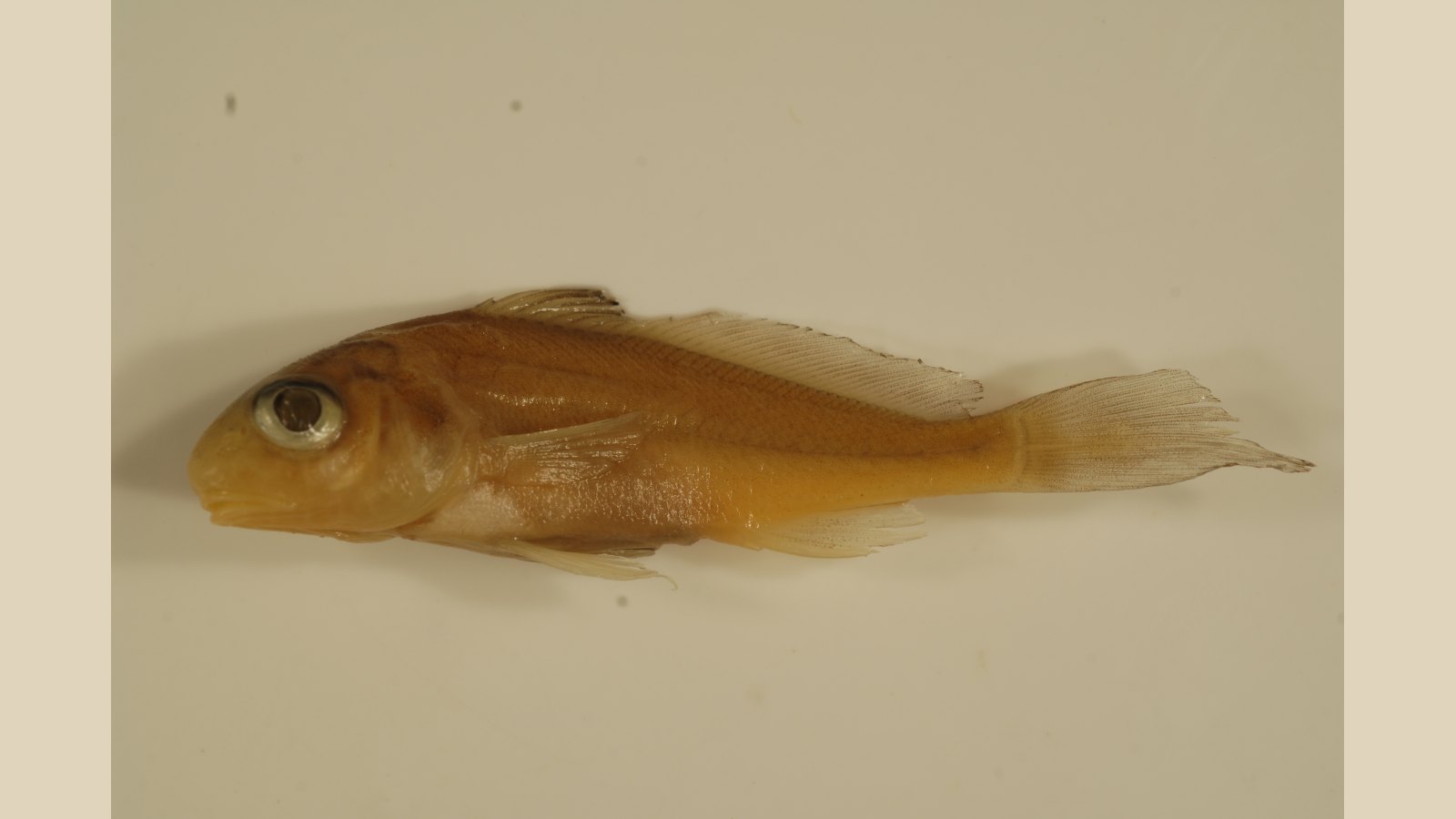
Freshwater drum (Aplodinotus grunniens) are the only North American freshwater member of the Sciaenidae family -- the same family that contains saltwater drum, croakers, redfish, weakfish, and seatrout. Every other Sciaenid is a saltwater species; the freshwater drum is the family's lone freshwater outlier, and its presence in the Great Lakes is one of those biogeographic curiosities that becomes obvious once pointed out.
Identification cues, in order of usefulness:
- High, arched back -- the dorsal profile arches sharply behind the head, giving the fish a distinctive hump-backed silhouette.
- Long single dorsal fin with a notch -- the dorsal fin runs the length of the back with a clear notch separating the spiny front portion from the soft rear portion. Some sources count this as two dorsal fins.
- Subterminal mouth -- the mouth opens under the chin and points downward, a clear bottom-feeder adaptation.
- Large rough scales -- the body scales are prominent and ctenoid (rough to the touch).
- Silver-gray to bronze coloration -- often with a slight purple or pink iridescence in fresh fish.
- Heavy-bodied for length -- a 5-lb drum is shorter than a 5-lb smallmouth would be.
- The drumming/grunting sound -- audible especially when fish are stressed or in dense schools. The sound is produced by a specialized muscle around the swim bladder and is the source of every common name the fish carries.
Range & abundance in the Alley
Where in the SHA region they live and where they're best targeted.
Freshwater drum are widely distributed across central North America -- from southern Manitoba and northern Saskatchewan south to Guatemala (Honduras population is a separate lineage), and east-west from the Appalachians to the Rocky Mountain foothills. The drum has the largest north-south range of any North American freshwater fish.
In the SHA-tracked region:
- Lake Erie -- abundant. One of the most numerous fish in the Lake Erie basin. Lake-wide population estimated in the tens of millions.
- Lake Ontario -- common in the lower reaches and harbors.
- Lake Erie tributaries -- present in the lower reaches of most SHA-tracked rivers; concentrate in deeper pools and around harbor mouths. Grand River, lower Cuyahoga, lower Black, lower Sandusky, and similar are all reliable lower-river drum water.
- Lake Ontario tributaries -- present in the lower reaches near harbors. Black River (Watertown) is a notable example.
Seasonal calendar
Month-by-month: when they bite, spawn, hide, or run.
| Window | What's happening |
|---|---|
| April | Drum become active as water warms past 55 degF. Pre-spawn movement begins. |
| May - June | Spawning window. Open-water broadcast spawning; eggs and larvae are pelagic. |
| June - August | Peak activity. Warmwater feeding on zebra mussels + crayfish + insects. Drum are widely caught as bycatch on smallmouth/walleye tackle. |
| September - October | Active feeding continues into fall as long as water stays above 55 degF. Drum follow the same prey patterns as smallmouth. |
| November - March | Sluggish, deeper water; less active. Some ice-fishing catches in shallow Lake Erie bays. |
Drum activity tracks water temperature closely; the species is most catchable through the warmwater months (May through October on the Great Lakes basin).
Spawning & life cycle
Reproduction biology, age curves, lifespan, behavioral phases.
Freshwater drum are highly fecund broadcast spawners with a relatively unusual reproductive strategy among large North American freshwater fish:
- Spawning -- May through July (water temp 60-75 degF). Multiple males and females spawn simultaneously in open water; eggs and milt are released into the water column.
- Pelagic eggs and larvae -- unusually for large freshwater fish, drum eggs are pelagic (float at the surface) for 1-2 days before hatching. Larvae remain pelagic for several weeks. This is the strategy that allowed drum to colonize the Great Lakes after the last ice age.
- Juveniles -- after pelagic larval phase, juveniles settle into shallow nearshore habitat and shift to bottom-feeding.
- Sexual maturity -- typically age 4-5 (~12 inches).
- Lifespan -- routinely 20+ years; documented individuals exceed 70 years in northern populations. The otolith growth rings make drum one of the easier large fish to age accurately.
The drum's combination of high fecundity + pelagic larvae + long lifespan + adult resilience to a wide range of conditions makes the species one of the most successful native fish in the Great Lakes basin.
Diet & forage
What they eat at each life stage; key forage species.
Freshwater drum are bottom-feeding generalists with specialized pharyngeal teeth that allow them to crush mollusks -- a capability shared with few other North American freshwater fish. The result: drum eat zebra and quagga mussels at meaningful scale.
| Food | Notes |
|---|---|
| Zebra and quagga mussels | Major dietary component since the dreissenid invasion of the late 1980s. Drum are one of the few native predators capable of cracking mussel shells at scale. |
| Crayfish | Heavy summer feeding on rocky bottoms. |
| Native mollusks (snails, native mussels) | Where present. |
| Aquatic insect larvae | Mayfly nymphs (especially hexagenia emergence windows), caddisfly larvae, others. |
| Small fish | Sculpin, gobies, juvenile shiners. Less primary than the invertebrate forage. |
| Round goby | Drum readily eat gobies on rocky bottoms, complementing the smallmouth + walleye consumption. |
The drum's mussel-crushing capability has ecological significance: drum are one of the more important native species controlling dreissenid populations in Lake Erie. Underrated by anglers, undervalued by fishery managers, and quietly doing serious ecological work.
Behavior patterns
Daily rhythm, weather response, water temp tipping points.
Freshwater drum are generally schooling, sluggish, bottom-oriented fish that occasionally surprise anglers with explosive fights. The combination of high body mass + powerful peduncle musculature makes a hooked drum one of the harder-pulling fish in the SHA-tracked set per pound.
Notable behavioral patterns:
- Schooling -- drum frequently aggregate in dense schools, especially during summer feeding windows. Catching one in a school often means catching several in quick succession.
- The grunting sound -- audible when fish are stressed or in dense schools. The drumming muscle around the swim bladder produces a distinctive low-frequency sound that can be heard above water near shore.
- Bottom-feeding -- drum vacuum their prey from the substrate using the subterminal mouth; rarely chase mobile prey.
- Strong fighters -- a hooked drum pulls hard and consistently rather than running in spectacular bursts. The fights are duller than a smallmouth or salmon but cost more arm strength per pound.
- Tolerant of degraded conditions -- drum survive in turbid, low-oxygen, and warm conditions that stress most other large fish. This is one reason the species thrived through the worst of the industrial pollution era.
Today's conditions read for Freshwater Drum
Live from the river network. Pulled at page load — refresh for the latest.
Today's read for Freshwater Drum is editorial-only — no temp window has been calibrated yet for the dynamic feed.
Alley Index today: 97 (Excellent) · Lake Erie surface: 75.9°F
Habitat preferences
Pool / run / riffle, depth, structure, cover, current speed.
Freshwater drum habitat is broad and flexible:
- Lake bottoms over hard substrate -- rocky reefs, gravel beds, sand-and-rock transitions. Lake Erie shoreline structure is excellent drum habitat.
- Lower river reaches -- the lower mile or two of SHA-tracked tributaries near the lake-mouth confluence.
- Harbors + breakwalls -- the structured habitat around harbor mouths concentrates drum reliably.
- Deeper pools in middle river reaches -- larger drum push up into deeper tributary holding water during summer.
- Temperature tolerance -- broad; comfortable 55-80 degF, surviving wider ranges.
- Water-quality tolerance -- exceptional; drum tolerate turbid + low-oxygen conditions that stress most other large fish.
How locals fish for it
Editorial — DJ + community on signature presentations.
Lake Erie shoreline + Lake Ontario shoreline. Charter boats and shore-based anglers catch drum incidentally on bass, walleye, and perch tackle. The fish are widely distributed; specific destinations are less important than presence of suitable bottom structure.
Western Lake Erie basin. Sandusky Bay area, Maumee Bay, the islands -- prime drum water in summer.
Lower Cuyahoga River. The lower river plus Cuyahoga Bay around the harbor are reliable drum water. See the Cuyahoga River guide.
Grand River, Ohio. Lower river around Fairport Harbor concentrates drum reliably. See the Grand River guide.
Black River Bay, Watertown NY. Eastern Lake Ontario; drum present in the bay structure. See the Black River (Watertown) guide.
Local lore & storied waters
Specific Alley waters, history, ethics, traditions.
The drum carries more cultural baggage than its angler reputation suggests:
- The otoliths -- the two large stones in the inner ear (technically the lapilli) were used as currency, jewelry, and ornament by multiple Indigenous Great Lakes peoples. They're often mistaken for ivory and are sometimes called "lucky stones" today.
- The drumming sound -- audible above water when drum school near shore; the sound has been documented in fisheries literature for over a century and explains every regional common name (drum, grunt, grunter, croaker, gou).
- The 1968 Lake Erie crisis -- during the worst of Lake Erie's industrial-pollution era, freshwater drum were one of the few species that persisted in commercial quantities. The drum's water-quality tolerance gave Lake Erie a measure of biological function even when more sensitive species collapsed.
- The dreissenid mussel response -- drum's mussel-crushing pharyngeal teeth have made the species one of the more important native predators of the invasive zebra and quagga mussel populations. This is real ecosystem work that anglers rarely credit.
- The "rough fish" label -- drum, along with carp, suckers, and other native non-game species, have been historically dismissed as "rough fish" by recreational anglers despite being native, ecologically important, and excellent table fare. This bias is slowly receding.
If you fish for smallmouth in Lake Erie and you don't occasionally catch drum, you are either being very selective or you are not fishing where the fish are.
Regulations & ethics
OH/PA/NY/Ontario regs, slot limits, season dates, C&R.
| Authority | Rules of note |
|---|---|
| Ohio (ODNR) | Drum are managed as a non-game species in most contexts; no specific size or daily limits in Lake Erie. Consult ODNR per-cycle. |
| Pennsylvania (PFBC) | Similar; drum are generally non-game with no specific size or daily limits. |
| New York (NYSDEC) | Similar; drum are managed as non-game with generally permissive rules. Consult NYSDEC per-cycle. |
| Ontario (MNRF) | Varies by Fisheries Management Zone. |
The drum's "rough fish" historical classification meant minimal regulatory attention. Some states now recognize the species' ecological role and apply more thoughtful management; the trajectory is generally toward more conservation-attentive treatment but still permissive harvest rules.
Drum are perfectly good table fare (firm white flesh, distinctive flavor). They have been undervalued for generations.