Rainbow Smelt Life Cycle
Lake Erie's secondary steelhead forage -- introduced in 1935, ~24% biomass in the GLFC 2004 steelhead diet study, spring tributary spawning at 40-50 deg F, and still the single most-abundant species in Central Basin hydroacoustic surveys despite a depressed 2025 East Basin signal. The most "tributary-relevant" baitfish in the Lake Erie forage briefing.
TL;DR -- if you only read one block
What this pillar is for
Most fly-shop conversation about Lake Erie baitfish defaults to emerald shiner -- correctly: shiner is the Tier 1 documented anchor of Lake Erie steelhead diet (47.7% occurrence / 57.71% biomass per GLFC 2004, species-confirmed West Central Basin). But rainbow smelt is the second forage species in the same study (~24% biomass), and smelt is the one anglers actually see -- because smelt run upstream in spring, while shiners stay in the lake. This article is the source-backed life cycle reference for the smelt side of the Lake Erie forage briefing.
Identity
Per the USGS Nonindigenous Aquatic Species rainbow smelt profile (Tier 3) and the USFWS Ecological Risk Screening Summary (Tier 3):
- Common name: Rainbow Smelt. Regional aliases: "smelt," "lake smelt," "American smelt."
- Scientific name: Osmerus mordax.
- Family: Osmeridae (smelts). Rainbow smelt is the dominant Osmeridae representative in the Great Lakes.
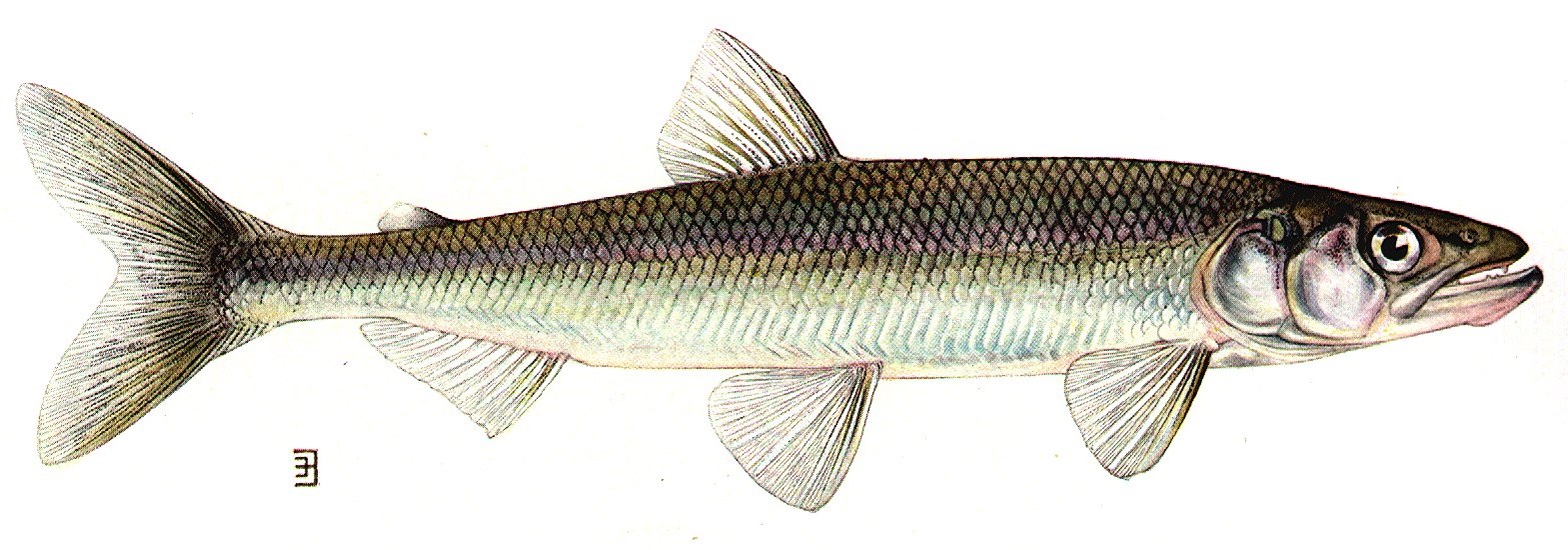
- Identification: silvery body with pale green back, white underside, and distinctive iridescent purple/blue/pink along the sides. Adults 100-350 mm (4-14 in).
- Native range: Atlantic drainages from Newfoundland to the Delaware River, plus Arctic and Pacific drainages from the Northwest Territories to Vancouver Island. Native populations are anadromous -- they spawn in freshwater and live as adults in the ocean.
- Great Lakes status: INTRODUCED. Stocked into Crystal Lake, Michigan in 1912 and colonized all five Great Lakes by the 1930s. Established in Lake Erie 1935. The Great Lakes population is landlocked / potamodromous -- adult life cycle stays within the lake, spawning happens in tributaries.
Sources:
USGS Nonindigenous Aquatic Species, Rainbow Smelt species profile (revised September 2020) -- Tier 3
USFWS Ecological Risk Screening Summary, Osmerus mordax (August 2025) -- Tier 3
The smelt life cycle
Rainbow smelt go through four distinct life stages that map cleanly to depth, season, and angler accessibility. Per USGS NAS (Tier 3) and GLFC Forage Task Group March 2026 reporting (Tier 1):
Egg stage -- tributary spawning, post-ice-out
Adult smelt move from the lake into tributary mouths and along shorelines after ice-out. Spawning begins at water temperature ~4.4 deg C (40 deg F) and peaks at ~10 deg C (50 deg F) per USGS NAS (Tier 3). Eggs are demersal and adhesive (scatter onto gravel and substrate). Females release thousands of eggs in a brief window, mostly at night. The same 40-50 deg F window overlaps the dropback steelhead window after the main spring run.
Larva stage -- planktonic spring drift
Eggs hatch within days to weeks depending on temperature. Larval smelt are tiny (a few millimeters), planktonic, and drift downstream into the lake on tributary current. The larval stage is short and not a targetable angling stage.
Juvenile stage -- shoreline 2-6 m depth
Per USGS NAS (Tier 3), young rainbow smelt inhabit shorelines at 2-6 m depth, feeding on copepods and cladocerans. YOY and Age I smelt sit in the 1-5 in body length range -- the predator-relevant size class for trout, walleye, and other lake predators. Per the GLFC March 2026 Forage Task Group report (Tier 1), 2025 hydroacoustic surveys found rainbow smelt was the most abundant single species in both epilimnion and hypolimnion of the Central Basin -- even though overall density remained below long-term means.
Adult stage -- vertical migrators, spawning runs
Adult rainbow smelt make seasonal vertical migrations between 18-91 m depth per USGS NAS (Tier 3): deeper in summer (cool hypolimnion), shallower in winter, and concentrated nearshore + in tributary mouths during the April-May spawning run. Lifespan is up to 8 years. Adult body size is 100-350 mm (4-14 in); the smaller end (4-7 in) is the predator-relevant class for steelhead, lake trout, walleye, and brown trout. The larger 10-14 in adults are eaten primarily by lake trout and walleye that can handle the size.
Sources:
USGS NAS Rainbow Smelt species profile -- Tier 3
GLFC, Report of the Lake Erie Forage Task Group (March 2026) -- Tier 1
Pothoven, Vanderploeg, Ludsin, Hook, Brandt (2009), Feeding Ecology of Emerald Shiners and Rainbow Smelt in Central Lake Erie, J. Great Lakes Research 35(2) -- Tier 3
Tributary spawning runs -- the angler-relevant angle
Of every Lake Erie forage species we cover in the steelhead briefing, rainbow smelt is the one that you can actually watch as an angler -- because smelt come to you. They run upstream into the tributary system in spring at temperatures that overlap directly with the steelhead and dropback steelhead fishing window.
What the run looks like
Adult smelt push into tributary mouths and along nearshore shorelines at night. Spawning concentrates in gravel and substrate riffles in lower-reach tributaries; eggs scatter onto gravel, larvae drift back into the lake within days. The run window is short -- usually 2-3 weeks at peak intensity per tributary, dependent on temperature ramp. Historically, spring smelt dipping was a major cultural angling activity in Steelhead Alley shore towns; NYSDEC permits smelt dip-net collection under standard fishing license (Tier 1). PA and Ohio dip-net specifics vary by state and require current regulation check.
Named-tributary specifics -- where this gets honest
Specific named Steelhead Alley tributaries with current-year documented smelt runs remain [source-required] at the Tier 1-3 level. Historic Ohio + PA + NY smelt runs are widely-cited in angler practice and shore-town tradition, but current-year run-intensity reports are Tier 5 angler-facing, not Tier 1-3 state-agency river-by-river run reports. We won't fabricate a "smelt run on River X" calendar without source backing.
Sources:
USGS NAS Rainbow Smelt -- Tier 3 (thermal trigger + spawning behavior)
NYSDEC, General Freshwater Fishing Regulations (dip net provisions for smelt + suckers + alewives + blueback herring) -- Tier 1
Why this matters for steelhead anglers
The steelhead-on-smelt diet anchor is the GLFC 2004 Coldwater Task Group study (Tier 1): smelt + emerald shiner together occurred in 82-91% of Lake Erie steelhead stomachs across basins; smelt contributed roughly 24% dry-weight biomass in the West Central Basin. That makes smelt the second-most documented Lake Erie steelhead baitfish behind emerald shiner -- so smelt-pattern streamers belong in the streamer box.
Where smelt patterns work
- Spring smelt-run window in tributary mouths. The most defensible window -- 4.4-10 deg C (40-50 deg F) concentrates smelt nearshore plus dropback steelhead work the same water. Silver/blue/pearl streamers swung through current breaks.
- Summer offshore boat fishing. Smelt's adult vertical migration to 18-91 m means jigging spoons and trolled smelt-pattern lures over deeper Central + East Basin water. Cool hypolimnion keeps smelt + cold-water predators (steelhead, lake trout, walleye) in the same thermal layer.
- Fall pre-spawn staging for returning steelhead. Steelhead returning in October-November stage at lake-tributary interface water where smelt also concentrate in pre-winter nearshore movement. Translation heuristic -- mechanism structurally plausible; quantitative selectivity at fall-staging windows remains
[source-required].
Color and size translation
Per the rainbow-smelt entry in our pattern-mapping reference:
- Color bands: silver/blue iridescent (matches USGS NAS coloration directly), silver/pearl with pink accent, chrome/blue back. White/silver with chartreuse for stained water.
- Hook size range: size 2-6 for adult-class smelt imitations (3-7 in body), size 6-10 for YOY-class (3-5 in body).
- Presentations: swung streamers (Clouser, Murdich, Sparkle Minnow, Game Changer baitfish) through tributary-mouth current breaks; jigging spoons (silver/blue chrome) for vertical presentations to suspended schools; trolled smelt-imitation lures for open-lake feeding.
[source-required]. Current adult walleye + brown trout + lake trout smelt-diet selectivity is also [source-required] at the same quantitative level.
Source: GLFC Coldwater Task Group, "An Analysis of the Diet of Steelhead Trout in Lake Erie" (~2004 final report) -- Tier 1
Curator's Picks
Four picks from the SHA shelf that anchor to the smelt forage profile -- same product set as our emerald shiner pillar because the silver/blue/pearl baitfish color band maps to both Lake Erie forage anchors.
- Clouser Minnow (B0CCRRMP1M). Canonical silver/blue/pearl Lake Erie baitfish-imitation streamer. Pairs to smelt body color band and the 4-7 in predator-relevant size class.
- Tigofly weighted Zonker streamer (B07CNWWTH5). Weighted baitfish profile that swings through tributary mouths during the spring smelt run (40-50 deg F per USGS NAS). Size 2-6 covers the predator-relevant 3-7 in body length.
- Articulated Sparkle Minnow (B0CH1B593Q). Articulation gives a longer baitfish silhouette matching the upper end of the predator-relevant smelt range (4-7 in). Sparkle minnow + Clouser + generic baitfish are the Tier 1 fly-pattern hits per our pattern-mapping reference.
- Brass beadhead glo-bug + assorted nymph kit (B0D7QK18BF). Spring-tributary-window companion to smelt streamers. The smelt spawning run overlaps sucker-spawn egg drift (~50 deg F per PFBC Tier 1) and stonefly/midge nymph activity -- the multi-pattern presentation for the same spring tributary scene.
Honest gaps -- what this profile is not yet ready to publish
SHA's source-discipline rule is that we flag every claim where the Tier 1-3 evidence stops. For rainbow smelt, the open residuals are:
- Named-tributary current-year smelt-run timing. Historical Ohio + PA + NY tributary smelt runs are widely-documented in angler practice; current-year tributary-specific run intensity remains
[source-required]at the Tier 1-3 state-agency level. - Quantitative size-class predator selectivity. GLFC 2004 (Tier 1) anchors "smelt is in steelhead diet at ~24% biomass." Size-stratified selectivity (which smelt size each predator size targets) remains
[source-required]. - Current adult walleye + brown trout + lake trout smelt-diet selectivity. USGS NAS identifies smelt as forage for walleye + lake trout (Tier 3); current adult walleye and brown trout quantitative smelt-diet selectivity at the same Tier 1-3 level remains
[source-required]. - 2025 East Basin population status caveat. Per GLFC March 2026 FTG (Tier 1): East Basin age-1+ smelt density declined sharply vs 2024; New York East Basin total forage biomass was FOURTH-LOWEST in the time series at 4.8 kg/ha; Central Basin smelt remained below long-term means despite still being the most abundant single species in epilimnion + hypolimnion. Smelt-pattern angling cannot assume historical density.
- River-specific dip-net regulations. NYSDEC dip-net rule is Tier 1 sourced; PA and Ohio specifics are
[source-required]by state. - Lake Ontario tributary smelt applicability. This profile is Lake Erie focused. Lake Ontario tributary patterns are
[source-required]separately.
If you have studies that close any of these gaps -- particularly current-year state-agency tributary-specific smelt-run reports or post-2010 size-stratified predator-diet studies -- send them in.
Full source list
| Source | Tier | Use |
|---|---|---|
| USGS Nonindigenous Aquatic Species, Rainbow Smelt species profile (revised September 2020) | 3 | Identity (silvery body / iridescent purple-blue-pink sides / 4-14 in adult); native Atlantic + Arctic + Pacific drainages; Great Lakes introduction 1912 Crystal Lake Michigan; established Lake Erie 1935; juvenile depth 2-6 m; adult vertical migration 18-91 m; spawning thermal trigger 4.4-10 deg C (40-50 deg F); diet copepods + cladocerans (juvenile) + benthic crustaceans + small fish (adult); lifespan up to 8 years; competes with Lake Herring; contributed to Blue Pike extinction. |
| USFWS Ecological Risk Screening Summary, Osmerus mordax (August 2025) | 3 | Federal species risk screening for rainbow smelt; broad species context. |
| GLFC Coldwater Task Group, Diet of Steelhead Trout in Lake Erie (~2004) | 1 | Lake Erie steelhead diet anchor for rainbow smelt: smelt + shiners combined occurred in 82-91% of steelhead stomachs across basins; smelt ~24% biomass West Central Basin overall; second-most documented baitfish in Lake Erie steelhead diet after emerald shiner. |
| GLFC, Report of the Lake Erie Forage Task Group (March 2026) | 1 | 2025 East Basin forage densities below time-series averages in New York + offshore Ontario; New York total forage biomass 4th-lowest at 4.8 kg/ha; East Basin age-1+ rainbow smelt density declined sharply vs 2024; Central Basin age-0 and age-1+ smelt below long-term means but smelt was the most abundant single species in both epilimnion + hypolimnion. |
| Pothoven, Vanderploeg, Ludsin, Hook, Brandt (2009), Feeding Ecology of Emerald Shiners and Rainbow Smelt in Central Lake Erie, J. Great Lakes Research 35(2) | 3 | Central Lake Erie offshore May-October 2005 sampling; peer-reviewed evidence for offshore pelagic presence; smelt + emerald shiner feeding ecology baseline. |
| NYSDEC, General Freshwater Fishing Regulations -- smelt dip net provisions | 1 | Smelt may be collected by dip nets under NYSDEC fishing license; statewide dip net regulations cover smelt + suckers + alewives + blueback herring. |
Common questions about rainbow smelt in Lake Erie
When do rainbow smelt spawn in Lake Erie tributaries?
Per USGS Nonindigenous Aquatic Species (Tier 3), spawning begins at ~4.4 deg C (40 deg F) and peaks at ~10 deg C (50 deg F) -- typically April into early May on Steelhead Alley tributaries depending on year and tributary. Adults move from the lake into tributary mouths at night; spawning concentrates in gravel riffles in the lower reaches. Current-year run-river timing for named Ohio + PA + NY tributaries remains source-required at the Tier 1-3 state-agency level.
How big do rainbow smelt get?
Adults are 100-350 mm (4-14 in) per USGS NAS (Tier 3). The predator-relevant class for steelhead, walleye, and lake trout is the smaller adult range (4-7 in) plus YOY (1-5 in). Smelt lifespan is up to 8 years.
Are rainbow smelt native to Lake Erie?
No. Rainbow smelt was deliberately stocked into Crystal Lake, Michigan in 1912 and established in Lake Erie 1935 per USGS NAS (Tier 3). The Great Lakes population is landlocked (potamodromous), not anadromous like the Atlantic-coast native runs. Smelt is documented as contributing to the extinction of Blue Pike via predation on fry + competition, and competes with native Lake Herring for zooplankton. Valuable forage AND ecologically destructive introduced species.
What time of year do smelt run upstream?
Spring -- after ice-out, when tributary water reaches 4.4-10 deg C (40-50 deg F) per USGS NAS (Tier 3). The window is short, usually 2-3 weeks at peak intensity per tributary. Spawning happens primarily at night. NYSDEC permits dip-net collection under fishing license (Tier 1); PA and Ohio specifics require current regulation check.
What is the rainbow smelt population status in Lake Erie right now?
Per the GLFC March 2026 Forage Task Group report (Tier 1): smelt is in a relatively low-abundance phase. East Basin age-1+ smelt density declined sharply in 2025 vs 2024; age-0 and age-1+ catches were low in New York and Ontario; New York East Basin total forage biomass was FOURTH-LOWEST in the time series at 4.8 kg/ha. Central Basin age-0 and age-1+ smelt remained below long-term means -- even though smelt was still the most abundant single species in both epilimnion and hypolimnion. Smelt-pattern angling cannot assume historical density-driven bite intensity.
Do Lake Erie steelhead actually eat rainbow smelt?
Yes -- per GLFC 2004 (Tier 1), smelt + emerald shiner combined occurred in 82-91% of Lake Erie steelhead stomachs across basins; smelt contributed ~24% dry-weight biomass in the West Central Basin. Smelt is the second-most documented Lake Erie steelhead baitfish behind emerald shiner (47.7%/57.71% per the same study).
Image credits and licensing
This article uses a combination of public-domain federal-agency imagery and source-cited educational images. Every image is credited to its source with a link back to the original.
- Hero image -- Rainbow smelt (Osmerus mordax). Image source: USGS Nonindigenous Aquatic Species, Rainbow Smelt species profile. Public domain (U.S. federal agency work).
If you are a rights-holder and believe an image attribution needs correction, contact us at SHA -- we will fix it promptly.
Continue learning
This life cycle pillar is part of the SHA forage briefing library. Related source-anchored pillars:
- Steelhead Alley Forage Briefing -- what Lake Erie steelhead actually eat per the GLFC 2004 Coldwater Task Group diet study. The umbrella source-anchored at Tier 1.
- Emerald Shiner Life Cycle -- the primary Lake Erie steelhead baitfish (47.7% occurrence / 57.71% biomass per GLFC 2004). Smelt's companion forage profile.
- The Goby Takeover -- how the post-1993 round goby invasion rewrote the Lake Erie smallmouth bass diet from 53.5% crayfish to 64% round goby. NYSDEC 2024 + Steinhart 2004 sources.
- Aquatic Insect Life Cycles -- the companion entomology glossary covering mayflies, stoneflies, caddis, and midges. The vocabulary anchor for "hatch" matching.
- The Steelhead Alley Seasonal Calendar -- the annual rhythm placing smelt in the seasonal forage picture.