March Brown Hatch (Maccaffertium vicarium): The Large Mayfly That Bridges Spring
March browns (Maccaffertium vicarium, formerly Stenonema vicarium) hatch from late April through May on SHA-region inland trout streams. Large freestone mayfly + mottled wing pattern + sporadic but substantial daytime emergences. The species bridges the Hendrickson season + the Sulphur season; substantial brown trout fishing during the overlap window.
TL;DR
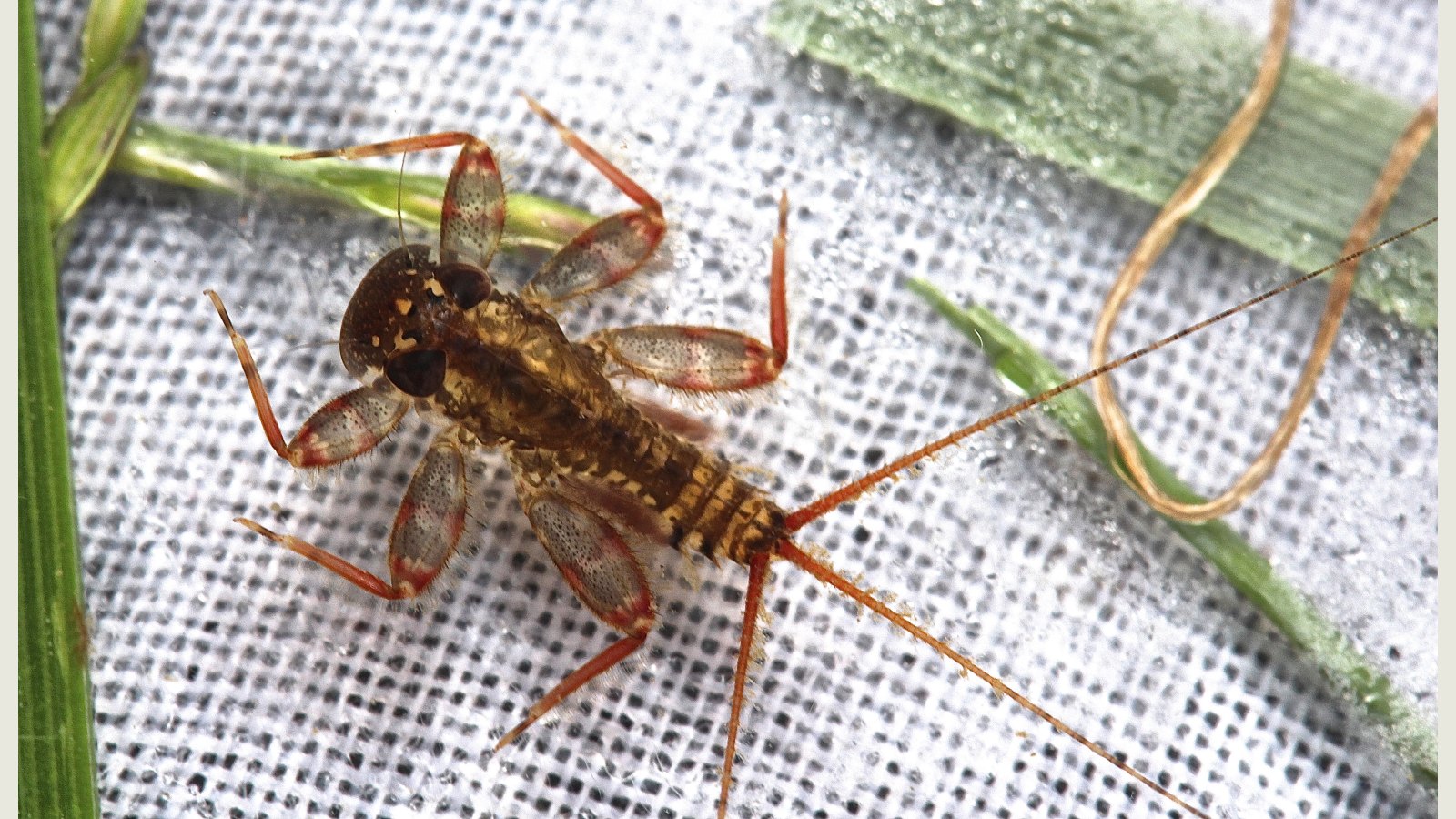
Identification
- Body color: tan-brown body with yellow undertones.
- Wing color: distinctive mottled gray + brown patches. The mottled wing is the diagnostic feature.
- Size: body length 10-14 mm; hook size 10-12.
- Tails: two (not three).
- Body shape: robust mayfly; large abdomen relative to thorax.
Timing
| Geographic onset | Late April in most SHA-region streams; water temperatures around 55-60 degF. |
| Peak weeks | Mid-May. |
| Tail-off | Late May into June. |
| Daily timing | Duns emerge sporadically through the afternoon; spinner fall in late afternoon. |
| Density | Less dense than Hendrickson or Sulphur. Individual fish throughout the afternoon rather than concentrated emergences. |
Tactics + flies
- Dun patterns: March Brown Comparadun + March Brown Parachute + Catskill-style March Brown. Sizes 10-12.
- Spinner patterns: rust-brown body with mottled spent-wing pattern.
- Wet fly patterns: the historic wet-fly March Brown pattern is classic + effective.
- Nymph patterns: size 10-12 nymphs in olive + brown.
- Tippet: 4X-5X. Large flies + larger fish accommodate stronger tippet.
SHA-region waters
March browns hatch on freestone water across the SHA region. Particularly substantial populations on Allegheny National Forest tributaries + larger NW PA streams (Oil Creek, Tionesta). See the Class A near the Alley pillar for water context.
Honest gaps
- Multiple closely-related Maccaffertium species lumped as "March brown" by anglers (genus formerly Stenonema; nomenclature recently revised).
- Site-specific timing varies; field observation is authoritative.
- Some anglers distinguish "March brown" + "gray fox" (M. ithaca) as separate hatches; treatment here lumps them.
Full source list
- Tier 3 -- entomological reference: Maccaffertium (formerly Stenonema) literature.
- Tier 1 -- state agency hatch reference where published.
Common questions
Why is the March brown called that?
British angling nomenclature: the European March brown (Rhithrogena germanica) hatches in March in Britain. The American March brown emerges in May but inherits the British common name.
Are March browns and gray foxes the same?
Closely related; some anglers distinguish them as separate hatches. M. vicarium is the larger + darker; M. ithaca (gray fox) is lighter + slightly smaller. Both produce similar fishing.
What's the easiest way to recognize a March brown on the water?
The mottled wings are unmistakable. No other SHA-region mayfly has the same wing-marking pattern.
Image credits and licensing
- Inline image: March browns are flatheaded mayflies, built for faster current and clinging habitat. Photo: Bob Henricks / Wikimedia Commons, CC BY-SA 2.0.
- Hero image: Photo: Bob Henricks / Wikimedia Commons, CC BY-SA 2.0.