Steelhead Life Cycle: From Egg to Lake Erie Tributary Run
The SHA audience IS steelhead anglers. This is the flagship biology pillar -- egg, alevin, fry, parr, smolt, adult lake stage, spawning run, kelt. Source-anchored where the science is anchored, honest about the regional Steelhead Alley tributary-specific timing gaps that remain at the Tier 1-3 level. Read this before any other lifecycle article on the site.
TL;DR -- if you only read one block
[source-required] for tributary-by-tributary wild-vs-stocked reproduction ratios.
[source-required] at Tier 1-3.
The Lake Erie steelhead fishery is the heart of Steelhead Alley. Every decision an angler makes -- which fly to tie on, which run to wade, which trip date to pencil in, which gear to keep on hand for what conditions -- traces back to a moment in the steelhead's lifecycle. This pillar walks the full sequence from egg to kelt, ties each stage to angler-translation patterns, anchors what can be anchored to Tier 1-3 state-agency and peer-reviewed sources, and is explicit about where Steelhead Alley tributary-specific timing data remains gated by the absence of public Tier 1-3 anchors.
The honest framing matters: most Lake Erie tributary steelhead are hatchery-origin fish released as yearling smolts that migrate to Lake Erie, feed for one to three years on a baitfish-anchored diet, and return to natal (or imprint-tributary) waters as adults to spawn. The lifecycle that produced them happened largely in a hatchery -- but the lifecycle that drives WHAT THEY DO when they hit your river is the wild salmonid lifecycle. Both stories belong here.
What this pillar is for
Three things this article does that most steelhead "lifecycle" content does not:
- Sources everything that can be sourced. The adult lake-stage diet anchor is GLFC 2004 Tier 1 (n=349 stomachs). The tributary-run fishery context is PFBC + NYSDEC Tier 1. The 50 deg F sucker-spawn thermal benchmark anchors the broader spring egg-availability window via PFBC Tier 1. Where regional Steelhead Alley tributary-specific timing is widely-attested in angler practice but NOT anchored to Tier 1-3 public-agency or peer-reviewed sources, we flag it
[source-required]rather than invent a peak-week table. - Honors the hatchery-primary reality. Lake Erie steelhead is fundamentally a stocked program. Natural reproduction exists but is limited; this is NOT a Pacific Northwest wild-population fishery. Editorial framing preserves that nuance.
- Maps each lifecycle stage to angler tactics. Egg patterns slot the spring spawn window. Streamers slot the adult lake-stage forage anchor. Nymphs cover the parr-stage in-stream feeding and adjust to in-tributary adult drift. Smoltification + out-migration windows have implications for tributary trout fishing (you're seeing the parr-to-smolt transition). The lifecycle is not academic biology -- it is the operating manual for a year-round Alley angler.
Identity
- Common name: Steelhead (life-history term for lake-run / sea-run rainbow trout)
- Scientific name: Oncorhynchus mykiss (Walbaum, 1792)
- Family: Salmonidae
- Native range: Pacific Northwest of North America + Russian Far East. Sea-run anadromous form of rainbow trout in Pacific drainages. Lake-run "steelhead" in the Great Lakes is a translation of the anadromous life-history into a freshwater-lake adoptive system.
- Working scope for this pillar: species-level Oncorhynchus mykiss with the LAKE ERIE LAKE-RUN life-history specifically. Pacific anadromous applicability + Lake Ontario lake-run applicability remain source-required for any extension claims and are not made here.
- Great Lakes introduction history: rainbow trout were introduced to the Great Lakes from the Pacific Northwest beginning in the late 1800s via state and federal stocking programs (Michigan ~1876+ is the widely-cited starting point). Lake Erie tributary steelhead populations are sustained by ongoing state-agency stocking programs (PFBC + NYSDEC + ODNR -- ODNR program context source-required pending live URL refresh per Codex 2026-06-23 audit). Treat the 1876 Michigan-stocking date as widely-attested historical context until a Tier 1-3 state-agency historical source is attached; the modern Lake Erie stocking program is well-documented at Tier 1.
- Regional aliases (heuristic): "lake-run rainbow", "lake-runner", "chrome", "Erie chrome", "fresh fish" (just out of the lake), "drop-back" (post-spawn fish returning to Lake Erie).
Sources for Lake Erie program context:
PFBC, Steelhead Pennsylvania program -- Tier 1 PA state agency for PA Lake Erie steelhead tributary context
NYSDEC, Steelhead Fishing in Lake Erie Tributaries -- Tier 1 NY state agency for NY Lake Erie steelhead tributary context
ODNR Lake Erie steelhead program context -- [source-required] pending live URL refresh per Codex 2026-06-23 audit (ODNR Steelhead Trout Fishing promo URL returned 404)
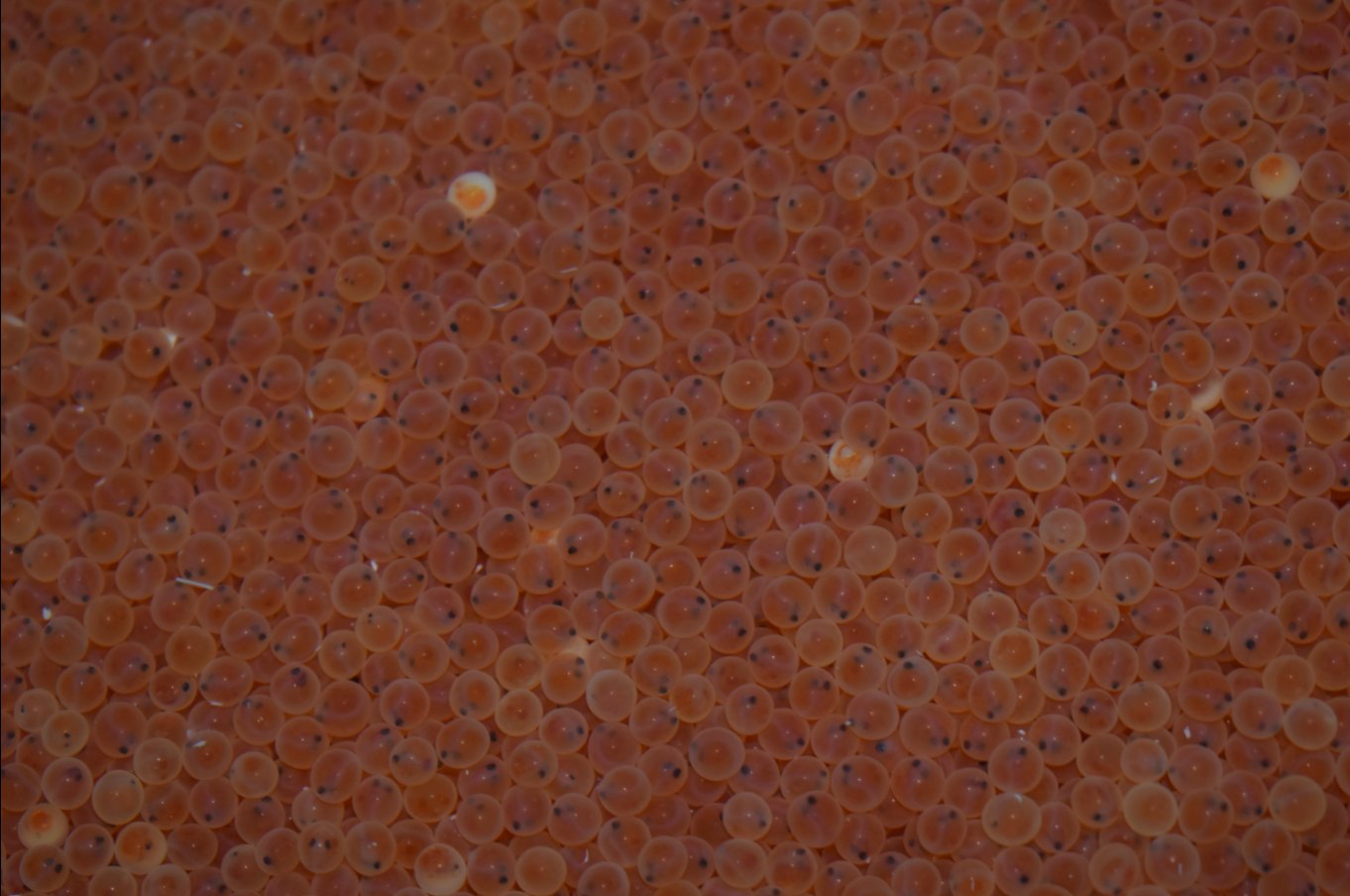
Lifecycle stage 1: Egg
Stage summary: Deposited by spawning female on gravel substrate in stream redds during spring spawn (March-May in the Lake Erie tributary system). Buried in gravel for protection from predation + UV. Incubation depends on water temperature; cold tributary water means longer incubation than Pacific Northwest analogues.
Timing. Lake Erie tributary spawning is primarily a spring event -- March, April, and into early May depending on river, latitude, and water temperature. Some fall + winter staging adults will hold in tributaries from October-November through the spring spawn. The widely-cited 50 deg F downstream tributary water temperature is the entry-trigger benchmark broadly used in angler practice (translation heuristic for Lake Erie steelhead specifically; the SAME 50 deg F number is anchored at Tier 1 PFBC for sucker spawn -- see white-sucker forage profile -- but its specific application to steelhead spawn-run initiation in Lake Erie tributaries remains [source-required] at Tier 1-3). Fall-run staging fish accumulate from October-November when water temperatures drop and tributary flows pick up after summer thermal stress; they hold through winter and spawn in spring.
Fecundity. Steelhead and rainbow trout broadly produce on the order of ~2,000 eggs per pound of female body weight per general salmonid life-history references. A 6-8 lb Lake Erie steelhead female could carry roughly 12,000-16,000 eggs; specific Lake Erie tributary fecundity studies are [source-required] at Tier 1-3.
Habitat. Spawning concentrates on clean gravel substrate in tributary riffles + run tailouts with moderate current and good oxygen exchange. Pea-gravel to golf-ball-sized substrate is the broadly-cited preference (consistent with brown trout spawning habitat per the brown-trout profile). Females excavate a redd (gravel depression) with their tail; males fertilize as eggs are deposited; the female covers the redd with displaced gravel. Lake-Erie-tributary-specific spawn substrate maps by named river remain [source-required].
Incubation. At typical late-winter / early-spring Lake Erie tributary water temperatures (35-45 deg F), incubation runs roughly 30-90 days. Warmer temperatures shorten the window; colder water in headwater reaches stretches it. Specific Lake Erie tributary incubation studies are [source-required].
Predator encounter notes. Salmonid eggs were NOT in the top documented prey items in the GLFC 2004 Lake Erie steelhead diet study at its sampling scope. As flagged in the salmonid-eggs-fry forage profile, this absence is a SAMPLING-WINDOW MISMATCH -- the GLFC 2004 study sampled stomachs primarily July-August (East Basin August-September), AFTER spring spawn-run egg-availability windows. The absence is NOT evidence that steelhead don't eat eggs during spawn-run windows; it is evidence that nobody timed a study to capture spring + fall windows in Lake Erie tributaries. Egg-pattern fly fishing during steelhead spawn-run windows is widely-attested Lake Erie tradition. Treat egg patterns as a defensible spawn-run-window choice based on biological egg-availability + angler practice -- NOT as a Tier 1-3 quantitatively diet-anchored pattern.
Source-status labels for this stage: general salmonid spawning habitat + redd-construction behavior is source-backed via general salmonid life-history references (Tier 3-5); 50 deg F downstream tributary thermal trigger is translation heuristic for steelhead specifically (Tier 1 PFBC anchors the same number for sucker spawn, NOT directly for steelhead spawn-run initiation); Lake Erie tributary spawn substrate maps + incubation studies + fecundity by tributary are source-required; egg-stage predator selectivity is source-required due to GLFC 2004 sampling-window mismatch.
Lifecycle stage 2: Alevin (sac-fry)
Stage summary: Newly hatched larvae buried in gravel, nourished by attached yolk sac. ~2-4 weeks underground before emerging as free-swimming fry.
Timing. Alevin hatch from eggs roughly April-May in most Lake Erie tributaries (timing follows incubation completion, which follows the March-May spawn window). They remain in gravel interstices absorbing the yolk sac for approximately 2-4 weeks before emerging.
Habitat. Inside the redd. The alevin doesn't feed yet -- yolk sac provides energy. Gravel substrate protects from current, predation, and UV. The same gravel quality that supports successful spawning supports successful alevin development; sediment-clogged gravel suffocates alevin and is one mechanism by which degraded tributaries lose natural reproduction.
Predator encounter notes. Not a target stage for anglers -- alevin are below gape-limit and inside gravel substrate. Predators (juvenile fish, crayfish, sculpin) can disturb gravel and eat alevin during this stage; quantitative Lake Erie tributary mortality rates are [source-required].
Source-status labels for this stage: general salmonid alevin biology (yolk-sac absorption, gravel residence ~2-4 weeks) is source-backed via general salmonid life-history (Tier 3-5); Lake Erie tributary specifics are source-required.
Lifecycle stage 3: Fry (emergence and swim-up)
Stage summary: Emerge from gravel after yolk sac absorption, swim up into the water column, begin feeding on micro-invertebrates (zooplankton, midge larvae, baetid nymphs, drifting aquatic insects). Roughly 1-2 inches.
Timing. Fry emergence in most Lake Erie tributaries falls in late April through June following March-May spawning and 2-4 weeks of alevin gravel residence. Specific Lake Erie tributary emergence timing is [source-required] at Tier 1-3.
Habitat. Margin habitat -- slow shallow water along stream banks, behind rocks, in vegetation. Fry are weak swimmers and depend on hydraulic refuges from current. Stream-margin cover is critical; tributaries that have lost streamside vegetation have lost fry habitat.
Diet. Micro-invertebrates: chironomid (midge) larvae, baetid mayfly nymphs, small caddis larvae, small terrestrial drift. This is the start of the in-stream aquatic-insect feeding pattern that defines the parr stage.
Predator encounter notes. Fry are vulnerable to ALL larger fish in the tributary -- including adult steelhead during their staging-and-spawn window (cannibalism by adult steelhead on out-migrating fry of their own species is broadly cited in general salmonid literature; quantitative Lake Erie rates are [source-required]). Brown trout, smallmouth bass, and creek chubs are documented predators on small salmonid fry in mixed-species tributary systems.
Source-status labels for this stage: general salmonid fry emergence behavior + early diet is source-backed via general salmonid life-history (Tier 3-5); Lake Erie tributary specifics + cannibalism rates are source-required.
Lifecycle stage 4: Parr (1-3 years in stream)
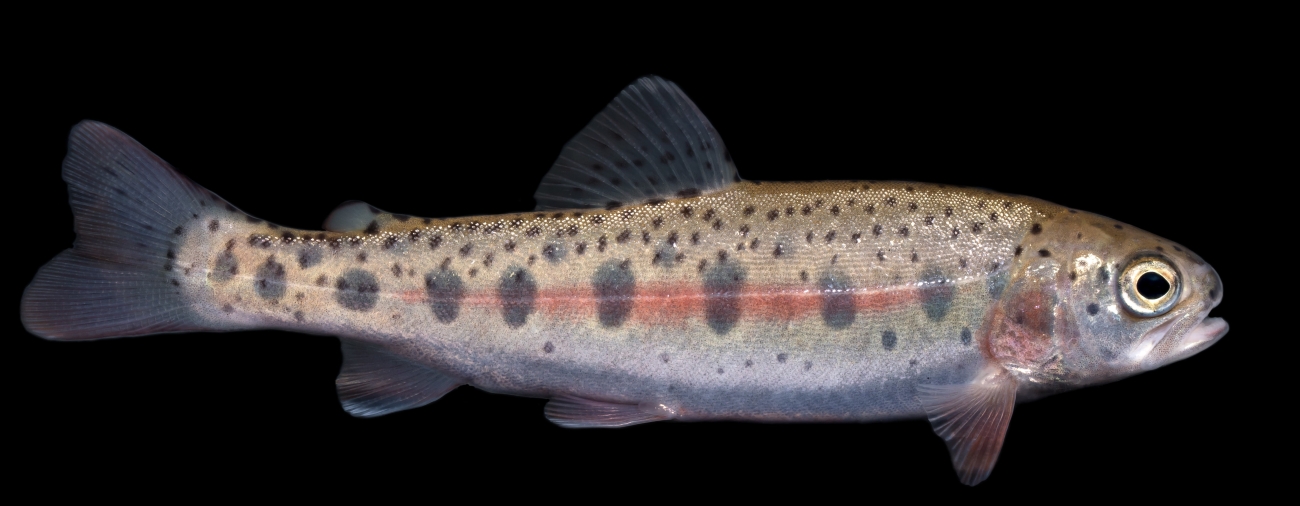
Stage summary: Juvenile steelhead resident in tributary streams. Distinct "parr marks" (vertical oval bars on flanks) for camouflage against gravel/substrate. Aggressive territorial feeders on aquatic insects + small forage. The size class small-stream and headwater anglers regularly catch as "small rainbows" -- many are pre-smolt steelhead parr.
Timing. Parr stage lasts 1-3 years in Lake Erie tributaries depending on growth rate, food availability, and individual variation. Most Lake Erie tributary parr come from HATCHERY YEARLING RELEASES (typical 6-8 in stocked yearlings released in spring) rather than wild reproduction -- the hatchery yearling smolt is the dominant pre-Lake-stage life stage in the Lake Erie program. Specific Lake Erie tributary wild-parr densities by river are [source-required] at Tier 1-3.
Size. Parr range from roughly 2-8 inches depending on age + tributary productivity. Yearling parr typically 4-6 in; two-year parr 6-8 in approaching smolt size.
Habitat. Riffle-run habitat with mixed substrate and moderate current. Parr are territorial -- they hold a defended station and feed on drifting invertebrates. Higher-productivity tributaries support higher parr densities; low-flow + high-temperature summer windows force parr into thermal refugia (spring seeps, deeper pools, shaded headwaters).
Diet. Aquatic insects dominate: mayfly nymphs (Baetidae + larger family-level), stonefly nymphs, caddis larvae, midge larvae, occasional terrestrial drift. Small fish (sculpin, dace, smaller salmonid fry) enter the diet as parr grow larger. This is the bread-and-butter dry-fly + nymph window for parr-stage feeding -- the same hatch-matching biology described in the aquatic-insect-lifecycle pillar applies here.
Predator encounter notes. Parr are mid-trophic-level prey for larger trout, brown trout, smallmouth bass (where co-occurring), kingfishers, mergansers, and otters. Parr-on-parr cannibalism is broadly cited in salmonid literature. Anglers fishing small tributaries for resident trout commonly catch steelhead parr; most should be released to continue toward smoltification.
Source-status labels for this stage: general parr behavior + diet + size range is source-backed via general salmonid life-history (Tier 3-5); Lake Erie tributary wild-parr densities + hatchery yearling vs wild-parr proportions by river are source-required.
Lifecycle stage 5: Smolt (smoltification + out-migration)
Stage summary: Physiological transformation from stream-resident parr to lake-going smolt. Body silvers (parr marks fade), behavioral shift toward downstream migration, physiological readiness for lake (rather than fresh-water-stream) life. Out-migration to Lake Erie typically in spring.
Timing. Smoltification in the Lake Erie program is dominated by HATCHERY yearling releases timed for spring out-migration -- typical April-May releases of 6-8 in yearlings ready to drop into Lake Erie. Wild-spawned smolt out-migration in tributaries with natural reproduction follows similar spring timing but is a smaller component of the overall Lake Erie smolt class. Specific Lake Erie tributary peak out-migration weeks remain [source-required] at Tier 1-3.
Physiological transformation. Smoltification is a hormonal + osmoregulatory transformation that prepares the fish for life in the larger Lake Erie water body. The freshwater salmonid framing is important: unlike Pacific anadromous steelhead transitioning to true saltwater, Great Lakes steelhead transition from small tributary to large lake -- a less extreme osmoregulatory shift but still a significant body-condition transformation.
Predator encounter notes. Out-migrating smolts are prey for larger fish in tributary mouths and nearshore Lake Erie (smallmouth bass, walleye, brown trout, larger steelhead, kingfishers, mergansers, double-crested cormorants). Smolt mortality from predation in the first months after out-migration is broadly cited as a significant population bottleneck in Pacific salmonid systems; Lake Erie quantitative rates are [source-required].
Source-status labels for this stage: general smoltification biology is source-backed via general salmonid life-history (Tier 3-5); Lake Erie tributary peak out-migration weeks + smolt-to-adult survival rates by tributary are source-required.
Lifecycle stage 6: Adult lake stage (1-3 years in Lake Erie)
Stage summary: Adult steelhead in Lake Erie feeding on baitfish for 1-3 years before returning to natal (or imprint) tributary to spawn. THIS IS THE STAGE THAT THE LOAD-BEARING TIER 1 DIET ANCHOR DOCUMENTS.
Timing. Smolts that out-migrate in spring of year 1 spend 1-3 years in Lake Erie before returning as adults. A typical Lake Erie steelhead returns to spawn at age 3-5 (1-3 years lake-resident after spring out-migration as a yearling smolt). Larger and older fish exist; Pacific anadromous steelhead can spawn multiple times across multi-year cycles (see kelt stage below).
Size. Adult Lake Erie steelhead in the run typically range 4-12 lbs, 18-30 in. Smaller "jacks" (early-returning males) and larger trophy fish (some over 15 lbs) exist; the bulk of the documented run-class fish fall in the 4-10 lb / 20-28 in band. Tributary-specific size-class distributions are [source-required] at Tier 1-3.
Habitat. Open-lake Lake Erie pelagic + nearshore zones. Adult steelhead are mid-water and upper-water column predators. Summer thermal stratification pushes them into deeper / cooler Central Basin water columns; spring and fall they hold shallower, closer to nearshore zones, and feed in tributary mouth + harbor areas before staging upstream.
Diet -- the GLFC 2004 anchor. THE single most important data point in this article. GLFC Coldwater Task Group 2004 study (Tier 1, n=349 steelhead stomachs across Lake Erie basins, 250 stomachs / 72% contained at least one food item):
- Emerald shiner: 47.7% frequency-of-occurrence and 57.71% dry-weight biomass species-confirmed West Central Basin June-October overall. Combined shiner group (emerald shiner + unidentified Notropis spp.) hits 67.5% frequency and 70.47% biomass. August West Central monthly peak for shiner group exceeded 76% frequency and 69% biomass.
- Rainbow smelt: approximately 24% biomass in the same study. Smelt + shiner combined occurred in 82-91% of stomachs across basins.
- Round goby: documented prey item; significant in basins where the goby invasion has rewritten Lake Erie food-web access.
- Juvenile yellow perch: documented prey item.
- Aquatic + terrestrial insects (terrestrial moths, beetles, Eurasian lady beetles): appeared significant BY COUNT but distant second BY BIOMASS. The Lake Erie steelhead diet at the documented sampling scope is fundamentally a baitfish diet, not a hatch-matching diet.
Source-status labels for this stage: diet selectivity is source-backed Tier 1 GLFC 2004 for West Central Basin June-October sampling scope; tributary-mouth and nearshore feeding behavior are source-backed Tier 1 NYSDEC via the smallmouth-bass-on-shiner page extension; specific lake-stage habitat-by-basin partitioning is source-required.
Source for the adult lake-stage diet anchor:
GLFC Lake Erie Committee Coldwater Task Group, "An Analysis of the Diet of Steelhead Trout in Lake Erie" (~2004 final report) -- Tier 1
NYSDEC, Smallmouth Bass Fishing On Lake Erie (spring nearshore + shiner-pattern recommendation) -- Tier 1
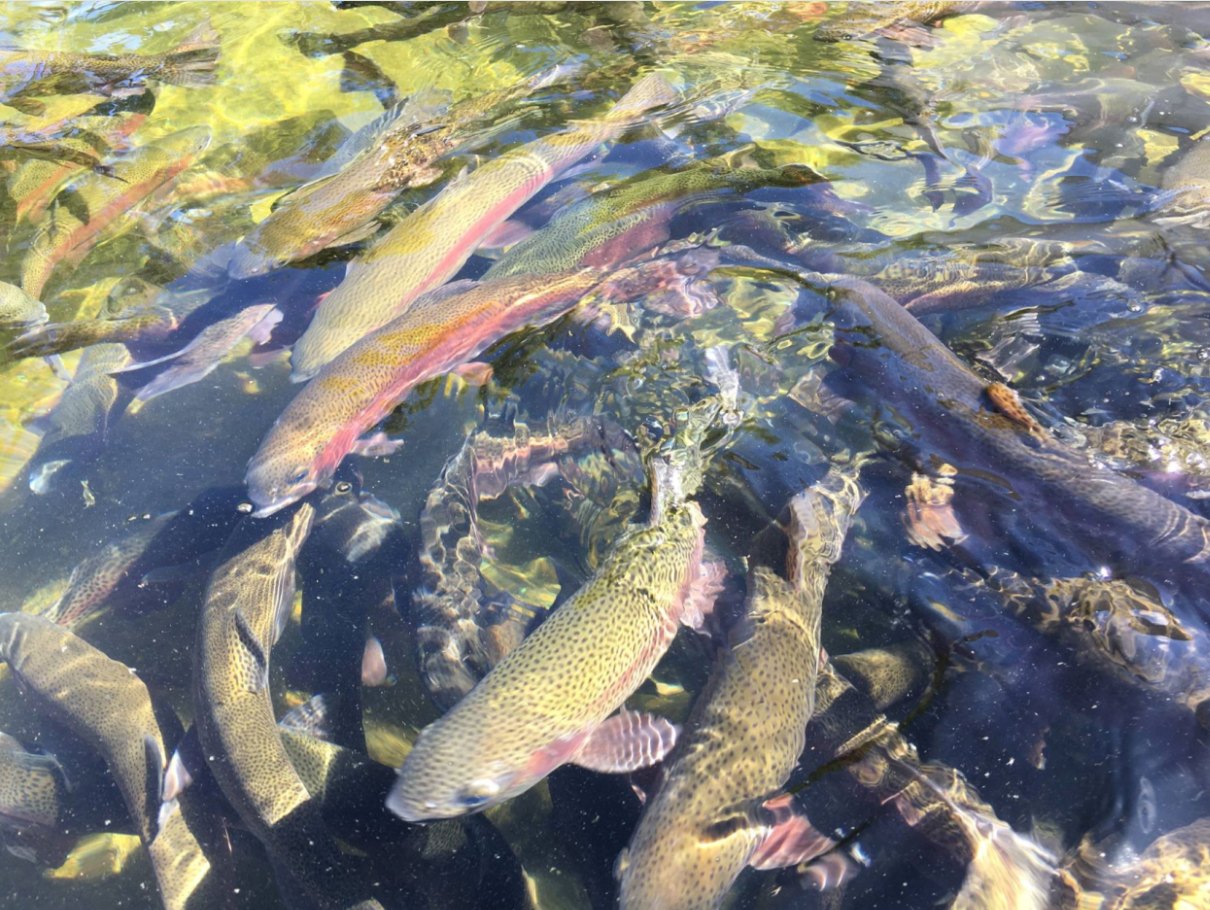
Lifecycle stage 7: Adult spawning run (return to natal tributary)
Stage summary: Adult steelhead return from Lake Erie to natal (or imprint) tributaries to spawn. The Lake Erie tributary spawn-run window spans fall (October-November staging entry) through spring (March-May spawn). This is the angler-marquee phase of the steelhead lifecycle.
Timing structure. Three working sub-windows (translation heuristic / widely-attested angler tradition until Tier 1-3 state-agency tributary-by-tributary timing tables are anchored):
- Fall run (October-November): First fresh fish ascend tributaries as water temperatures drop and tributary flows increase following autumn rain events. Fish stage in lower-river holding water + run-into-pool habitat. Many will hold through winter before spawning.
- Winter holdover (December-February): Fish are present in tributaries but activity is thermally constrained. Low-and-slow presentations dominate. Tributaries with limited groundwater influence can freeze out; tributaries with spring influence remain fishable through the deepest cold windows.
- Spring run + spawn (March-May): A second wave of fresh fish enters tributaries timed to spring runoff. The actual spawning event concentrates in March-May depending on tributary and water-temperature progression. Post-spawn drop-back fish (kelts) begin moving back toward Lake Erie.
50 deg F translation benchmark. The 50 deg F downstream tributary water-temperature target is widely used in Lake Erie angler practice as a "steelhead are ready" benchmark, with Tier 1 PFBC anchoring 50 deg F for the parallel sucker-spawn thermal trigger (PFBC, PA Fishes Chapter 12 -- see white-sucker forage profile). Application of the same 50 deg F number to steelhead spawn-run initiation in Lake Erie tributaries specifically remains [source-required] at Tier 1-3 -- the heuristic is broadly defensible but is not anchored to a specific Tier 1-3 Lake Erie steelhead source. Treat as translation heuristic.
Habitat. Adults stage in pool habitat + slack-water margins + run-into-pool transitions. Spawning concentrates on tributary gravel riffles + run tailouts. Tributary-specific staging-pool maps + spawning-gravel surveys remain [source-required].
Diet in tributaries. Adult steelhead in tributaries are NOT actively feeding the way they were in Lake Erie -- they are in spawn-run physiology with reproductive priorities. They will, however, OPPORTUNISTICALLY take eggs (drifting from upstream redds), aquatic insect nymphs (in-tributary drift), small baitfish (sculpin, dace, smolts), and aggressive intrusion strikes on streamers (territorial / predator-instinct triggered, not hunger-driven). This is why egg + nymph + streamer patterns all produce on tributary steelhead despite the GLFC 2004 lake-stage diet anchor pointing to baitfish.
Source-status labels for this stage: general spawn-run biology is source-backed via general salmonid life-history (Tier 3-5); tributary-by-tributary peak weeks + 50 deg F application to steelhead specifically are source-required; in-tributary opportunistic feeding behavior is source-backed via general salmonid literature but Lake Erie tributary quantitative selectivity is source-required.
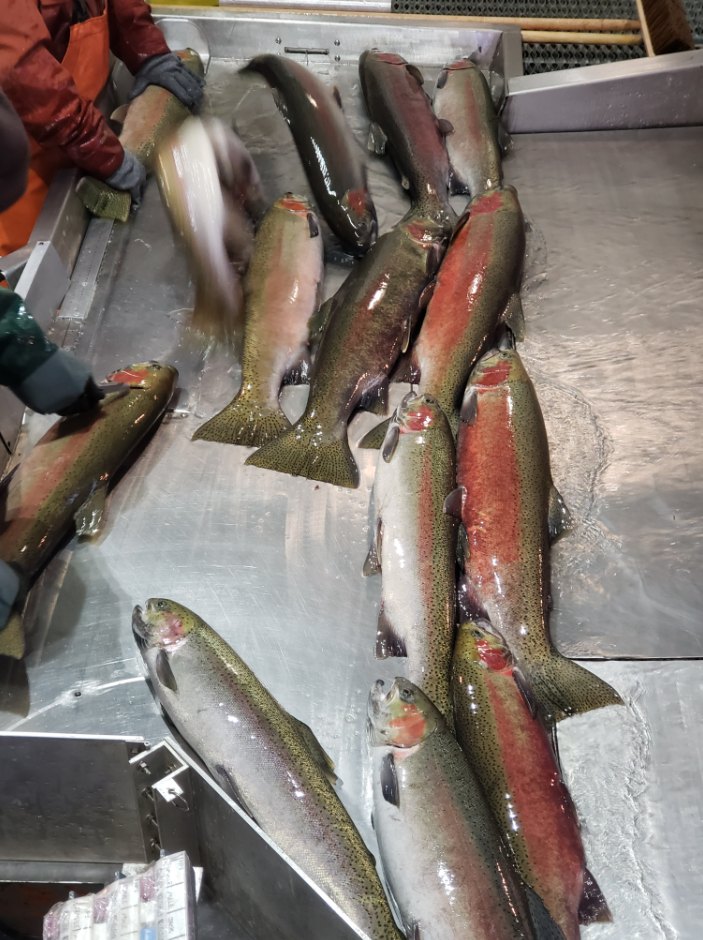
Lifecycle stage 8: Kelt + repeat spawner (post-spawn)
Stage summary: Post-spawn adults ("kelts") drop back downstream to Lake Erie. Unlike Pacific salmon (which die after spawning), steelhead are ITEROPAROUS -- they can spawn multiple times across successive years if they survive the drop-back, the lake-recovery period, and the next spawning run.
Timing. Kelt drop-back begins in late spring (April-May) following spawn. Drop-back fish are dark, thin (post-spawn body condition), and stressed -- they need to feed quickly to recover body condition in Lake Erie. Some are caught by tributary anglers as drop-back fish during the late-spring window.
Iteroparity vs semelparity. Steelhead are iteroparous (multi-spawn capable) -- a key difference from Pacific salmon (chinook, coho, sockeye, chum, pink) which are semelparous (one-spawn-then-die). Iteroparity is one of the marquee biological features that makes steelhead a year-after-year fishery in the same tributaries. Atlantic salmon are also iteroparous; brown trout (Salmo trutta) is iteroparous in the same family. Lake Erie kelt survival rates by tributary remain [source-required] at Tier 1-3.
Repeat-spawn count. Pacific anadromous steelhead are documented to spawn 1-3 times across their lifetime in some populations; some individuals achieve 4+ spawns. Lake Erie kelt survival-and-return rates are generally lower than wild Pacific systems due to hatchery-origin physiological differences and the smaller Lake Erie recovery basin -- but specific Lake Erie quantitative repeat-spawner rates by tributary are [source-required].
Predator encounter notes. Drop-back kelts are vulnerable -- thin, stressed, and recovering. Catch-and-release ethics during the late-spring drop-back window matter (kelts have less reserve to survive handling stress than fresh fish). Many guides and conservation-minded anglers minimize targeting drop-back kelts.
Source-status labels for this stage: general iteroparity biology + Pacific-vs-Atlantic-salmon distinction is source-backed via general salmonid literature; Lake Erie kelt survival rates + repeat-spawn frequencies by tributary are source-required.
Why this matters for steelhead anglers
The lifecycle is not academic biology -- it is the operating manual for an Alley angler. Here is how each stage maps to angler tactics:
- Egg stage -> egg patterns during spawn windows. Glo bugs, Estaz eggs, Otter eggs, micro-egg bead patterns. Hook 8-14. Orange, red, peach, cream, chartreuse colors. Dead-drift through tailouts + gravel runs DOWNSTREAM of confirmed redds during fall-run + winter-holdover + spring-spawn windows. Honor the GLFC 2004 sampling-window mismatch caveat: this is biological egg-availability + widely-attested angler practice, NOT a Tier 1-3 quantitative diet anchor.
- Parr stage -> resident-trout tributary fishing. When you catch small "rainbows" 2-8 in in a Lake Erie tributary, you're catching steelhead parr (or hatchery-origin yearlings approaching smoltification). Release them; they're future adult-run fish. Dry flies during local hatches, small nymphs (size 14-18), micro-streamers (size 8-10) all work -- the same hatch-matching biology described in the aquatic-insect-lifecycle pillar applies here.
- Smolt stage -> spring out-migration window. If you're fishing tributaries in April-May, you may see out-migrating smolts (silver, 6-8 in, schooling downstream). These are heading to Lake Erie; do not target the smolt class deliberately. Larger predators (brown trout, smallmouth, walleye in tributary mouths) follow the smolt class.
- Adult lake stage -> streamer game. The GLFC 2004 diet anchor (Tier 1) sets the streamer rotation: white/silver/pearl Clouser, Tigofly Zonker, Articulated Sparkle Minnow in size 2-6 for the shiner + smelt 3-4 in Age II+ size class. This is the bread-and-butter for Lake Erie tributary streamer fishing, even though adults in tributaries aren't actively feeding -- you're triggering predator-instinct strikes that the fish carries forward from its lake-stage diet memory.
- Spawn run -> the marquee tributary fishery. Fall staging (October-November), winter holdover (December-February), spring spawn (March-May) drive the entire Lake Erie tributary year. Egg patterns, nymph patterns under indicators, swung streamers, drifted bait (where legal) -- all techniques produce because adult steelhead in tributaries opportunistically take small drifting prey items and aggressively defend territory against intruders.
- Kelt stage -> ethics matter. Drop-back kelts are recovering from spawn stress. Catch-and-release them quickly, handle minimally, get them back in the water. Steelhead are iteroparous; the kelt you release in May may return as a fresh adult next year.
Lake Erie steelhead diet -- the load-bearing forage anchor
This section repeats the GLFC 2004 numbers in compact form for citability. Per GLFC Lake Erie Committee Coldwater Task Group, "An Analysis of the Diet of Steelhead Trout in Lake Erie" (~2004 final report, Tier 1), n=349 steelhead stomachs across Lake Erie basins, 250 (72%) contained at least one food item:
- Emerald shiner (Notropis atherinoides): 47.7% frequency-of-occurrence and 57.71% dry-weight biomass species-confirmed West Central Basin June-October overall. Combined shiner group (emerald shiner + unidentified Notropis spp.) = 67.5% / 70.47%. August West Central monthly peak shiner group: >76% / >69%.
- Rainbow smelt (Osmerus mordax): approximately 24% biomass.
- Smelt + shiner combined: occurred in 82-91% of steelhead stomachs across basins.
- Round goby (Neogobius melanostomus): documented prey item.
- Juvenile yellow perch: documented prey item.
- Insects (terrestrial moths, beetles, Eurasian lady beetles): significant BY COUNT but distant second BY BIOMASS. Insects are present in the diet but do not drive it.
The honest framing: this is a SUMMER LAKE-STAGE diet sampling window (primarily July-August, East Basin August-September). It documents what the fish ate in Lake Erie during the summer feeding window. It does NOT document spring or fall tributary spawn-run feeding, nor does it document winter holdover feeding. Egg, parr-stage, kelt, and tributary-resident in-stream feeding all happen OUTSIDE the GLFC 2004 sampling window. Treat the numbers as anchoring ADULT LAKE STAGE diet, not the entire steelhead lifecycle diet.
See our emerald shiner lifecycle pillar for the deep forage profile -- size-at-age, spring tributary nearshore window per NYSDEC, current abundance caveats per GLFC FTG March 2026 (decade-low). See our Forage Briefing for the cross-species summary covering emerald shiner + rainbow smelt + round goby + juvenile yellow perch as the documented Lake Erie steelhead baitfish anchor set.
Honest gaps -- what this pillar cannot yet say at Tier 1-3
SHA is building toward an authoritative Lake Erie steelhead biology library. Several things you might want from this flagship article -- and that we will not invent -- are still [source-required] at the Tier 1-3 level:
- Steelhead Alley tributary-specific spawn-run timing peaks (October-March-by-river). PFBC + NYSDEC pages document general fishery context at Tier 1; tributary-by-tributary timing tables are extensive at Tier 5 (angler reports, fly-shop posts, guide blogs) but Tier 1-3 timing-anchored sources are thin. ODNR Ohio program context returned 404 in our Codex 2026-06-23 audit and remains
[source-required]pending live URL refresh. - 50 deg F application to steelhead spawn-run initiation in Lake Erie tributaries. PFBC anchors 50 deg F at Tier 1 for sucker spawn (PA Fishes Chapter 12); the same number is widely-attested angler tradition for Lake Erie steelhead but its specific Tier 1-3 anchoring for steelhead spawn-run initiation has not been confirmed.
- Stocked-vs-wild reproduction rates per tributary. Lake Erie steelhead is primarily a stocked program (PFBC + NYSDEC + ODNR), but natural reproduction exists in select tributaries. Tributary-by-tributary wild-vs-stocked proportions remain
[source-required]. - Kelt survival rates by river. Pacific steelhead populations have published kelt survival data; Lake Erie tributary kelt survival quantitative studies remain
[source-required]. - Smolt out-migration peak weeks by tributary. Hatchery release schedules are state-agency-internal data; published peak-week tributary out-migration tables remain
[source-required]at Tier 1-3. - Quantitative Lake Erie tributary in-stream adult-steelhead diet selectivity during spawn-run windows. The GLFC 2004 sampling window is summer lake-stage; no equivalent spring/fall tributary diet study has surfaced in our reference set. Egg + nymph + streamer effectiveness during spawn-run windows is widely-attested angler practice but is NOT directly anchored at Tier 1-3 by GLFC 2004.
- Fecundity by tributary. ~2,000 eggs per pound is a broadly-cited rainbow trout fecundity benchmark; Lake Erie tributary-specific fecundity by river is
[source-required]. - Spawn substrate maps by named tributary. Gravel-spawning preference is broadly anchored; tributary-by-tributary spawn-substrate surveys at Tier 1-3 remain
[source-required]. - Lake Erie tributary repeat-spawner rates. Iteroparity is biological fact; quantitative Lake Erie repeat-spawn rates are
[source-required]. - Lake Ontario / Pacific applicability. This pillar's scope is LAKE ERIE specifically. Lake Ontario lake-run + Pacific anadromous applicability of timing windows, diet, and reproductive metrics remain
[source-required]for any extension claims.
If you have access to studies that close any of these gaps -- ODNR Lake Erie steelhead program documents, state-agency tributary timing reports, peer-reviewed Lake Erie spawn-run diet studies -- send them to us. The library grows when source-backed evidence does.
The takeaways
What is a steelhead? The lake-run (or sea-run) life-history form of Oncorhynchus mykiss, family Salmonidae. Native to the Pacific Northwest; established in Lake Erie tributaries via state-agency stocking programs (PFBC + NYSDEC + ODNR) beginning in the late 1800s.
Why does the lifecycle matter for anglers? Every decision an Alley angler makes traces back to the lifecycle. Egg patterns target the spring spawn-availability window. Streamers target the adult lake-stage forage memory. Nymphs cover parr-stage + adult in-tributary drift. Knowing where the fish are in their lifecycle tells you what to tie on, where to fish, and when to plan a trip.
Eight stages: egg (spring spawn on gravel redds) -> alevin (~2-4 weeks in gravel, yolk-sac absorption) -> fry (emergence + swim-up, micro-invertebrate feeding) -> parr (1-3 years stream-resident, aquatic-insect-dominant diet) -> smolt (physiological transformation + spring out-migration) -> adult lake stage (1-3 years in Lake Erie, baitfish-dominant diet per GLFC 2004) -> adult spawning run (fall through spring return to natal tributary, opportunistic in-stream feeding) -> kelt (post-spawn drop-back, iteroparous repeat-spawn capability).
The lake-stage diet anchor (Tier 1): GLFC 2004 Coldwater Task Group, n=349 steelhead stomachs. Emerald shiner 47.7% frequency / 57.71% biomass species-confirmed West Central Basin June-October. Combined shiner + smelt 82-91% of stomachs across basins. Aquatic insects appear by count but are distant second by biomass. The fishery is a baitfish fishery at lake stage.
The honest framings: Lake Erie steelhead is primarily a stocked program. Tributary-specific spawn-run timing peaks remain [source-required] at Tier 1-3. The GLFC 2004 sampling-window mismatch means quantitative spawn-run-window egg + nymph + streamer selectivity is NOT directly Tier 1-3 anchored -- those are widely-attested angler tradition + biological availability, not quantitative diet evidence. The 50 deg F downstream tributary thermal benchmark is translation heuristic for steelhead specifically (Tier 1 PFBC anchors 50 deg F for sucker spawn parallel).
Why we're publishing this
SHA is building toward being the authoritative source for Lake Erie steelhead biology. Most steelhead "lifecycle" content online either over-claims Pacific Northwest applicability for the Great Lakes system, invents tributary-specific peak-week tables without anchoring them to public-agency or peer-reviewed sources, or skips the GLFC 2004 diet anchor entirely. This pillar cites the lake-stage diet anchor to a Tier 1 GLFC Coldwater Task Group study, cites the tributary fishery context to Tier 1 PFBC + NYSDEC state-agency pages, honestly flags the ODNR URL refresh gap from our Codex 2026-06-23 audit, and is explicit about which Steelhead-Alley-specific lifecycle details (tributary timing, kelt survival rates, smolt out-migration windows, stocked-vs-wild reproduction rates by river) still need Tier 1-3 anchors.
If you fish Steelhead Alley -- this is the lifecycle article we'd want in your back pocket before you tie on your first fly of the season.
Full source list
| Source | Tier | Use |
|---|---|---|
| GLFC Coldwater Task Group, "An Analysis of the Diet of Steelhead Trout in Lake Erie" (~2004) | 1 | LOAD-BEARING adult-lake-stage diet anchor: n=349 stomachs, 250 with food, West Central Basin June-October species-confirmed emerald shiner 47.7% / 57.71%; combined shiner group 67.5% / 70.47%; August West Central monthly peak shiner-group >76% / >69%; smelt + shiner combined 82-91% across basins; rainbow smelt ~24% biomass; round goby + juvenile yellow perch documented; insects distant second by biomass. Sampling-window caveat: July-September lake stage (East Basin Aug-Sept) -- DOES NOT document spring/fall tributary spawn-run feeding selectivity. |
| PFBC, Steelhead Pennsylvania program | 1 | PA Lake Erie steelhead tributary context + stocking program. Sustains anchored Tier 1 state-agency framing for PA Lake Erie steelhead presence + tributary fishery scope. |
| NYSDEC, Steelhead Fishing in Lake Erie Tributaries | 1 | NY Lake Erie steelhead tributary context + state-agency stocking framework. Sustains Tier 1 NY state-agency framing for NY Lake Erie steelhead presence + tributary fishery scope. |
| NYSDEC, Smallmouth Bass Fishing On Lake Erie (spring nearshore + shiner-pattern recommendation) | 1 | Spring (April-May) nearshore + tributary + harbor window for emerald shiner schools; NYSDEC explicit recommendation of "woolly buggers and minnow patterns, especially emerald shiner patterns" extends to steelhead via the GLFC 2004 diet anchor. |
| ODNR Division of Wildlife, Steelhead Trout Fishing (Ohio program context) | 1 (URL stale) | Intended Ohio Lake Erie tributaries + steelhead fishery + stocking program context. Current URL returned 404 during Codex audit 2026-06-23 -- DO NOT TREAT AS ACTIVE OHIO EVIDENCE until replaced with a live ODNR source. ODNR program context is referenced from secondary source-citations.md row but Ohio-specific quantitative claims are [source-required] pending live URL refresh. |
| GLFC Lake Erie Forage Task Group, March 2026 | 1 | Forage caveat for the adult lake-stage diet anchor: emerald shiner abundance has remained at decade lows; multi-agency trawl-survey pool of "soft-rayed fish" includes emerald shiner + rainbow smelt + spottail shiner. Practical implication: shiner-pattern flies remain biologically defensible but are not the default search pattern they once were. |
| Atkinson et al. 2015, Ohio Journal of Science 114(2) | 3 | Adult forage size-class anchor for the streamer-fly hook-size translation: Western Basin emerald shiner Age II+ males 78-111 mm TL and females 81-108 mm TL (combined 3.1-4.4 in); Age I 1.5-3.1 in; Age 0 YOY 0.6-1.3 in. Drives the size 2-6 streamer recommendation for adult forage and size 6-10 for Age I forage. |
Common questions about the steelhead life cycle
When do Lake Erie steelhead spawn?
Lake Erie tributary steelhead spawn in spring -- primarily March through May depending on river, latitude, and water temperature. Fall-staging adults enter tributaries from October-November and hold through winter before the spring spawn. Tributary-specific peak weeks remain [source-required] at Tier 1-3 -- widely-attested in angler reports and fly-shop content but not anchored to PFBC + NYSDEC + ODNR tributary-by-tributary timing tables in our reference set. Treat spring spawn as the working assumption; do not invent named peak dates.
What temperature triggers the steelhead run?
The widely-cited 50 deg F downstream tributary water-temperature target is the commonly-used "steelhead are ready" benchmark in Lake Erie angler practice. The same 50 deg F number is anchored at Tier 1 PFBC for the parallel sucker-spawn thermal trigger (PFBC PA Fishes Chapter 12) -- but its specific application to steelhead spawn-run initiation in Lake Erie tributaries remains [source-required] at Tier 1-3. Treat 50 deg F as a defensible translation heuristic rather than a Tier 1-3 anchored Lake Erie steelhead trigger.
How long do steelhead live?
Lake Erie steelhead typically live 4-6 years -- 1-3 years as in-stream parr (or yearling hatchery class), spring out-migration as smolts, 1-3 years as adult lake-stage piscivores in Lake Erie, return as adults to spawn at age 3-5. Iteroparity means surviving kelts can return to spawn in subsequent years; some individuals may achieve 2-3 lifetime spawns. Pacific anadromous steelhead can occasionally reach age 7-8 with 3-4 lifetime spawns; Lake Erie quantitative lifespan + repeat-spawn data by tributary is [source-required].
What do Lake Erie steelhead eat?
Per the GLFC Coldwater Task Group 2004 study (Tier 1, n=349 steelhead stomachs across Lake Erie basins, summer lake-stage sampling), adult Lake Erie steelhead diet is dominated by baitfish: emerald shiner at 47.7% frequency / 57.71% dry-weight biomass species-confirmed West Central Basin June-October, with combined shiner group hitting 67.5% / 70.47%. Rainbow smelt is approximately 24% biomass. Smelt + shiner combined occurred in 82-91% of stomachs across basins. Round goby and juvenile yellow perch are also documented. Aquatic + terrestrial insects appeared significant by count but were a distant second by biomass. NOTE: this is the SUMMER LAKE-STAGE diet -- the study did not sample spring/fall tributary spawn-run windows.
What's the difference between a parr and a smolt?
A PARR is a stream-resident juvenile steelhead with distinctive vertical oval bars ("parr marks") for camouflage against gravel substrate. Parr live 1-3 years in tributary streams feeding on aquatic insects and small forage. A SMOLT is a parr that has completed smoltification -- the physiological transformation from stream-resident to lake-going life. Smolts are silvery (parr marks fade), behaviorally oriented toward downstream migration, and physiologically ready for lake life. Out-migration to Lake Erie typically happens in spring. In the Lake Erie program, most "smolts" entering Lake Erie are hatchery-released yearling smolts (6-8 in) timed for spring release; wild stream-reared parr-to-smolt transitions also occur in tributaries with natural reproduction.
Do steelhead die after spawning?
No. Steelhead (Oncorhynchus mykiss) are ITEROPAROUS -- capable of spawning multiple times across successive years. This is a key biological difference from Pacific salmon (chinook, coho, sockeye, chum, pink), which are SEMELPAROUS (one-spawn-then-die). Post-spawn steelhead are called KELTS; they drop back downstream to Lake Erie, recover body condition by feeding on baitfish, and can return to spawn in subsequent years. Lake Erie kelt survival rates and quantitative repeat-spawn frequencies by tributary remain [source-required] at Tier 1-3.
When do steelhead smolts out-migrate to Lake Erie?
Out-migration peaks in spring -- typically April-May depending on tributary and hatchery release schedule. Hatchery yearling smolts (the dominant Lake Erie program input) are released by state agencies in spring timed for active out-migration; wild stream-reared smolts follow similar spring timing in tributaries with natural reproduction. Specific peak weeks by named Lake Erie tributary remain [source-required] at Tier 1-3 -- hatchery release schedules are typically state-agency-internal and tributary-by-tributary peak-week tables for out-migration have not surfaced in our reference set.
How big do Lake Erie steelhead get?
Adult Lake Erie steelhead in the spawn run typically range 4-12 lbs and 18-30 in. Smaller early-returning males ("jacks") and larger trophy fish (some over 15 lbs) exist. The bulk of documented run-class fish fall in the 4-10 lb / 20-28 in band. Tributary-specific size-class distributions remain [source-required] at Tier 1-3. Maximum sizes are constrained by Lake Erie food-web productivity and 1-3 year lake-stage feeding windows; Lake Erie steelhead do not approach the maximum sizes documented in some Pacific anadromous populations.
Image credits and licensing
This pillar uses a combination of public-domain federal-source and SHA-original images. Every image is credited to its source with a link back to the original.
- Hero / featured image -- Steelhead (Oncorhynchus mykiss). Placeholder pending source selection. Will be replaced with state-agency or USGS public-domain steelhead imagery or original SHA photography upon source confirmation.
If you are a rights-holder and believe an image attribution needs correction, contact us at SHA -- we will fix it promptly.
Continue learning
This is the flagship lifecycle pillar. Continue with the lifecycle + biology + forage profiles that complete the Lake Erie steelhead story:
- Emerald Shiner Life Cycle -- the primary Lake Erie steelhead forage anchor at the adult lake stage. GLFC 2004 (Tier 1) + Atkinson et al. 2015 (Tier 3) + NYSDEC (Tier 1). The deep forage profile behind the streamer-fly rotation.
- Round Goby Life Cycle -- the post-1993 invasive forage that rewrote Lake Erie food-web access. Goby appears in the GLFC 2004 steelhead diet documentation and dominates the smallmouth bass diet (NYSDEC 2024).
- Rainbow Smelt Life Cycle -- the secondary Lake Erie steelhead forage anchor at ~24% biomass per GLFC 2004. Cold-water pelagic forage that pairs with emerald shiner across the adult lake-stage diet.
- White Sucker Life Cycle -- the Tier 1 PFBC-anchored 50 deg F spring spawn benchmark that drives the broader spring egg-availability window in Lake Erie tributaries. Parallel forage profile to salmonid eggs.
- Aquatic Insect Life Cycles: What Exactly Is a Hatch? -- the entomology glossary covering mayflies, stoneflies, caddis, midges, terrestrials. The hatch-matching vocabulary that defines parr-stage in-stream feeding and adjacent inland brown trout fisheries.
- The Goby Takeover -- how the post-1993 round goby invasion rewrote the Lake Erie smallmouth bass diet from 53.5% crayfish to 64% round goby. NYSDEC 2024 + Steinhart 2004 sources. Companion to the goby lifecycle pillar.
- Steelhead Alley Forage Briefing -- the cross-species summary covering emerald shiner + rainbow smelt + round goby + juvenile yellow perch as the documented Lake Erie steelhead baitfish anchor set, all source-traced to GLFC 2004 (Tier 1).
- The Steelhead Alley Seasonal Calendar -- the annual rhythm tying every steelhead behavior described here to a calendar month.