Steelhead Alley does not shut off when the last dropbacks slide back to the lake. It changes jobs. By June, July, and August, the responsible move is usually not to stretch the steelhead season. The better plan is to use the same river-reading habits on fish that are built for warm water.
That means summer fishing on Steelhead Alley is a real plan, not a consolation prize. Current, shade, rock, bait, water clarity, low-light timing, lake wind, and creek-mouth structure still matter. The target list shifts toward smallmouth bass, walleye, yellow perch, panfish, northern pike, and other warm-water fish that can handle the season.
Stop Thinking of Summer as Off-Season
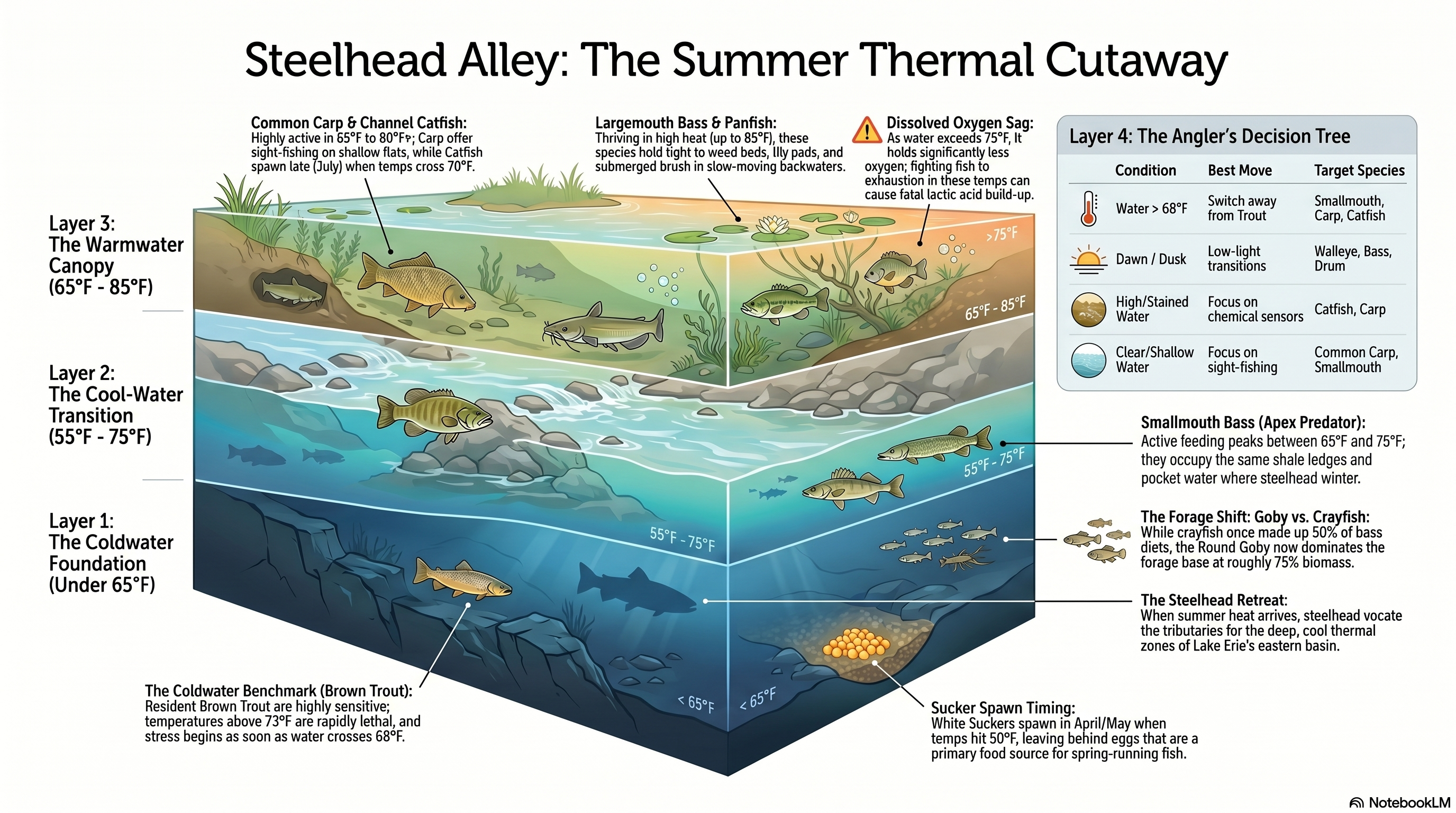
For steelhead specifically, summer is the off-season. For anglers, it is not. The rivers, harbors, lakefront edges, marinas, breakwalls, lower pools, backwaters, and creek mouths are still there. The water is warmer, the trout are stressed, and the best bite often moves earlier, later, deeper, or closer to shade and structure.
The first rule is simple: if you are wondering whether the water is too warm for steelhead, assume it is and fish something else. That is not giving up. It is how you protect the fishery and keep fishing.
Smallmouth Bass: The Natural River Substitute
Smallmouth are the cleanest seasonal handoff for a Steelhead Alley angler. They like rock, current, shade, crayfish, baitfish, and structure. If you already know how to read seams, pool tails, boulder runs, bridge shade, and creek-mouth transitions for steelhead, you already have most of the map.
Start with larger tributaries, lower-river current, lake-connected rock, and places where moving water touches depth. Tubes, Ned rigs, small jerkbaits, crayfish flies, poppers, and compact streamers all fit the job. The best windows are often first light, evening, cloudy stretches, and stable water after a rain event clears enough to read.
Walleye, Perch, and Panfish: Watch the Lake
Steelhead Alley is not just the tributaries. In summer, Lake Erie becomes part of the plan. Walleye reward low-light timing, wind-aware shore choices, reefs, harbor edges, creek mouths, and stained-water transitions. Yellow perch and panfish can be the practical family-friendly option when lake conditions are stable and access is simple.
Use the river conditions dashboard to check tributary clarity and temperature, but do not ignore wind, waves, and lake access. A river can look wrong while the nearby harbor or shoreline sets up perfectly.
Pike and Other Predators
Northern pike use weeds, backwaters, marina cuts, connected ponds, and cooler inflows. They are not everywhere, and they are not always the highest-percentage target, but they give aggressive anglers a predator option when bass are buried in shade and lakefront conditions are awkward.
Handle summer predators quickly. Warm water is not only a trout issue. Big fish that fight hard need efficient releases, especially during heat waves.
Read Conditions Differently
The best steelhead day and the best summer day are not the same thing. High muddy water can ruin a smallmouth bite. Very low, clear water can push fish into shade, depth, wood, weeds, or lake-connected zones. Hot sun can compress action into dawn and dusk. A stained but readable river can be better than clear water when predators are feeding by ambush.
For direct answers, use these pages as quick references: where to fish for smallmouth in summer, whether Steelhead Alley is worth fishing in summer, and which river conditions matter for summer fishing.
A Practical Summer Decision Tree
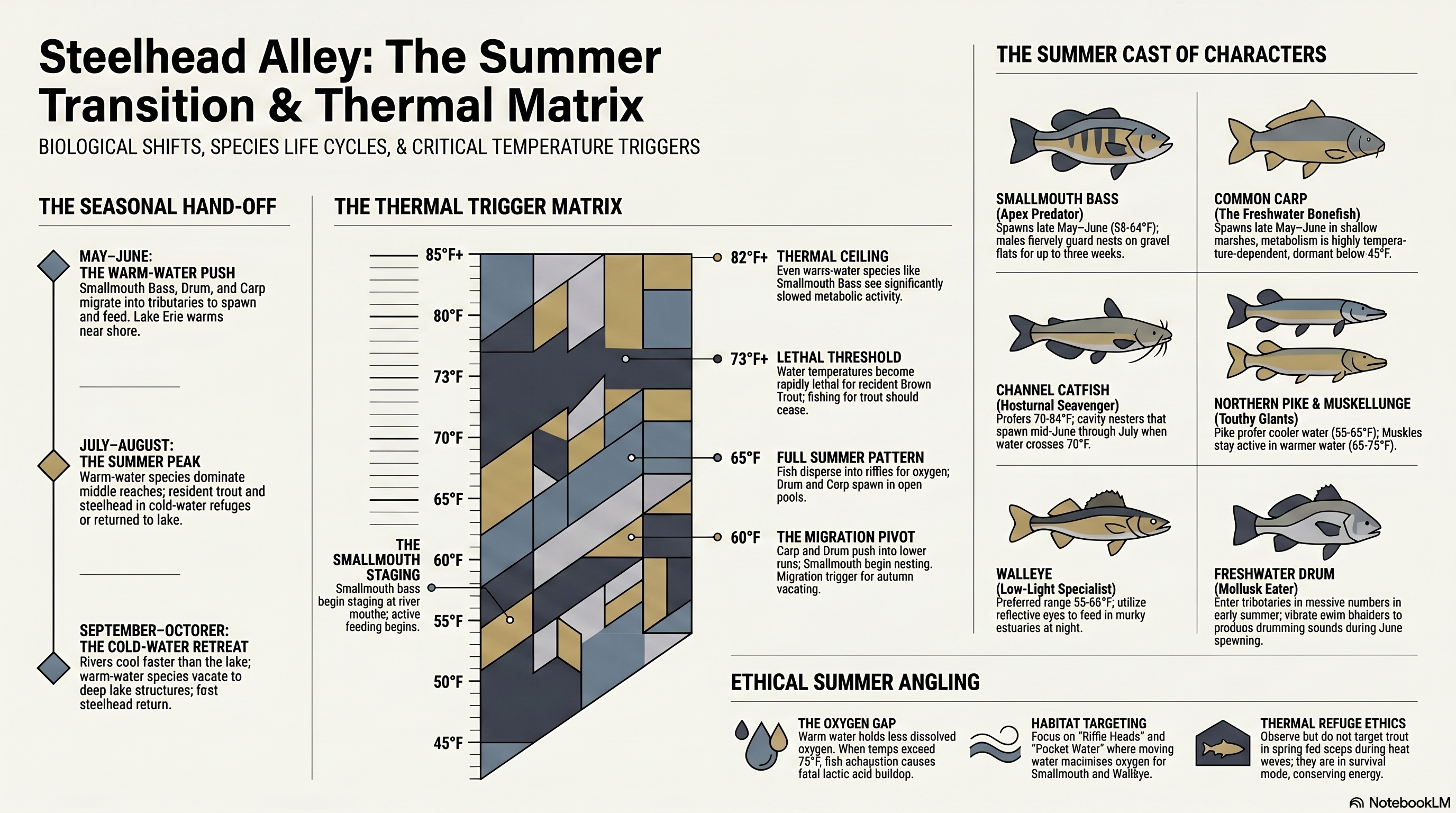
- Check water temperature. If the question is steelhead stress, switch species.
- Check clarity and flow trend. Fishable summer water is usually stable or clearing, not fresh mud.
- Pick the target. Smallmouth for rock/current, walleye for low-light lake edges, panfish for stable access, pike for weeds and cuts.
- Pick the window. Dawn, dusk, shade, clouds, and post-storm clearing windows matter more than midday heat.
- Use the same discipline. River-reading still wins. The species changed; the logic did not.
Summer Fishing FAQ
Is Steelhead Alley worth fishing in summer?
Yes, but treat summer as a warm-water season. Focus on smallmouth bass, walleye, panfish, yellow perch, northern pike, harbors, lakefront structure, and lower-river summer habitat instead of trying to force a steelhead trip.
Should I fish for steelhead in June, July, or August?
Usually no. Warm tributary water stresses steelhead and reduces recovery after a fight. When temperatures climb, switch to warm-water species that are better suited to summer conditions.
What is the best summer river target for steelhead anglers?
Smallmouth bass are usually the most natural substitute because they use rock, current, shade, bait, and creek-mouth structure. Walleye, perch, panfish, and pike round out the plan depending on lake conditions and access.